In brief
- A whole-person concept: TCM views the person as a unity and is based on the life energy qi and the balance of yin and yang.
- Specific diagnostics: Illnesses are identified through unique methods such as pulse and tongue diagnosis, which allow conclusions about the energetic balance.
- The five pillars: The healing system rests on five therapeutic paths: acupuncture, herbal medicine, dietetics, massage (tuina) and movement exercises (qigong/tai chi).
- Focus on balance: The goal is not merely fighting symptoms but releasing blockages and restoring the harmonious flow of energy in the body.
- Integrative medicine: In the Western world, TCM is now increasingly used as a scientifically accompanied complement to conventional medicine, especially for chronic complaints.
What is Traditional Chinese Medicine?
Traditional Chinese Medicine (TCM), a system of healing arts thousands of years old, is deeply rooted in the rich culture and philosophy of China.
This unique form of medicine, which reaches far beyond the borders of Asia, has also found increasing recognition in the Western world in recent decades.
TCM is based on a holistic view of the person and their connection to nature.
At its centre is the concept of qi, the life energy regarded as the driving force behind all life processes.
Unlike Western medicine, which concentrates predominantly on treating specific symptoms, TCM aims to maintain and promote balance in the body in order to safeguard health and well-being.
The growing popularity of TCM in countries like Germany reflects an increasing interest in alternative and complementary healing methods.
This trend shows itself both in the rising number of practices and therapy centres offering TCM and in the scientific research examining the effectiveness and integration of this ancient healing art into modern medicine.
The qi concept and the principles of yin and yang in TCM
In Traditional Chinese Medicine, qi, the life force, is the central element.
Qi is more than just energy; it is the vital substance that flows through the entire body and drives all vital processes.
TCM teaches that a free and undisturbed flow of qi is essential for health and well-being.
Disturbances or blockages of this energy flow can lead to illnesses and complaints.
Yin and yang, two further pillars of TCM, represent opposing yet interconnected forces and qualities present in everything in the universe.
Yin stands, for example, for cold, rest and passivity, while yang symbolises warmth, activity and dynamism.
In TCM, health is regarded as a state of balance between yin and yang.
An imbalance of these forces can lead to health problems.
The TCM view of illness differs fundamentally from Western medicine.
While in Western medicine illnesses are often regarded as a series of symptoms or as the consequence of specific pathogenic factors, TCM sees illness as the result of a disharmony or an imbalance of the life forces in the body.
Diagnostic procedures in Traditional Chinese Medicine
Diagnostics in Traditional Chinese Medicine are unique and differ clearly from Western methods.
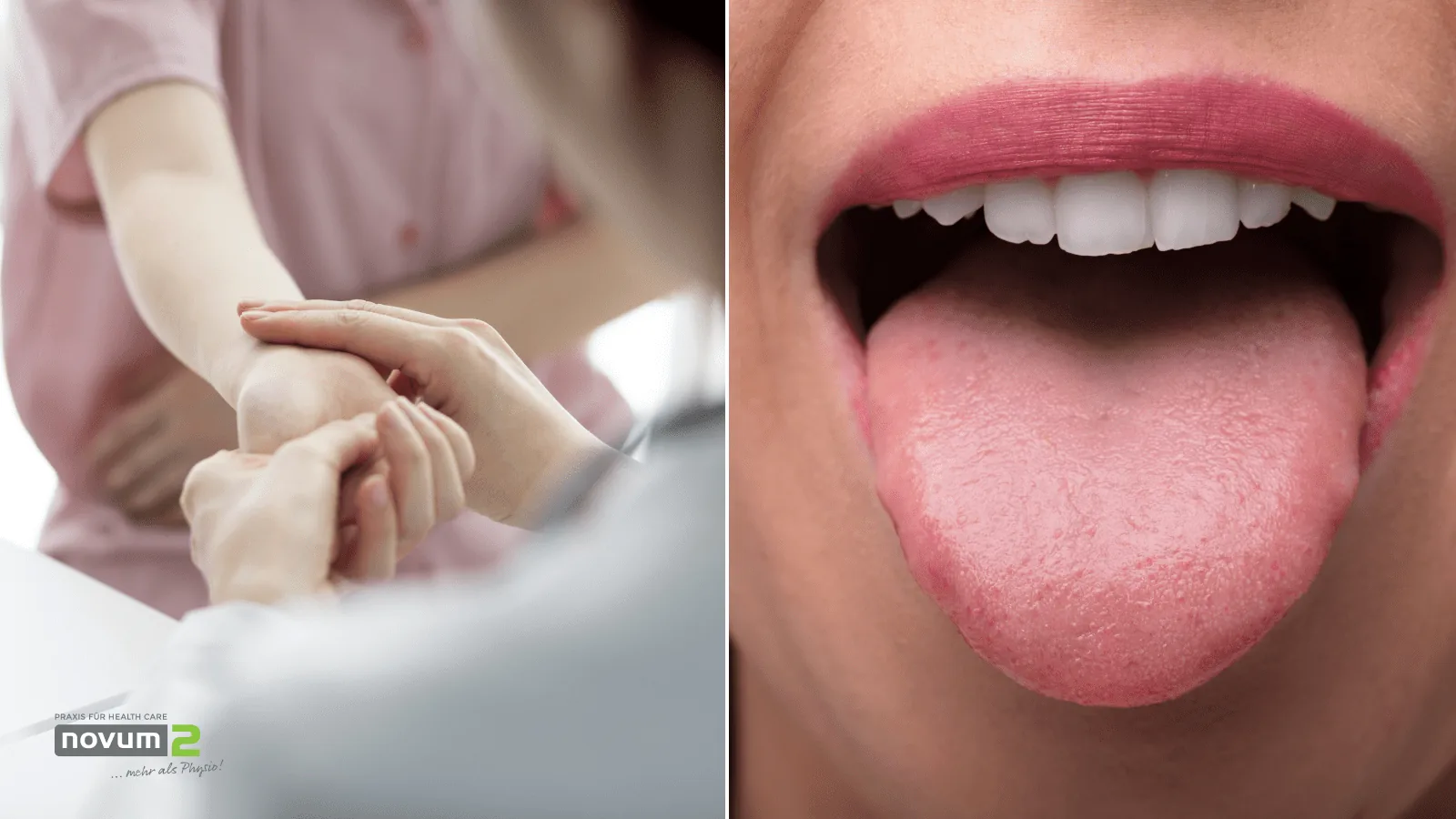
Central to diagnosis in TCM are pulse and tongue diagnosis, which offer deep insight into a person's state of health.
In pulse diagnostics, the pulse is felt at various points on the wrist to draw conclusions about the quality of the qi, the balance of yin and yang, and the state of the internal organs. In TCM, more than 30 different pulse qualities are known, and each of them offers specific information about the patient's state of health.
Tongue diagnosis is another central pillar of TCM diagnostics. The tongue is regarded as a mirror of the body, since it offers insight into the state of the internal organs. Observing the tongue's colour, shape, structures and coating provides valuable information about the energetic balance and possible health problems.
In addition to pulse and tongue diagnosis, TCM also includes other factors such as the patient's voice and odour and a detailed history-taking conversation.
This comprehensive approach enables TCM therapists to form a detailed picture of the state of health and plan correspondingly individualised treatments.
The five pillars of Traditional Chinese Medicine
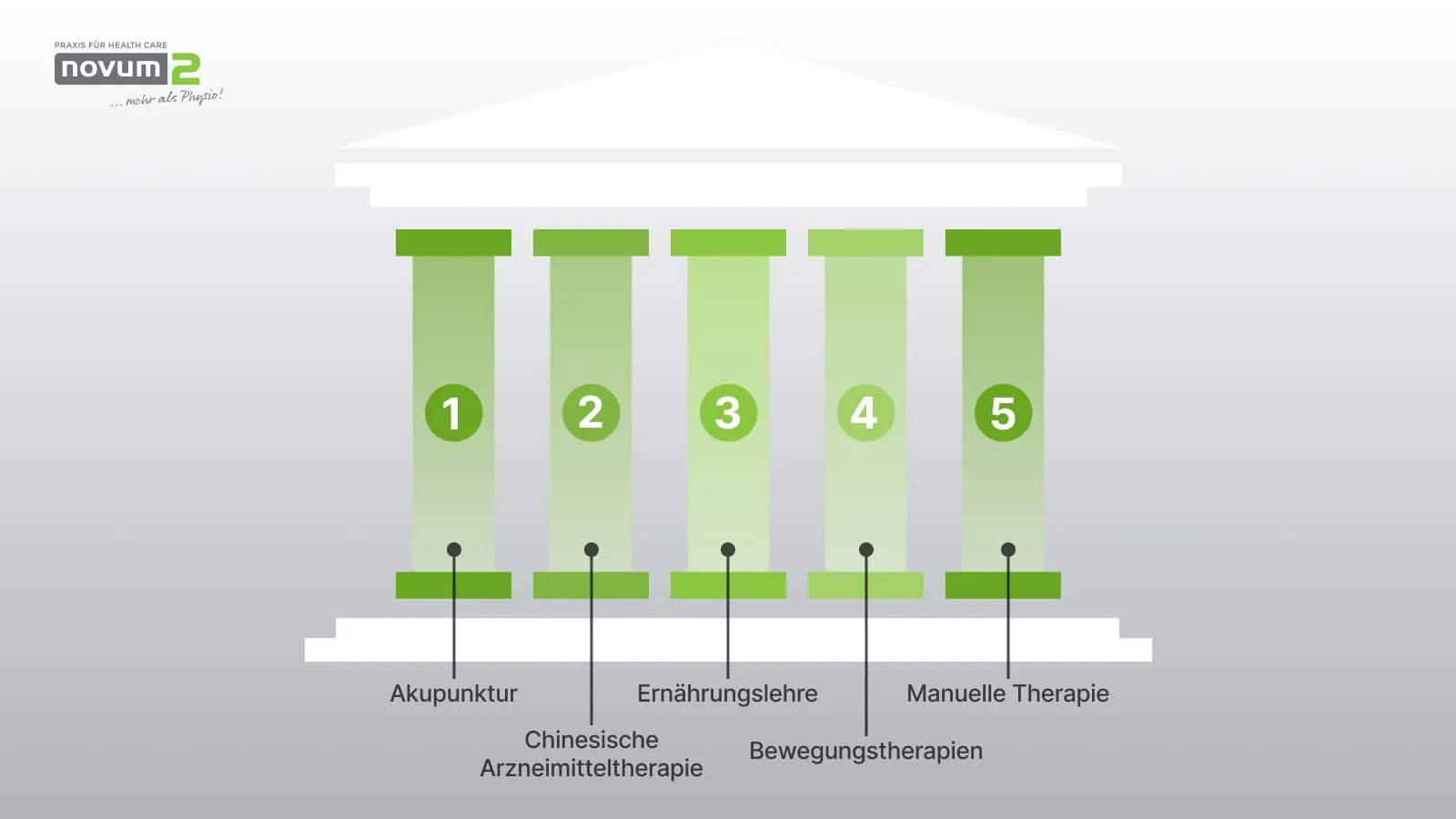
Traditional Chinese Medicine rests on five fundamental pillars, which together form a comprehensive system for promoting health and well-being.
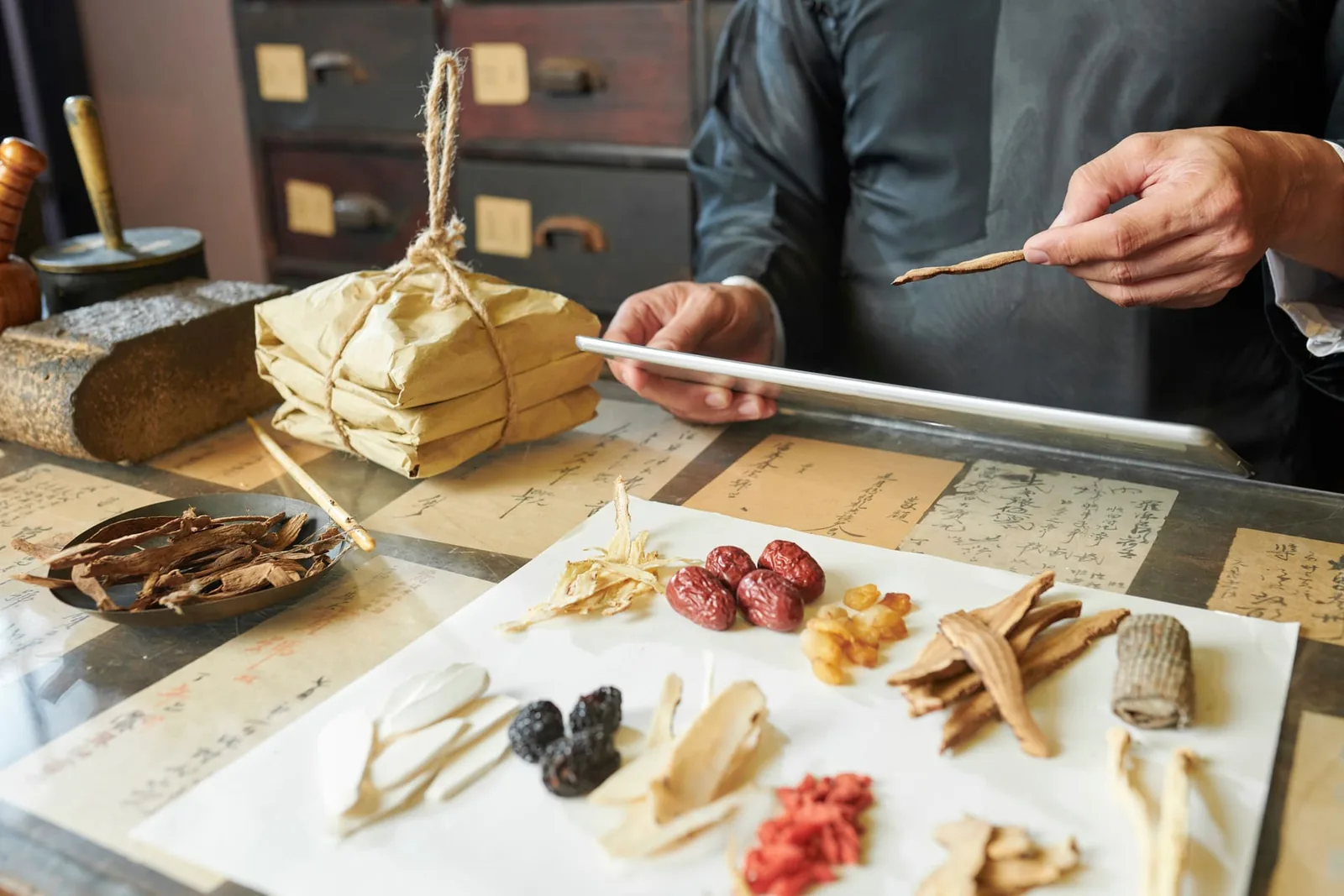
- Acupuncture: This well-known TCM treatment uses fine needles inserted at specific points in the body. The goal is to regulate the flow of qi, release blockages and restore the balance of yin and yang. Acupuncture is frequently used for pain relief and for treating a wide variety of health problems.
- Chinese herbal medicine: Here, plant, animal and mineral substances are used in individually tailored formulas. This form of therapy aims to correct imbalances in the body and support natural regeneration.
- Dietetics: TCM dietetics is based on the idea that foods have certain energetic properties that can influence yin and yang in the body. A balanced diet adapted to individual needs plays a decisive role in preventive healthcare.
- Movement therapies (qigong and tai chi): These forms of therapy combine meditative breathing exercises with gentle movements to promote the flow of qi in the body and strengthen mental and physical balance.
- Manual therapy (tuina massage): Tuina is a form of body massage that concentrates on acupuncture points and meridians. Through various techniques such as kneading, rubbing and pressing, the circulation of qi is improved and physical complaints are eased.
These five pillars of TCM offer varied possibilities for promoting health and treating illnesses, the goal always being to maintain or restore the harmony of body and mind.
Integrating Traditional Chinese Medicine into modern Western medicine
The connection between Traditional Chinese Medicine and modern Western medicine has gained increasing importance in recent decades.
This integration offers a more comprehensive approach to healthcare and opens up new possibilities for treating various illnesses.
In many Western countries, including Germany, TCM is regarded as a complement to conventional medicine.
Especially in the treatment of chronic pain, stress, sleep disorders and certain functional disorders, TCM has proven to be valuable support.
Its use in combination with conventional medicine can contribute to improving patients' quality of life and, in some cases, to reducing the need for medication.
The acceptance of TCM in Western medicine is also strengthened by scientific research.
Studies on the effectiveness of acupuncture and certain Chinese herbal therapies increasingly provide evidence supporting their use in modern medicine.
TCM thus offers a valuable extension of the therapeutic possibilities, especially in the comprehensive view and treatment of illnesses.
The future of Traditional Chinese Medicine
Traditional Chinese Medicine, with its deep roots in ancient Chinese culture and philosophy, has established itself as a valuable complement to Western medicine.
Its holistic perspective, which places the person and their connection to nature at the centre, offers an alternative view on the treatment and prevention of illnesses.
The future of TCM looks promising, as more and more people worldwide recognise and use its value. Its methods, from acupuncture to herbal medicine, are increasingly integrated into health programmes and offer an additional dimension in patient care.
Ongoing scientific research and integration into modern medicine will contribute to further validating TCM and expanding its applications.
In conclusion, Traditional Chinese Medicine not only builds a bridge between ancient wisdom and modern science but also represents an integral part of comprehensive, patient-centred healthcare.
It enriches our understanding of health and recovery and opens the way for innovative treatment methods in the future.