
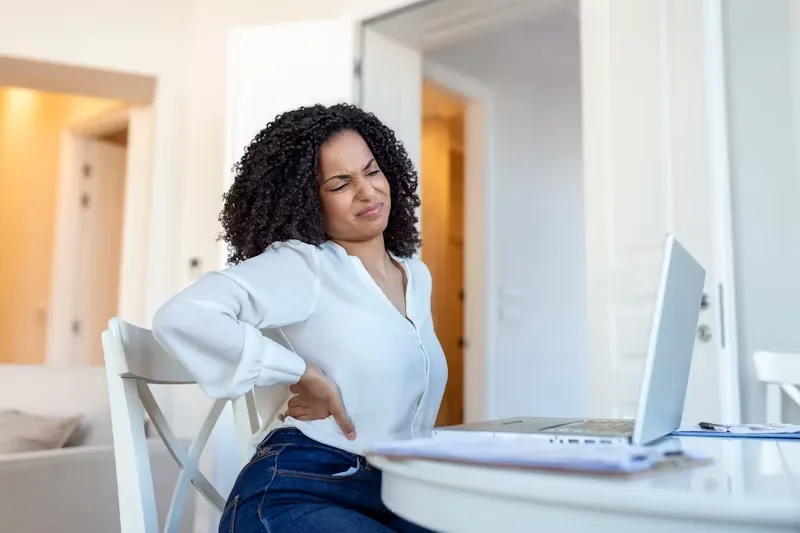
What exactly happens in a herniated disc?
Your intervertebral discs sit between the vertebral bodies of your spine and act as natural shock absorbers.
Each disc consists of a firm outer fibrous ring and a soft gel-like core.
If the fibrous ring tears, the gel core emerges and presses on the nerve roots or the spinal cord.
That is exactly what is called a herniated disc.
How does a herniated disc occur?
Your discs do a lot of work every day.
With increasing age, however, they lose elasticity and stability.
In addition, incorrect lifting, poor posture or lack of exercise can further weaken the fibrous ring and ultimately cause it to tear.
A disc bulge, by the way, is a preliminary stage of a herniation, in which the gel core does not yet break through the fibrous ring but can already cause complaints.
Causes: why does a herniated disc develop?
Several factors increase your risk of a herniated disc:
- Age: Natural wear of the discs.
- Lack of exercise: Weak back muscles provide poor stabilisation of the spine.
- Poor posture: Long-term sitting or incorrect lifting.
- Excess weight: Additional load on the spine.
- Genetics: Some people have genetically weaker discs.
- Accidents: Strong sudden loads or injuries.
Symptoms of a herniated disc – what to watch out for
Herniated disc in the lumbar spine
- Pain in the lower back radiating into the leg
- Numbness or tingling in the legs
- Muscle weakness or difficulty walking
- Severe cases: bladder and bowel problems
Herniated disc in the cervical spine
- Neck pain radiating into the arms and hands
- Numbness or tingling in the hands
- Muscle weakness in the arms
- Severe cases: possible paralysis
Different forms of herniated disc
Not every herniated disc is the same.
There are different variants:
| Type of herniated disc | Description | Effects |
|---|---|---|
| Medial herniated disc | The disc core emerges centrally into the spinal canal. | Can affect the spinal cord, which can lead to severe neurological symptoms such as paralysis or restricted movement. |
| Paramedial herniated disc | The disc core emerges laterally (left or right) and presses on individual nerve roots. | Frequent in the lumbar spine, causing pain, tingling and numbness in the legs or arms. |
| Foraminal herniated disc | The herniation enters the nerve exit point (foramen), the area where the nerve roots leave the spine. | Often causes severe pain, particularly in the legs, due to pressure on the nerve roots. |
These different types of herniated disc can cause different symptoms and degrees of complaint depending on their location, and treatment can vary.
Anatomy of the disc – structure and function
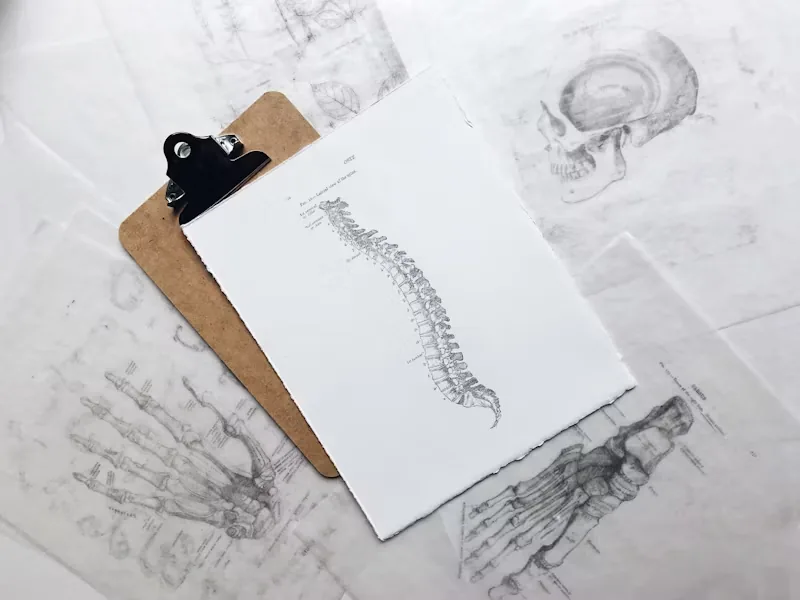
To understand how a herniated disc develops, it helps to take a closer look at the anatomy of the disc.
It lies between the vertebral bodies of the spine and acts as a shock absorber that enables the movement of the vertebrae.
Each disc consists of two main components:
- The fibrous ring (anulus fibrosus): This outer shell of the disc consists of fibrocartilage and is responsible for stability.
- The gel core (nucleus pulposus): The soft, gel-like core of the disc contains a lot of water and ensures pressure distribution within the disc.
Through repeated loading, poor posture or natural wear, the fibrous ring can develop tears.
The gel core can then be pushed outwards – this is how a herniated disc (disc prolapse) develops.
Difference between disc bulge and herniated disc
Many patients hear the terms disc bulge (disc protrusion) and herniated disc (disc prolapse) in their diagnosis.
But what is the difference?
- Disc bulge: The shell of the disc remains intact, but the core of the disc pushes outwards and can irritate nerves in the spinal canal.
- Herniated disc: The fibrous ring tears and the disc core emerges. The pressure on the nerve root can cause severe pain, tingling or even signs of paralysis.
A disc bulge can regress, while a herniated disc often requires targeted therapy.
Diagnosing a herniated disc

A doctor will carry out various examinations to confirm the diagnosis.
- Clinical examination: Checking reflexes, muscle strength and sensation in the arms and legs.
- Imaging: MRI or CT show exactly where the disc core has emerged and which nerves are affected.
- Neurological examination: Tests to clarify nerve irritation or deficits.
Treating a herniated disc

Therapy depends on the severity of the complaints.
In most cases, conservative treatment is sufficient.
Conservative therapy
- Pain therapy with anti-inflammatory medication
- Physiotherapy to strengthen the back muscles
- Heat and cold applications to relax the muscles
- Back-friendly exercise programmes
Most patients recover within a few weeks through these measures.
Surgical therapy
Surgery is only recommended for severe or long-lasting complaints.
Possible surgical methods:
- Microsurgical removal of the herniation through a small opening in the spine
- Disc prosthesis as a replacement for the damaged disc
- Fusion operations for unstable spinal segments
An operation becomes necessary when signs of paralysis or bladder and bowel disorders occur.
When is a second opinion sensible for a herniated disc?
Many patients wonder whether they really need an operation.
In orthopaedics and neurosurgery, a second opinion is often helpful when:
- The complaints do not improve despite conservative therapy.
- An operation is proposed as the only solution.
- Paralysis or bladder and bowel problems occur.
Another look by a doctor can help find the best treatment.
Exercise and physiotherapy for herniated discs

An active lifestyle helps strengthen the back muscles and relieve the spine.
Regular training can significantly reduce the risk of another herniated disc.
Recommended activities
- Back school and targeted muscle training
- Swimming as a joint-friendly sport
- Yoga and Pilates to improve posture
- Avoiding heavy lifting and incorrect movements
Physiotherapy and back training: exercises for prevention and healing

To prevent a herniated disc and support healing, targeted physiotherapy is essential.
Special exercises strengthen the muscles around the spine, which helps take pressure off the discs and stabilise the vertebral bodies better.
- Strengthening exercises: Exercises to strengthen the abdominal and back muscles support the spine by relieving the discs. Strong muscles in the lumbar and cervical spine stabilise the vertebrae and reduce the risk of a disc protrusion or herniation.
- Stretching exercises: They promote mobility and prevent tension, which can frequently lead to pain and irritation of the nerve roots.
- Correcting poor posture: A physiotherapist helps identify and correct postural problems that can lead to disc overload over time.
With regular exercise and an individually adapted therapy plan, the healing process after a herniated disc can be favourably supported.
Complaints such as tingling in the arms and legs or signs of paralysis can thus be avoided or reduced.
Which occupations are particularly at risk of a herniated disc?

Occupational groups under heavy physical strain have an increased risk of suffering a herniated disc.
Particularly affected are people who regularly lift heavy loads, frequently move in unfavourable positions or have to sit for long periods.
Examples of such occupations are:
| Occupation | Strain | Effects on the spine/discs |
|---|---|---|
| Construction workers | Frequent lifting of heavy materials and repeated physical strain on the lumbar spine. | Increases the risk of a herniated disc, especially in the lower spine, through overload of the fibrous ring and gel core. |
| Nursing staff | Frequent bending, lifting and moving of patients. | Strains the gel core (nucleus pulposus) and increases the risk of disc bulges or prolapse, especially in the lumbar spine. |
| Office workers | Prolonged sitting, poor posture and lack of exercise. | Leads to weakening of the back muscles and increases pressure on the discs, raising the risk of disc herniation and problems in the cervical/lumbar spine. |
These occupations expose the body to different strains that can particularly endanger the discs in the lumbar or cervical spine.
The strain on the spine in these occupations can lead to a disc prolapse if the disc is overloaded and the shell (fibrous ring) tears, allowing the gel core to emerge and press on the nerves.
It is important to take preventive measures such as ergonomic workplace design and regular exercise to prevent a herniated disc.
Herniated discs in older people: special challenges
With increasing age, the structure of the discs changes.
They lose elasticity and water content, making them more susceptible to injury.
The shell of the disc (fibrous ring) also becomes more brittle over the years and can tear more easily, resulting in a herniated disc, also known as a disc prolapse.
This occurs more frequently in the lumbar spine and the cervical spine in particular.
In older people, diagnosing a herniated disc is often more complex, as the symptoms can be confused with other age-related complaints such as osteoporosis or joint wear.
A herniated disc can not only cause severe pain but also signs of paralysis or numbness in the arms and legs.
In severe cases, surgical therapy is required to reduce the pressure on the nerves and prevent permanent damage to the spinal cord.
Treating herniated discs in older people requires a comprehensive approach that includes pain-relieving measures as well as gentle physiotherapy and lifestyle adjustments.
Gentle exercise to strengthen the back muscles and a balanced diet that supports the spine are important aspects of therapy.
Long-term effects of an untreated herniated disc
An untreated herniated disc can have long-term and serious effects on the health of the spine and the nervous system.
If the pressure that the emerged disc core (gel core) exerts on the nerves is not reduced in time, permanent damage can occur.
- Chronic pain: Untreated, a herniated disc can lead to long-lasting back pain and complaints in the arms or legs. The pain can intensify with movement or poor posture and considerably impair quality of life.
- Paralysis: If the nerve roots or spinal cord are trapped by the emerged disc core, signs of paralysis can occur in the legs or arms. In severe cases, mobility can be permanently impaired.
- Bladder and bowel disorders: A very severe herniated disc, particularly in the lumbar spine, can also impair control of the bladder and bowel, requiring immediate medical treatment.
Early diagnosis and targeted treatment are decisive for avoiding this long-term damage.
In many cases, conservative therapy such as pain treatment and physiotherapy helps.
In advanced cases, however, surgical therapy may become necessary to relieve the nerves and prevent permanent damage to the spine.
Prevention: how to protect your discs
- Ergonomic sitting posture in everyday life and at work
- Regular exercise and targeted back training
- Avoiding heavy loads
- A balanced diet to support the discs
A healthy lifestyle helps keep the discs elastic and prevent complaints.
Psychosomatic factors in back pain

Many people with a herniated disc suffer not only from physical complaints but also from psychological strain.
Stress, anxiety or depression can intensify the pain.
The body reacts with muscle tension that further irritates the nerves.
A comprehensive treatment approach in orthopaedics and neurosurgery therefore also includes relaxation techniques and pain therapy to break the vicious circle of pain and tension.
Living with a herniated disc
A herniated disc does not necessarily mean permanent restriction.
With the right treatment and preventive measures, pain-free movement is often possible again.
Those who specifically strengthen their back muscles and pay attention to healthy posture can avoid complaints in the long term and improve their quality of life.
What to do in an acute herniated disc? First aid and immediate measures
In an acute herniated disc, prompt measures are important to ease the pain and prevent further damage to the spine.
Here are some first aid tips that can help mitigate the symptoms:
| Measure | Description | Effect |
|---|---|---|
| Pain-relieving medication | Taking pain-relieving and anti-inflammatory medication recommended by the doctor. | Helps control the pain and reduce pressure on the nerves. |
| Short-term relief | Temporarily adapt pain-intensifying activities – but keep moving. Prolonged bed rest is not recommended according to current guidelines. | According to current knowledge, early, dosed activity supports recovery better than strict rest. |
| Cold and heat treatment | Cold treatment (e.g. cooling pad) in the first 48 hours to reduce inflammation, then heat treatment (e.g. heating pad). | Cold eases inflammation and pain in the first hours, heat relaxes tense muscles and promotes healing. |
| Seeing a doctor | With very severe pain, numbness, tingling or paralysis, see a doctor immediately. | A neurological examination helps determine the degree of damage and choose the right treatment. |
A quick and appropriate response to an acute herniated disc can support the healing process and help avoid long-term damage.
These measures offer initial support for a herniated disc, though a visit to the doctor is necessary to establish the exact diagnosis and the best therapeutic approach.
Everyday tips for people with a herniated disc
Small adjustments in everyday life can often ease complaints:
- Ergonomic sitting: A chair with lumbar support relieves the lumbar spine.
- Correct sleeping position: A straight spine reduces pressure on the discs.
- Correct lifting and carrying: Always lift heavy objects using your legs.
Targeted exercise and a back-friendly posture can often prevent herniated discs.
The lumbar support is an ergonomic support for the lower back that helps maintain a healthy sitting posture.
Latest treatment methods and innovations in spinal surgery
Modern spinal surgery offers new options for the treatment of a herniated disc.
Some innovative procedures are:
- Minimally invasive surgery: The emerged disc tissue is removed through a small access point.
- Laser therapy: The disc core is reduced with laser energy to lower the pressure on the nerve root.
- PRP therapy (platelet-rich plasma): Injections of the patient's own blood are intended to promote the regeneration of the disc.
These methods often enable rapid recovery, so patients can return to everyday life more quickly.
Suffering from a herniated disc?
Book an appointment here at our physiotherapy practice in Cologne and let our experts advise you on the treatment options that make sense for you.