
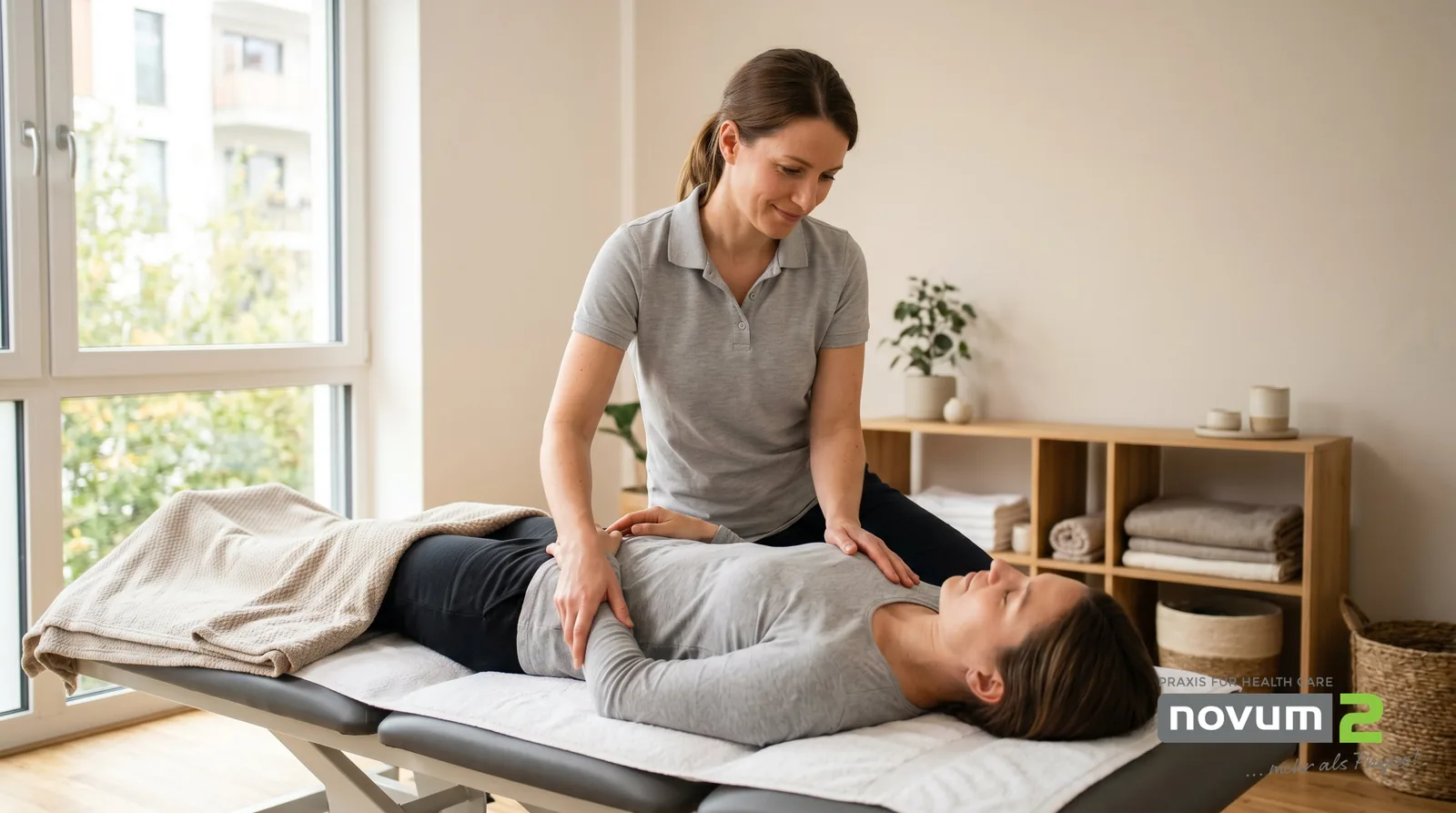
Fibromyalgia is one of the most common chronic pain conditions in Germany. It affects people of all ages and often means a long road to a confirmed diagnosis. At our physiotherapy practice at Ebertplatz in Cologne, we support those affected through targeted movement therapy and individual care, with the goal of achieving more quality of life in everyday activities.
What is fibromyalgia?
Fibromyalgia syndrome (FMS) is a chronic condition characterised primarily by widespread muscle and soft-tissue pain. The term is composed of the Latin "fibro" (connective tissue), "myo" (muscle) and the Greek "algos" (pain). Characteristic is pain affecting both halves of the body and persisting for at least three months.
In Germany, an estimated 1.5 to 2 million people suffer from fibromyalgia. Women are affected considerably more often than men. The condition belongs to what is called soft-tissue rheumatism and is not one of the classic inflammatory joint diseases. Organs and joints are not permanently structurally damaged by fibromyalgia.
Causes and risk factors
The exact cause of fibromyalgia syndrome is not yet fully understood scientifically. Current research findings indicate that disturbed pain processing in the central nervous system plays an important role. The brain perceives pain stimuli more intensely. Experts call this mechanism central sensitisation (increased pain sensitivity of the nervous system).
The following factors are associated with an increased risk of the condition:
- Persistent physical or psychological stress
- Chronic sleep disorders over a longer period
- Physical inactivity and lack of exercise
- Other rheumatic diseases such as rheumatoid arthritis
- Genetic predisposition
- Previous injuries or psychological traumas
Fibromyalgia sometimes occurs together with other conditions. Frequently mentioned accompanying conditions are chronic fatigue syndrome (ME/CFS) and rheumatism. The symptom patterns partially overlap.
Symptoms: how do you recognise fibromyalgia?
The main symptom is chronic, widespread pain. It typically affects both halves of the body and areas above and below the waist. Those affected often describe it as pulling, burning or pressing. Typical pain areas are the neck, shoulders, back, hips, elbows and knee regions.
Frequent accompanying symptoms of fibromyalgia are:
- Pronounced exhaustion, even after sufficient sleep
- Non-restorative sleep with problems falling and staying asleep
- Cognitive impairment, colloquially called "fibro fog" or brain fog: difficulties with concentration and memory
- Headaches and tension headaches
- Hypersensitivity to cold, heat, noise or touch
- Gastrointestinal complaints, for example irritable bowel syndrome
- Tingling or numbness in the hands and feet
The complaints can fluctuate in intensity. Stress, cold, weather changes and physical overexertion often intensify them temporarily.

Diagnosis: the path to a confirmed diagnosis
Diagnosing fibromyalgia is demanding. There is no specific blood test and no imaging procedure that unambiguously proves the condition. The diagnosis is made clinically: through a detailed conversation (history), a physical examination and the exclusion of other conditions with similar complaints.
The criteria of the American College of Rheumatology (ACR) are internationally recognised. A central feature is the presence of chronic, widespread pain over at least three months. Blood tests and imaging procedures such as X-ray or MRI serve to exclude other causes, for example rheumatoid arthritis, lupus or thyroid disorders.
Many of those affected report that the road to diagnosis takes years. If you suspect you may have fibromyalgia, seeing your family doctor, a rheumatologist or a pain therapist is a sensible first step.
Treatment: what helps with fibromyalgia?
Fibromyalgia cannot be treated with a single medication or a single method. What has proven itself in practice: a multimodal treatment concept combining various building blocks. Movement, relaxation and psychological support form the foundation.
Non-medication therapy
According to the current S3 guideline, regular, moderate exercise is one of the most strongly recommended non-medication measures for fibromyalgia. Studies show that physical activity can help reduce pain, improve sleep quality and stabilise mood. Suitable are endurance activities such as walking, Nordic walking, swimming, cycling or dancing. In addition, targeted muscle-strengthening training can be sensible.
Further measures that help many of those affected:
- Progressive muscle relaxation according to Jacobson
- Autogenic training
- Mindfulness-based stress reduction (MBSR)
- Cognitive behavioural therapy for accompanying psychological strain
- Hydrotherapy, i.e. movement in water
Accompanying medication
In certain cases, medication can be used in addition. Tricyclic antidepressants such as amitriptyline are prescribed in low doses for fibromyalgia and can have a positive influence on sleep and pain perception in some of those affected. Classic painkillers such as ibuprofen, on the other hand, usually show only limited benefit in fibromyalgia. Opioids and cortisone are generally not suitable. The decision about medication lies exclusively with the treating physician.
The role of physiotherapy and movement therapy
Physiotherapy is a central building block in the treatment concept for fibromyalgia. It starts exactly where many of those affected experience the greatest obstacle: getting back into movement. Chronic pain frequently leads to protective postures and movement avoidance. This further weakens the muscles, intensifies the complaints and can lead to a vicious circle.
At our practice, we rely on a gradual (step-by-step) training approach. We start where you are today and increase load and intensity at your own pace. The goals are: building muscle strength, improving mobility, training body awareness. We tailor every treatment plan individually to your complaints and your current load tolerance.

What we offer at our practice
At the Novum2 physiotherapy practice at Ebertplatz 2, 50668 Cologne, the following services are available to support you with fibromyalgia:
- Training therapy: Individually dosed strength and endurance training for gradually building physical load tolerance
- Manual therapy: Targeted techniques for improving joint mobility and treating muscular tension
- Heat applications: To relax the muscles, especially for cold-related pain and tension
- Cryotherapy: Cold applications that can be used as a complement for acute complaints
- Individual home exercise programmes: Exercises for home that you can do independently between appointments
Where sensible, we work closely with your treating doctor or rheumatologist. You will find an overview of all our services on our services page.
Everyday life with fibromyalgia: practical advice
Besides therapy, everyday habits play an important role in how well fibromyalgia can be managed in the long term. Some advice that helps many of those affected:
- Regular, moderate exercise: Better 10 to 15 minutes of walking daily than a rare long session. Increase slowly.
- Improve sleep hygiene: Fixed sleep times, a quiet and cool room, and a relaxation routine before going to bed can improve sleep.
- Stress management: Techniques such as yoga, breathing exercises or mindfulness training can help calm the nervous system.
- Energy management (pacing): Consciously alternate activities and breaks. Do not overdo it on good days, to avoid setbacks.
- Social support: Exchange with others affected, for example in support groups, can be emotionally relieving.
Book an appointment now
If you have a fibromyalgia diagnosis and don't know how to get back into regular movement, a physiotherapy consultation can be a sensible next step. This also applies if previous measures have shown little effect.
We take time for a thorough assessment and discuss openly with you which measures come into question for you. We do not promise complete freedom from pain. But we accompany you in making your everyday life more active and self-determined.
Book an appointment now: call us on +49 221 1693 8485, write to us at info@novum2.de or use our contact form. You can reach us Monday to Friday during our opening hours (Fridays until 4:10 pm). You will find us at Ebertplatz 2, 50668 Cologne.
You will find further information on related conditions in our guides on chronic fatigue syndrome (ME/CFS), brain fog and rheumatism.