

In brief
- Understanding TMD: Jaw pain is often part of a functional disorder of the chewing apparatus (temporomandibular dysfunction, in German "CMD").
- Varied symptoms: Besides pain in the joint, jaw clicking, tinnitus, neck tension and morning headaches are typical signs.
- Finding the causes: Stress, teeth grinding (bruxism) and poor posture are the most common triggers of overloaded chewing muscles.
- Physiotherapy as the key: Manual therapy helps release restrictions and relax the muscles in a lasting way.
- Self-help: Special exercises and stress management actively support your recovery in everyday life.
What exactly is jaw pain?
When we speak of jaw pain, we mean pain in the region of the temporomandibular joints, the chewing muscles or the surrounding tissues.
Often it is not just a single muscle that is affected – the entire system of teeth, jaw joints and muscles has fallen out of balance.
We call this imbalance temporomandibular dysfunction (TMD/CMD).
The German term "Craniomandibuläre Dysfunktion" is made up of "cranium" (skull), "mandibula" (lower jaw) and "dysfunction" (malfunction).
It describes a disorder in the interplay of the upper and lower jaw that can radiate far beyond the mouth area.
The 7 main symptoms: how do you recognise TMD?
Jaw pain manifests differently in every patient.
It is often a gradual process that begins with slight tension.
Watch out for the following warning signs:
Why does the jaw hurt? The causes
The causes of jaw pain are as individual as you are.
Usually several factors come together:
- Stress and psychological strain: "Grit your teeth and get through it" – this saying exists for a reason. Under stress, we unconsciously tense our jaw muscles.
- Bruxism (teeth grinding): We usually clench or grind stress away at night. The enormous force not only damages the teeth but overloads the joint.
- Misalignments: Even small deviations in the bite (e.g. from new crowns or gaps between teeth) can disturb the system.
- Poor posture: Those who work a lot at the computer and push their head forwards ("turtle posture") change the alignment of their jaw.
- Habits: Excessive chewing-gum use or biting on pens trains the chewing muscles one-sidedly into overdrive.
- Trauma: Previous accidents or falls onto the chin can cause late effects in the joint.
Diagnosis: how we find the cause
To be able to help you effectively, we examine your jaw joint closely.
Our treatment is based on structured root-cause analysis:
Through this combination of conversation, manual testing and modern technology, we create a treatment plan for you at NOVUM2 that addresses the possible contributing factors of your complaints.
- The patient consultation (history): We take time for you. Together we discuss your symptoms, look at your daily routine and identify possible stress factors that may literally have "sunk their teeth" into your jaw.
- Clinical functional analysis: This is where a fine touch matters. We carefully palpate the chewing muscles to find trigger points. We also check how mobile your lower jaw is and whether typical sounds occur when opening or closing.
- Instrumental analysis: Sometimes the problem lies in the detail – more precisely, in the bite. A dentist often assists here, measuring the position of your teeth precisely to uncover unfavourable loading.
- Imaging: If the complaints are persistent, X-rays, MRI or CT provide clear facts about structural changes or the position of the articular disc.
Treating jaw pain: the focus on physiotherapy
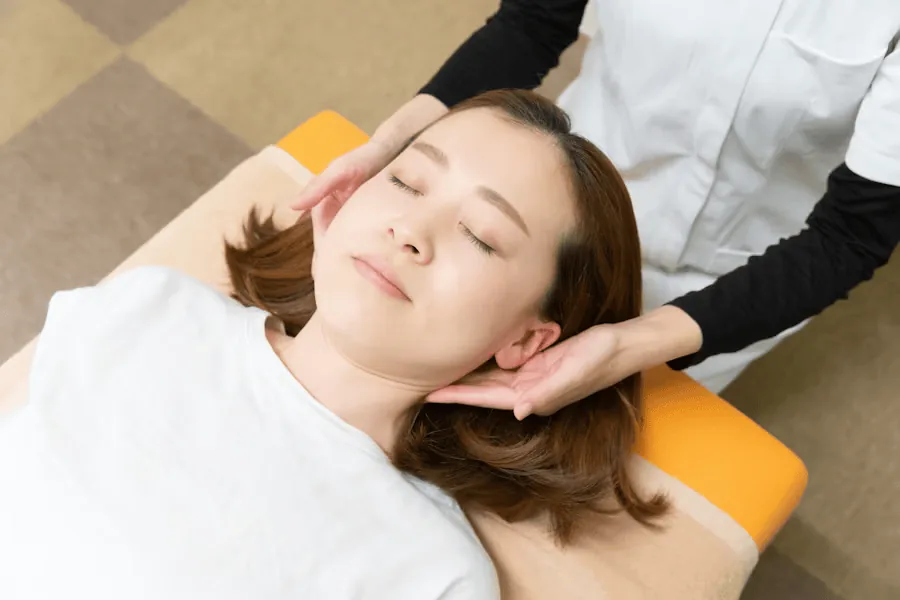
At NOVUM2 we take a whole-person approach.
Since jaw pain is usually functional in origin, physiotherapy is often a central treatment method for functional jaw complaints.
Manual therapy – our speciality
In manual therapy, our specialised therapists use targeted hand techniques to improve the mobility of your jaw.
We loosen the tense chewing muscles from inside and outside and mobilise the joint to release restrictions.
Further treatment methods
- Heat & cold therapy: Moist heat helps relax the muscles deep down, while cold can be useful for acute inflammation in the joint.
- Posture training: We work on your entire body alignment. Only when your neck and back are stable can the jaw also let go.
- Bite splints: In close cooperation with your dentist, an occlusal splint can help absorb the pressure at night.
- Stress management: Techniques such as progressive muscle relaxation (PMR) help you stay relaxed even in hectic times.
5 exercises against jaw pain
You can actively support your recovery.
Integrate these exercises into your daily routine to stretch and strengthen the muscles.
1. Mouth opening with tongue on the palate
Place the tip of your tongue loosely on the palate directly behind the front teeth.
Now open your mouth slowly as far as possible without the tongue losing contact with the palate.
- Repetitions: 5 times, 3 sets.
2. Sideways resistance (isometrics)
Place your flat hand against the side of your lower jaw.
Now try to press the jaw gently against the hand while the hand holds firm.
No visible movement takes place.
- Repetitions: 5 times per side, 3 sets.
3. Opening against resistance
Make a fist and place it under your chin.
Try to open your mouth against the light pressure of your fist.
This strengthens the opening muscles.
- Repetitions: 5 times, 3 sets.
4. Self-massage of the masseter
Find the large chewing muscle in front of your ears (briefly clench your teeth to feel it).
Massage this area with circular movements of your fingertips for 2-3 minutes.
Linger on painful points with gentle, static pressure.
5. The big stretch
Carefully open your mouth as far as possible.
Tilt your head slightly back as you do so.
Hold this stretch for about 2 minutes, breathing deeply and calmly.
The close connection between jaw and neck

Did you know that jaw pain is often actually a neck problem?
The muscles of the jaw and the upper neck muscles are closely interconnected neurologically via the trigeminal nerve.
Poor head posture (for example from constantly looking at a smartphone) puts the jaw muscles under permanent tension.
Conversely, TMD can trigger chronic neck pain.
That is why at NOVUM2 we always examine your cervical spine as well.
When should you see a doctor? (Red flags)
If you notice any of the following symptoms, a visit to a doctor (dentist or orthopaedist) is strongly advised:
- Pain lasting longer than 4 weeks.
- A complete locked jaw (mouth will not open) or jaw lock (mouth will not close).
- Sudden dizziness or sudden hearing loss.
- Severe swelling or redness in the joint area.
Self-help: what you can do today
In addition to therapy with us, you can make your everyday life more "jaw-friendly":
- Soft food: Give your jaw a break and avoid hard foods such as crusty bread or tough meat.
- Lips together, teeth apart: At rest, your teeth should not touch. Pay conscious attention to this.
- Enjoy warmth: A moist, warm cloth on the cheeks can noticeably ease tension.
- Ergonomics: Pay attention to your workplace. Screen height and chair should support an upright posture.
Your path to improvement
Jaw pain rarely disappears on its own – but as a rule it can be treated well.
A combination of specialised physiotherapy, targeted exercises and stress reduction can, depending on the individual findings, help to noticeably ease the complaints – course and duration vary from person to person.
Would you like to tackle your jaw pain?
The NOVUM2 team supports you with expertise and empathy.
Together we develop a suitable treatment path that can help to release tension and improve the way your jaw works.