
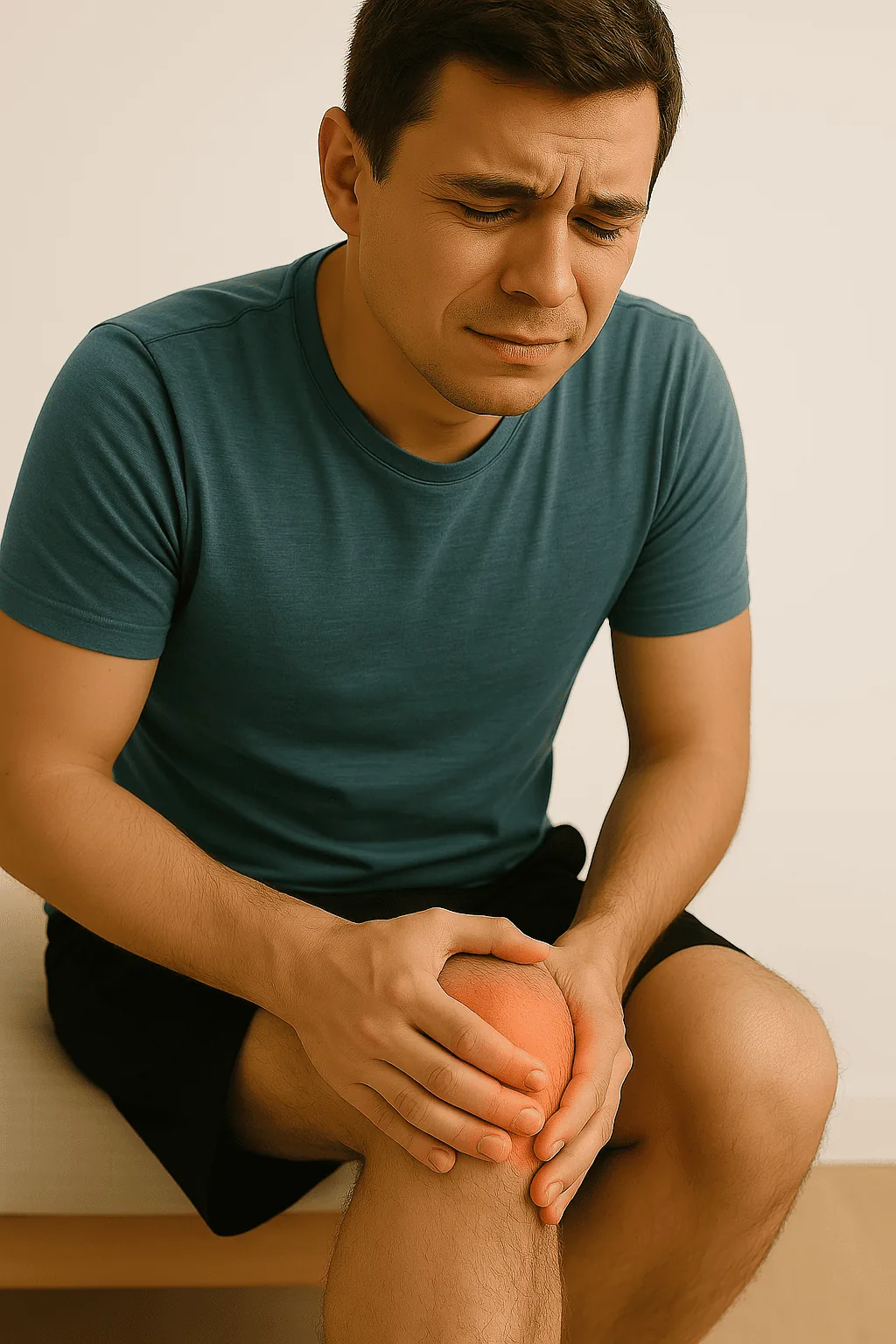
In brief
- Definition and development: Tendinopathy refers to degenerative changes in the tendons, usually as a result of overload and unfavourable loading.
- Anatomy and function: Tendons connect muscles to bones, transfer force and, due to their limited blood supply, are susceptible to injury.
- Typical conditions: Common forms are tennis elbow, Achilles tendon pain, patellar tendinopathy (jumper's knee) and shoulder impingement.
- Diagnosis and therapy: In addition to the clinical examination, imaging procedures (e.g. MRI, ultrasound) are used; treatment is primarily conservative and physiotherapy-based.
- Training and rehabilitation: Targeted, phase-specific load management and individual exercises promote regeneration and the restoration of mobility.
What is tendinopathy?
The term tendinopathy is composed of the Latin "tendo" (tendon) and the Greek "pathy" (disease or suffering). It covers all pathological changes of the tendons – from acute inflammation (tendinitis) to degenerative damage (tendinosis).
In everyday language, the terms are often used synonymously, although they describe different medical conditions.
It is important to distinguish:
- Tendinitis: An inflammation of the tendon, frequently resulting from an acute injury, mostly treated in the short term with anti-inflammatory measures.
- Tendinopathy: Primarily covers overuse damage and degenerative changes in the collagen fibres of the tendon tissue, which often require a longer treatment period.
Anatomy and function of the tendon
Tendons are fibrous structures that connect the muscles to the bones, enabling force transmission.
Structure:
Tendon tissue consists mainly of collagen fibres, which provide high strength and flexibility – similar to a thick, robust rubber band.
Blood supply:
Compared to muscle, the blood supply of tendons is limited, which slows their regeneration. This also explains why tendon damage often takes longer to heal and is more susceptible to overload.
Causes and risk factors of tendinopathy
Tendinopathies usually develop through overload and unfavourable loading of the tendons.
Main causes of tendinopathy:
| Cause | Description |
|---|---|
| Repeated loading | Unaccustomed or intensive activities, such as a sudden increase in training or a half marathon without sufficient preparation, can lead to micro-traumas. |
| Unfavourable loading | Improper warming up, unsuitable equipment or incorrect movement execution increase the risk. |
| Age-related degeneration | With increasing age, the elasticity of the tendons decreases, leading to greater susceptibility. |
| Lifestyle | A sedentary lifestyle and lack of physical activity can also contribute to the deterioration of the tendon tissue. |
Typical conditions and locations
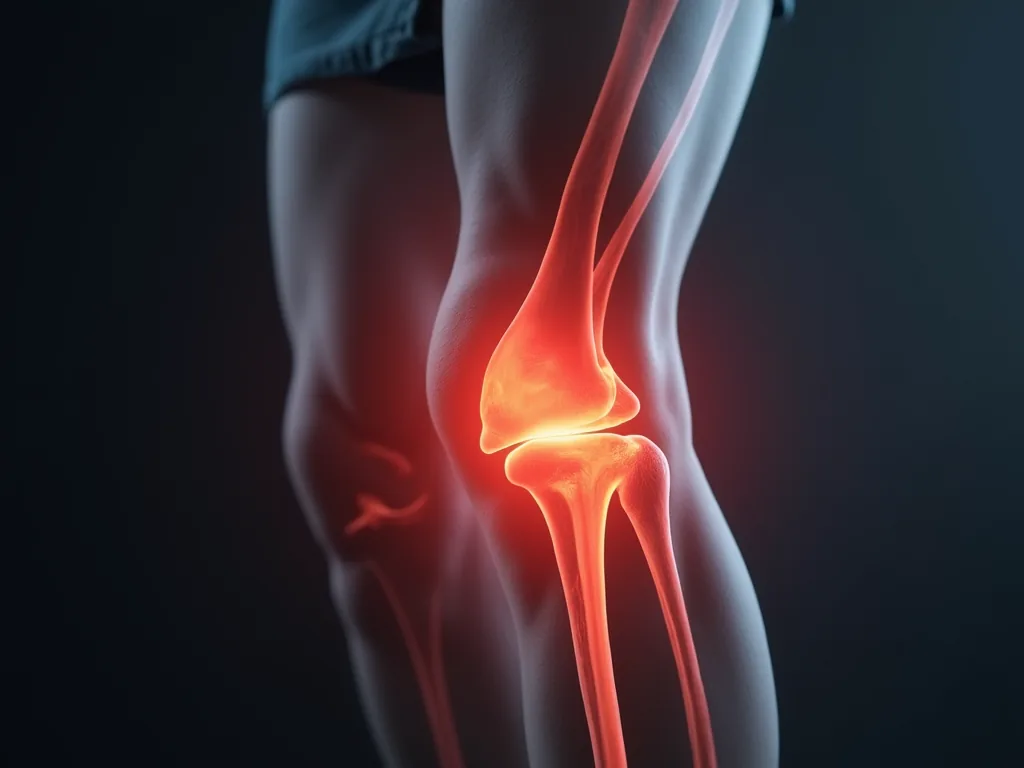
Tendinopathies can affect almost any tendon – but certain regions are frequently in focus:
Achilles tendon
- Function: Connects the calf muscles (triceps surae) to the heel bone.
- Symptoms: Swelling, redness and pain when walking or running.
- Special feature: Frequent overload through long-distance running and jumping loads.
Patellar tendon (jumper's knee)
- Function: Connection of the quadriceps to the front of the shin.
- Symptoms: Pain below the kneecap, especially when squatting or jumping.
- Special feature: Typical in sports requiring explosive movements.
Tennis elbow (a wrist extensor tendon)
- Function: Connects the wrist extensor muscles (e.g. extensor carpi radialis) to the outside of the elbow.
- Symptoms: Pain on pressure on the outer elbow, weakness in the wrist.
- Special feature: Often triggered by repetitive loading, e.g. in tennis.
Shoulder impingement
- Function: The rotator cuff, consisting of several tendons, connects the shoulder blade muscles to the upper arm.
- Symptoms: Pain when lifting the arm, often radiating down to the elbow.
- Special feature: Can develop through overload and degeneration of the tendon tissue.
Pathological remodelling and pain mechanisms
Under intensive loading, the tendon tries to adapt to the mechanical stimuli through an accelerated remodelling process.
More collagen is formed, but it is often of reduced structural quality and can hardly withstand the acting forces.
As a result, the tissue reacts with a palpable thickening and painful swelling.
Diagnostics
The diagnosis of tendinopathy relies primarily on the clinical examination, in which, in addition to the history, palpation in particular reveals typical signs such as pain on pressure or swelling.
Imaging procedures provide additional information about the condition of the tissue: while ultrasound makes acute changes and swelling visible, MRI enables a detailed assessment of the tendon structure and serves for the long-term monitoring of therapy success.
Therapy options
The treatment of tendinopathy is individual and depends on the severity of the complaints and the affected tendon attachment.
Conservative measures
Rest and relief:
- Avoiding activities that cause severe pain.
- Elevation and targeted ice treatment (always with protection, e.g. a towel).
Medication:
- Anti-inflammatory medications (e.g. ibuprofen) for short-term pain relief in acute inflammation.
Physiotherapy measures and exercises
- Eccentric exercises:
- Exercises in which the muscle is loaded while lengthening promote the rebuilding of the tendon without overloading it.
- Isometric exercises:
- Static muscle contractions without joint movement, which can contribute to pain relief.
- Phase-specific load management:
- Phase 1 (pain reduction): Reducing pain in everyday life, avoiding activities that intensify the pain.
- Phase 2 (building mobility and strength): Slowly increasing the load to build mobility and strength.
- Phase 3 (strength training): Targeted training to restore tendon thickness and strength.
- Phase 4 (return to sport/work): Gradual return to sporting or occupational activities under controlled conditions.
- Phase 1 (pain reduction): Reducing pain in everyday life, avoiding activities that intensify the pain.
Surgical procedures
Surgical measures are usually only considered in far advanced courses of the disease, particularly in the case of a tendon rupture or when conservative therapies remain unsuccessful over a long period.
In such cases, minimally invasive procedures are often used, such as ultrasound-guided tissue ablation, to specifically remove damaged parts and stimulate natural healing.
Do you have pain or restricted movement in the area of your tendons?
Don't hesitate – book an appointment at our physiotherapy practice.
At NOVUM2 we offer you a comprehensive, evidence-based treatment approach tailored individually to your needs – from the first examination to your personal training and therapy plan.