

In brief
- A common cause of back pain, often due to age, unfavourable loading or lack of exercise
- Not every case causes complaints – symptoms usually arise from pressure on nerves
- Left untreated, a bulge can develop into a herniated disc
- In most cases, conservative therapy without surgery helps
- Targeted exercise, muscle building and everyday adjustments promote healing and back health
What is a disc bulge?
A disc bulge – also called disc protrusion or "bulging disc" – is a common but often misunderstood condition of the spine.
Protrusions frequently occur in the lumbar and cervical spine and are a common form of disc disease.
The outer fibrous ring of the disc (medically: anulus fibrosus) bulges towards the nerve canal without tearing.
The inner gel core (the nucleus pulposus) remains inside.
This bulge usually develops over the course of life – through age, unfavourable loading or too little exercise.
The lumbar spine is particularly frequently affected.
Causes and risk factors
Various factors promote a protrusion:
- Lack of exercise and insufficient back muscles
- Persistent poor posture or sitting for too long
- High loading from heavy lifting or carrying loads incorrectly
- Excess weight pressing on the discs
- Natural wear with increasing age
Repeated impacts – for example in hard physical work or sport – can also weaken the fibrous ring.
Symptoms: how a protrusion makes itself felt

Not every bulge causes complaints – but if the pressure on surrounding nerves increases, the following symptoms can occur:
- Back pain in the region of the affected vertebrae
- Radiating pain into the legs or arms
- Tingling, numbness or muscle weakness
- Restricted mobility and back complaints during certain activities
- In severe cases: inability to work
Certain movements can worsen the symptoms of a disc bulge.
The difference between a bulge and a herniation
| Term | Description |
|---|---|
| Disc bulge | The outer fibrous ring (anulus fibrosus) bulges towards the nerve canal without tearing. The inner gel core (nucleus pulposus) remains inside. |
| Herniated disc | The fibrous ring tears – gel mass emerges and can press on nerves. Frequently occurs in the lumbar or cervical spine. |
| Why it matters | The bulge is considered a precursor to a herniation and should be taken seriously and treated early. |
Important to know: the bulge is considered a precursor to a herniation. Those who act early and treat it specifically can often prevent a true herniation.
Diagnosis: how a protrusion is identified
For a reliable diagnosis, imaging procedures such as MRI or CT are decisive, in addition to a detailed history.
These allow the orthopaedic specialist to identify the exact location and severity of the bulge.
Important: not every visible protrusion needs treatment – the deciding factor is always the pattern of complaints.
Conservative therapy instead of surgery
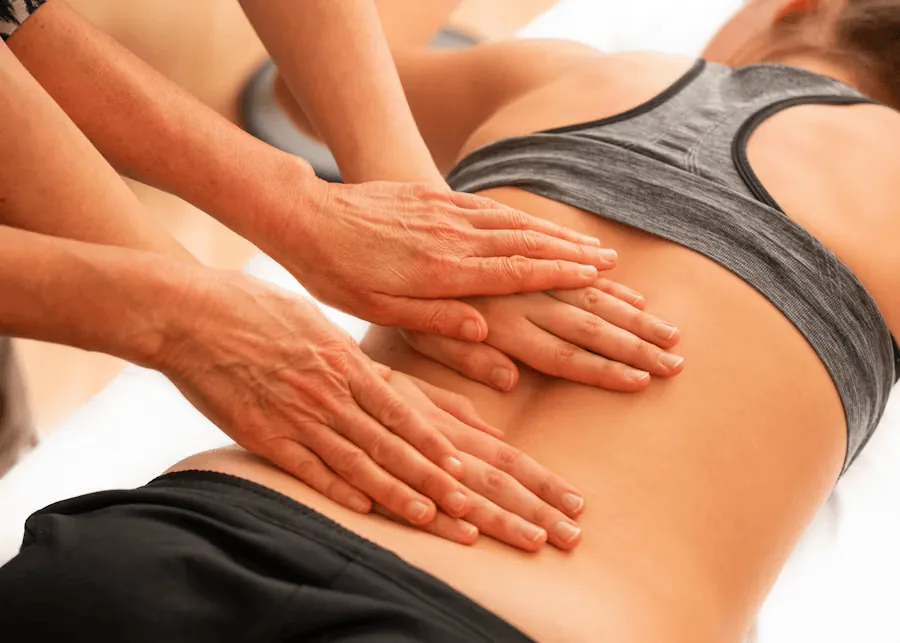
The good news: surgery is rarely necessary for a disc bulge.
In many cases, conservative therapy can offer quick help.
In most cases, conservative therapies that specifically address the causes are effective:
- Physiotherapy for mobilisation and targeted muscle building
- Heat applications to relax tense muscles
- Pain therapy for short-term relief of acute complaints
- Movement training for better posture and to avoid renewed irritation
The long-term goal of treatment is to reduce the load on the affected disc and strengthen the surrounding muscles and ligaments.
Exercises and tips for everyday life

Regular, well-guided exercises are the key to stabilising the spine.
Strong tendons and ligaments are important for coping with loads and minimising the risk of disc bulges.
The rule is: quality before quantity.
Further tips:
- Pay attention to back-friendly lifting and carrying
- Avoid long standing or sitting in a rigid posture
- Use active breaks in everyday life
- Reduce excess weight to lower the pressure on the discs
- Use heat when the muscles are tense.
Typical mistakes in dealing with a bulge
Many patients react to the diagnosis of a disc bulge with uncertainty – and unconsciously do things that slow the healing process or even worsen it:
- Resting for too long: too much rest risks the back muscles weakening and the spine becoming unstable.
- Unauthorised loading: returning to heavy lifting or intensive sports without consulting professionals can lead to a herniated disc.
- Stopping therapy early: many end treatment as soon as the first pain subsides – and let the long-term effect fizzle out.
- No adjustments in everyday life: without ergonomic corrections at work or at home, the load on the discs remains.
Diet & lifestyle for disc problems

What you eat and how you live has a direct influence on your spine:
- Maintain a healthy body weight to lower the pressure on the discs.
- Drink enough – discs consist largely of water.
- Micronutrients such as magnesium, vitamin D and omega-3 fatty acids support regeneration and have an anti-inflammatory effect.
- Exercise regularly but gently on the joints – and reduce stress, because the nervous system also reacts sensitively to overload.
Psychosomatics & back pain
Back pain is not only physical.
Mental tension, constant stress or emotional strain can also affect the back.
Muscle tension, shallow breathing and constant brooding increase tension in the body and intensify the pain.
Mindfulness, stress management and an open conversational culture in therapy help relieve the body as a whole.
What happens with an untreated protrusion?
Without targeted treatment, a disc bulge can become chronic.
The complaints intensify, mobility decreases – and in many cases a true herniated disc develops from it.
The consequences: more severe pain, possibly paralysis, operations or long-term inability to work.
Acting early is therefore decisive.
How does the disc change with age?

Over the course of life, the disc loses elasticity and fluid.
The fibrous ring (anulus fibrosus) becomes more brittle, the gel core (nucleus pulposus) less able to balance pressure.
These changes are normal – but regular exercise, targeted exercises and a healthy lifestyle can slow the wear considerably.
What role do the back muscles play?
The deep muscles along the spine stabilise your posture and relieve the discs.
Without sufficient strength or coordination, the disc takes on too much pressure – which increases the risk of a protrusion or a disc prolapse.
That is why targeted muscle building is a fixed part of any good therapy.
Bulging in the cervical spine: what is different?
A protrusion in the cervical spine often presents differently than in the lumbar region.
Typical symptoms are neck pain, dizziness, pain radiating into the shoulder or arms, and tingling down to the fingers.
Since the cervical spine is more sensitive, particularly careful treatment options and targeted exercises are needed here.
How long am I unable to work with a protrusion?
That depends strongly on the severity of the bulge, your occupation and the general strain.
For office work, often only a few days off are needed – physically demanding jobs require longer breaks and possibly a gradual return to work.
In any case: start therapy early and be considerate of your spine.
Psychological strain from chronic back pain
Those who live with back pain permanently feel it not only in the body.
The mind also suffers: sleep disorders, irritability, exhaustion and even depression are not uncommon.
A good therapy concept for a disc bulge should therefore keep not only the disc but the whole person in view – including coaching, education and mental support.
Modern approaches in physiotherapy for disc problems
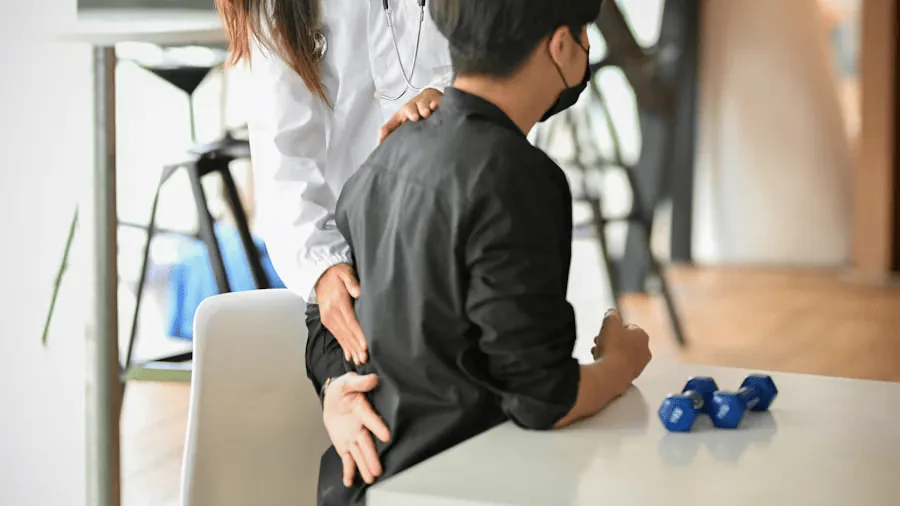
Physiotherapy has evolved – today, modern, evidence-based methods are available:
- Manual therapy to release restrictions
- Neurodynamic techniques that specifically relieve the nervous system
- Medical training, individually adapted
- Biofeedback, which makes posture and loading visible
Prevention and self-help
| Measure | Effect |
|---|---|
| Regular exercise | Strengthens the back muscles and stabilises the spine |
| Healthy diet | Supports a healthy body weight and reduces pressure on the discs |
| Avoiding rigid postures | Reduces one-sided loading and tension |
| Back-friendly behaviour | Prevents acute overload – e.g. when lifting heavy loads |
| Conservative therapy | Physiotherapy and pain therapy ease complaints and promote the long-term stability of the spine |
Do you suspect a disc bulge?
NOVUM2 is there for you – with a team of experienced physiotherapists, state-of-the-art concepts and a whole-person approach.
Book your appointment here – and take the first step towards individual advice.