
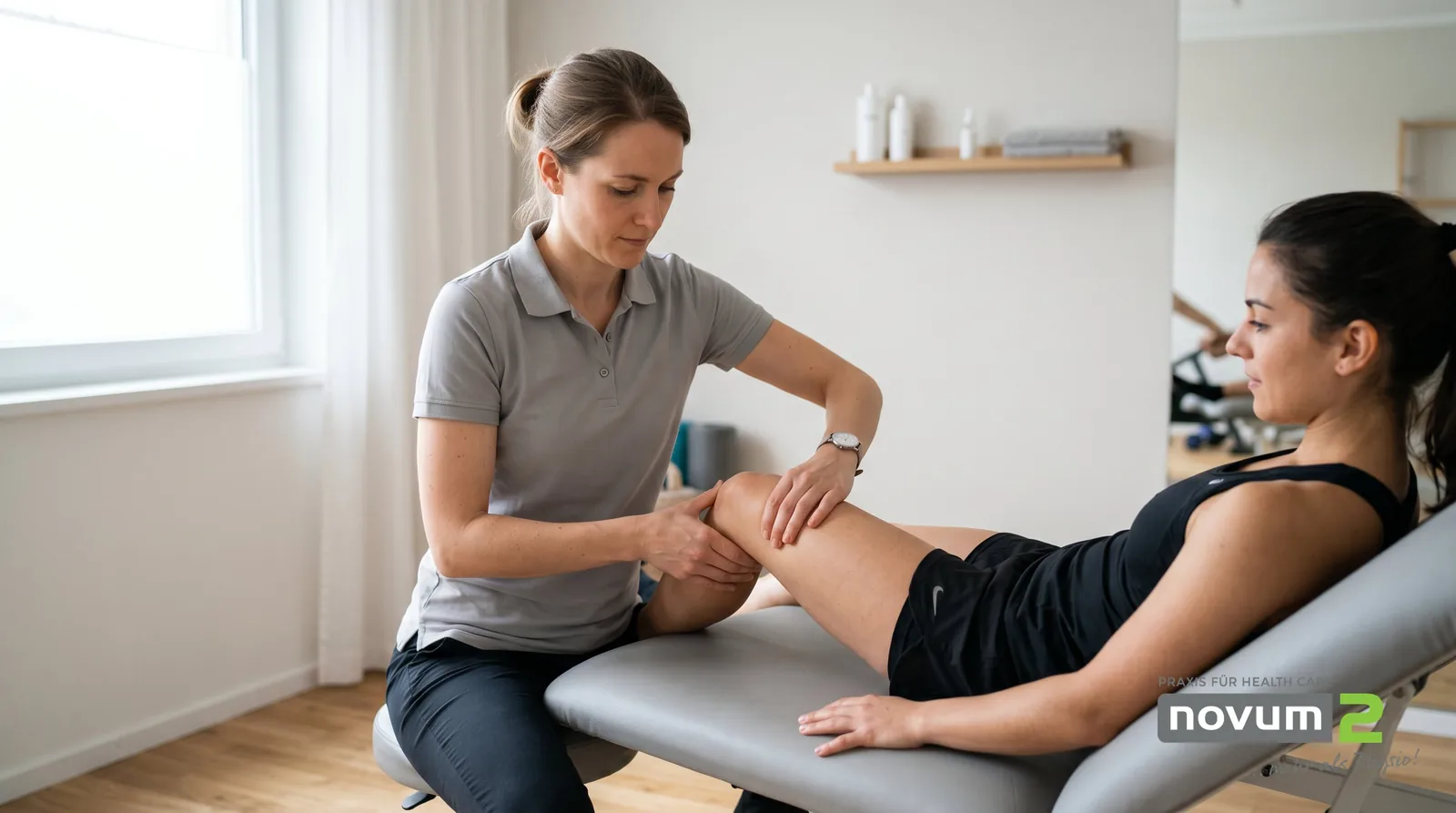
Jumper's knee, medically known as patellar tendinopathy, is one of the most common overuse injuries in sport. Typical is a pulling pain directly below the kneecap that occurs when jumping, running or climbing stairs. At our physiotherapy practice at Ebertplatz in Cologne, we help you identify the cause and gradually become resilient again with a targeted treatment plan.
What is jumper's knee?
Jumper's knee (technical term: insertional tendinopathy of the patellar tendon) develops through overload of the patellar tendon at its attachment at the lower pole of the kneecap. This tendon connects the kneecap to the shin and transfers the force of the thigh muscle (quadriceps) to the leg.
With repeated load peaks, small damage occurs in the tendon tissue, so-called micro-traumas. If the tissue does not heal completely between loads, chronic irritation of the tendon develops. The result is pain that initially only occurs during sporting activity but can gradually worsen.
The terms "jumper's knee" and its German equivalent "Springerknie" describe the same condition and make clear which sports are particularly affected: basketball, volleyball, athletics and all disciplines with a lot of jumping or intensive running.
Symptoms of jumper's knee
The leading symptom is pain on pressure directly below the kneecap at the attachment of the patellar tendon. The complaints often develop gradually over four stages:
- Stage 1: Pain only after sporting activity; performance is still fully intact.
- Stage 2: Pain at the start of activity, improving after warming up but returning after training.
- Stage 3: Pain throughout the activity; performance is noticeably restricted.
- Stage 4: Constant pain even at rest; everyday activities are impaired.
Accompanying signs can include slight swelling in the knee area, morning stiffness and pain when climbing stairs or squatting. Some sufferers report a feeling of weakness in the thigh, particularly under single-leg load.
Self-test: recognising the first signs
A simple indicator test: place your thumb directly below the kneecap at its lower pole. Press firmly on this spot. If you feel a clear, localised pain, this can indicate jumper's knee. This test does not replace a medical or physiotherapy diagnosis but provides a first clue.
Another clue: pain when walking down stairs is often more pronounced than when walking up. Tensing the straightened leg against resistance (the so-called quadriceps test) can also trigger typical complaints.
Causes and risk factors
The root cause of jumper's knee is a discrepancy between the load on and the load capacity of the patellar tendon. The tendon is stressed more than the tissue can regenerate between sessions.
Training-related risk factors include a sudden increase in training volume or intensity, recovery phases that are too short and one-sided loading on hard surfaces. Muscular factors play an equally important role: a weak or shortened quadriceps, muscle imbalances between the front and back of the thigh, and a lack of hip stability considerably increase the risk. Anatomical features such as overpronation of the foot can also increase the load on the patellar tendon.
Sports with a particularly high risk are basketball, volleyball, football, athletics (jumping and sprinting disciplines), cycling with a poor riding position, and skiing.
Treatment: what helps with jumper's knee?
Treatment depends on the stage of the condition. Two principles are central: adapted load management and targeted tendon training.
Load management
Complete rest is usually not the right approach for tendon complaints. The goal is adapted loading: as little as necessary, as much as possible. Pain-provoking activities are reduced without completely immobilising the tendon. As a guideline: pain up to an intensity of 3-4 on a scale of 0-10 is often tolerable during training if it subsides again within 24 hours.
Eccentric training: the core therapy
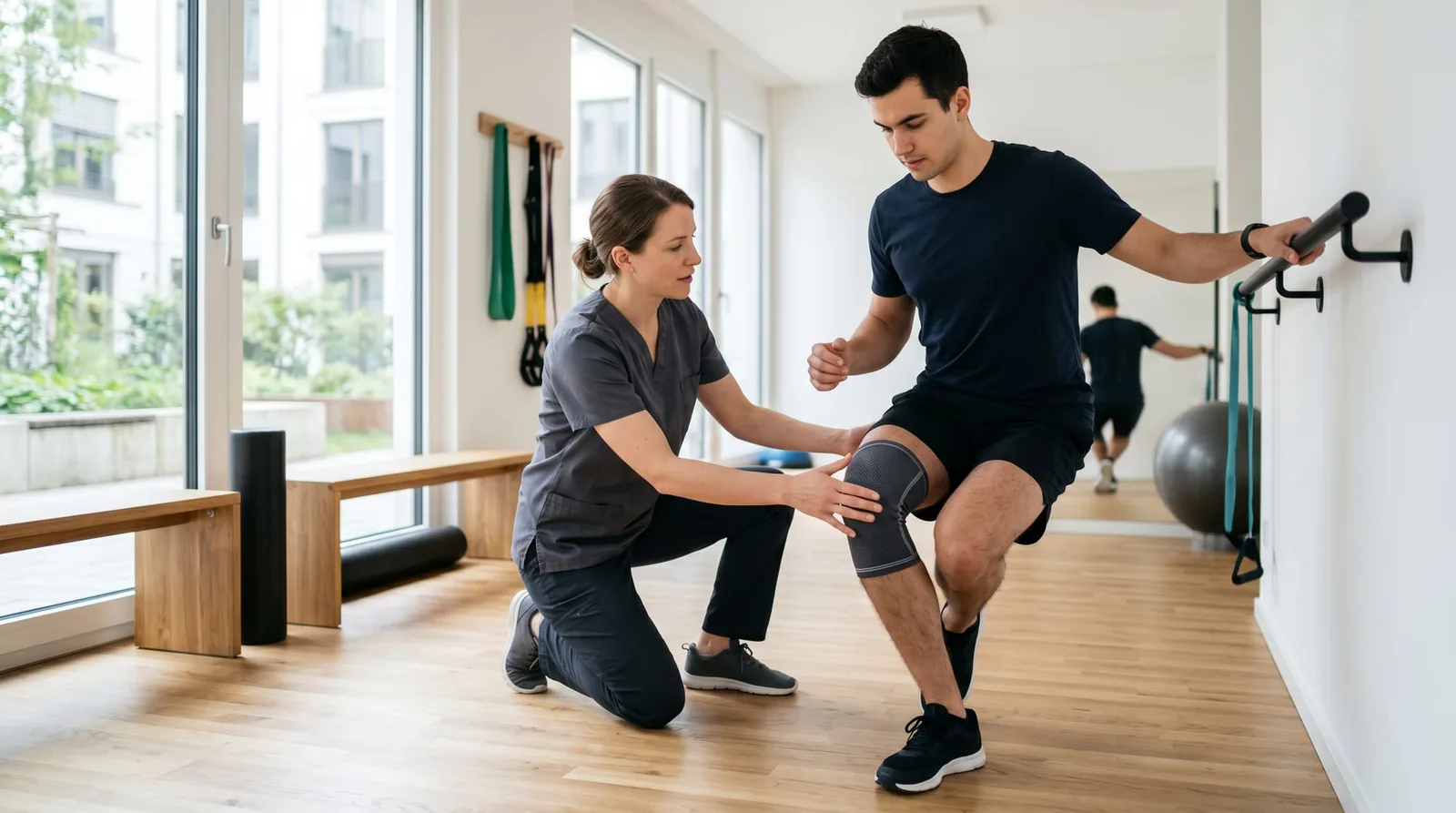
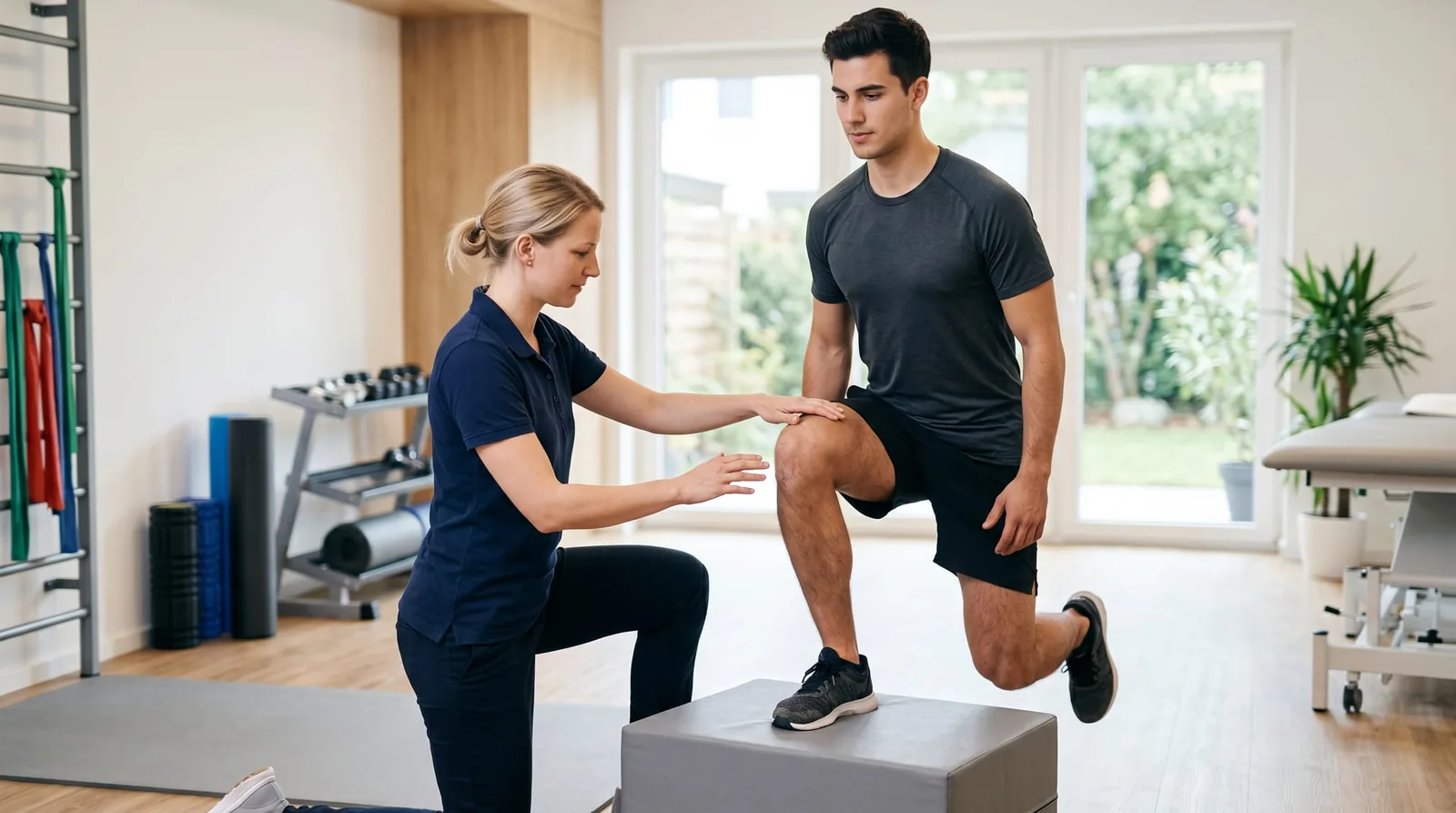
Eccentric training is the best-studied conservative therapy measure for patellar tendon complaints. The tendon is trained primarily in the braking (eccentric) phase of the quadriceps muscle. The classic exercise is the single-leg squat on a slightly inclined board (25-degree decline): lower your body weight slowly on the affected leg (3 seconds) and rise again using both legs (2 seconds). Mild pain within the tolerable range is normal at the start of the programme and no reason to stop.
Further physiotherapy measures
Various additional measures are used. Manual therapy can treat muscles, fasciae and adjacent structures and is frequently used to positively influence mobility and complaints. Ultrasound therapy is used as a complement and is perceived as soothing by some patients. A patellar strap or kinesio tape can ease complaints in the short term. Strengthening exercises for the gluteal muscles and hip abductors reduce the load on the patellar tendon and are an important building block in the rebuilding programme.
Similar load management principles apply to related tendon conditions: read our articles on shin splints and Achilles tendon complaints.
Exercises for jumper's knee
The following exercises can support the healing process. Coordinate the programme with your physiotherapist to adapt it to your current condition.
Isometric knee extension (for the acute phase)
Press the straightened leg against a fixed resistance, for example a wall, with about 70 to 80 percent of maximum force for 30 to 45 seconds. Perform 4 to 5 repetitions. Isometric exercises can temporarily ease acute pain peaks and are particularly suitable for early phases of treatment.
Eccentric squat (main exercise)
Stand on the affected leg, hips slightly bent forwards. Slowly bend the knee to about 60 degrees (3 seconds down). Then rise using both legs (2 seconds). The goal is 3 sets of 15 repetitions, twice daily. If possible, use a slightly inclined board with a 25-degree slope for more effective loading of the patellar tendon.
Quadriceps stretch
Stand on one leg and grasp the ankle of the other leg. Pull the heel towards your buttocks until you feel a stretch in the front of the thigh. Hold for 30 seconds and repeat the stretch 2 to 3 times per side. Keep an upright posture.
Course and return to sport
Healing a patellar tendinopathy takes time. Depending on the severity and duration of complaints, the therapy process can take several weeks to a few months. Early stages (1 and 2) usually respond well to conservative measures. With longer-lasting complaints and higher stages, a more structured, longer-term programme is sensible.
A gradual return-to-sport programme should include the following stages: first pain-free basic training, then sport without competition, finally full sporting load. This build-up helps reduce the risk of relapse. Accompanying changes in the knee joint, such as cracking, can indicate load-related structural changes and should be monitored.
When to see a physiotherapist?
Seek physiotherapy advice if the pain below the kneecap lasts longer than two to three weeks, does not improve despite load reduction, or occurs during rest. An early assessment can help evaluate the stage of the condition and start a suitable therapy programme.
At the NOVUM2 practice at Ebertplatz 2, 50668 Cologne, Kamal Habib and the practice team help athletes with targeted physiotherapy. Book an appointment on +49 221 1693 8485 or by email to info@novum2.de. You can reach us Monday to Friday during our opening hours (Fridays until 4:10 pm).