
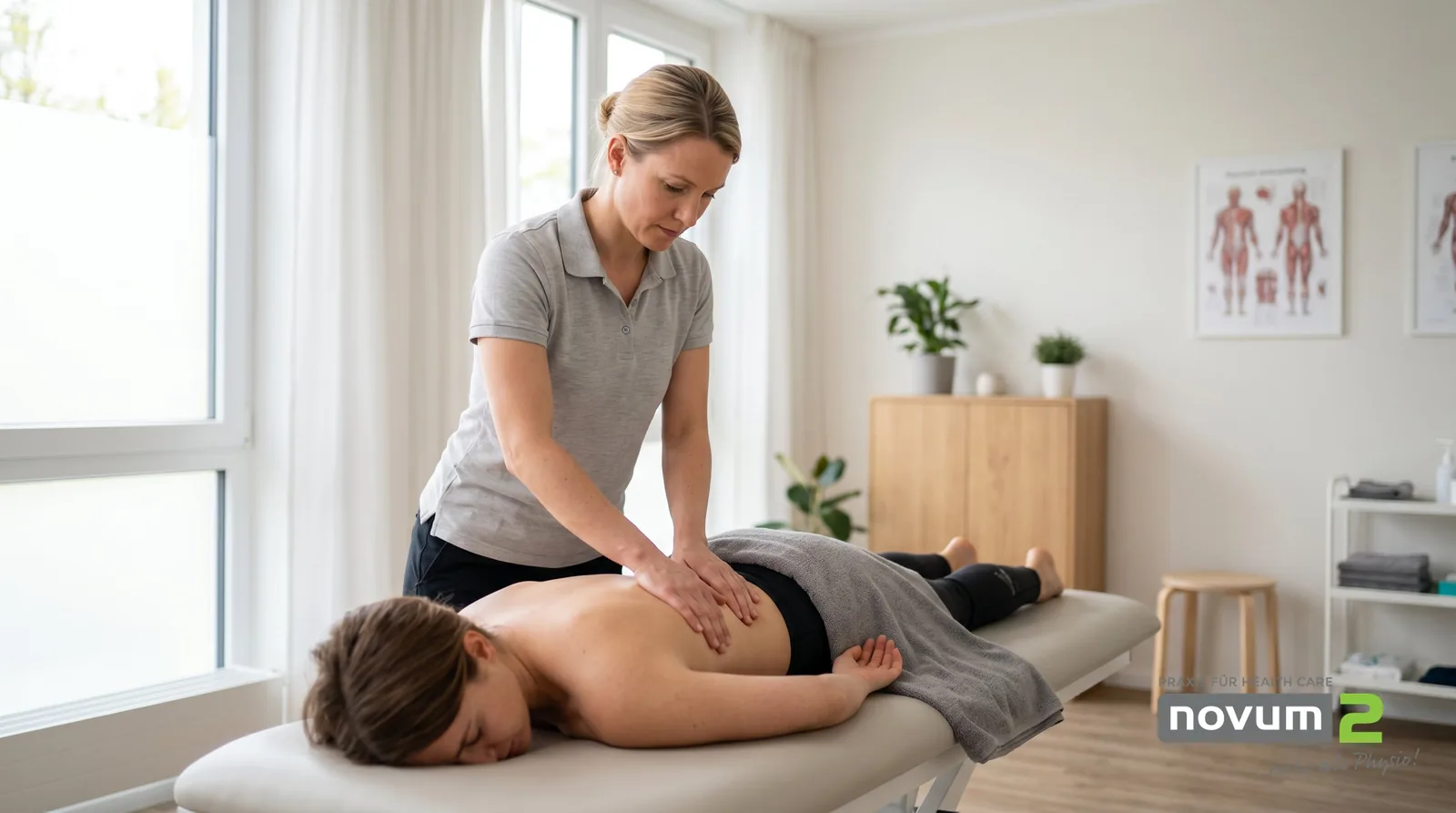
Ever shorter walking distances, pain radiating into the legs, and relief only when bending forwards: these are the typical signs of spinal stenosis. Behind it is a narrowing of the spinal canal that puts nerves under pressure. At our physiotherapy practice at Ebertplatz in Cologne, we support people with spinal stenosis in regaining more mobility in everyday life and addressing the complaints in a targeted way.
What is spinal stenosis?
Spinal stenosis describes a narrowing of the spinal canal. This canal runs through the vertebral bodies and protects the spinal cord and the nerve roots emerging from it. If the canal becomes too narrow, the nerves come under pressure. This causes the typical complaints.
The lumbar spine is most commonly affected. Stenosis develops less frequently in the cervical spine. The condition occurs predominantly in people over 60 and is one of the most common causes of back complaints in older age. You will also find a brief overview of the most important basic terms in our lexicon entry on spinal stenosis.
Symptoms of spinal stenosis
The leading symptom is so-called spinal claudication (also neurogenic claudication). It follows a typical pattern: those affected can initially only walk short distances before pain, tingling or a feeling of weakness in the legs forces them to stop. After a short break in a slightly bent-forward position, the complaints subside and walking can continue.
Typical symptoms of spinal stenosis are:
- Pain in the lower back radiating into the buttocks and legs
- Tingling or numbness in the legs and feet
- A feeling of weakness or heaviness in the legs
- Shortened walking distance due to spinal claudication
- Improvement when sitting, bending forwards or cycling
An important distinguishing feature: in contrast to typical sciatic pain, the complaints of spinal stenosis usually improve when bending forwards. Many of those affected report that they can cover considerably longer distances when pushing a shopping trolley or cycling than when walking upright.
With acute or rapidly increasing complaints, always seek medical advice first before starting an exercise programme.
Causes and risk factors
In most cases, the narrowing results from age-related wear of the spine. The following changes play a role:
- Disc bulges or herniated discs protruding into the spinal canal
- Osteoarthritis of the small vertebral joints (facet joints)
- Bony outgrowths on the vertebral bodies (spondylophytes or osteophytes)
- Thickening of the ligamentum flavum (a stabilising ligament in the spinal canal)
Rarely, the stenosis is congenital. In that case, the spinal canal is narrower than normal from birth, and even small wear-related changes can lead to complaints early on. You can read more about the role of the disc in back problems in our article on disc bulges.
Conservative treatment: what physiotherapy can achieve
For many of those affected, a conservative treatment approach is the first and most important step. Physiotherapy offers concrete approaches: strengthening the trunk muscles, improving mobility and reducing the load on the narrowed spinal canal. The goal is to make the complaints more manageable in everyday life.
At our practice at Ebertplatz in Cologne, we use the following forms of therapy:
- Manual therapy: Targeted mobilisation of the affected spinal segments to improve mobility
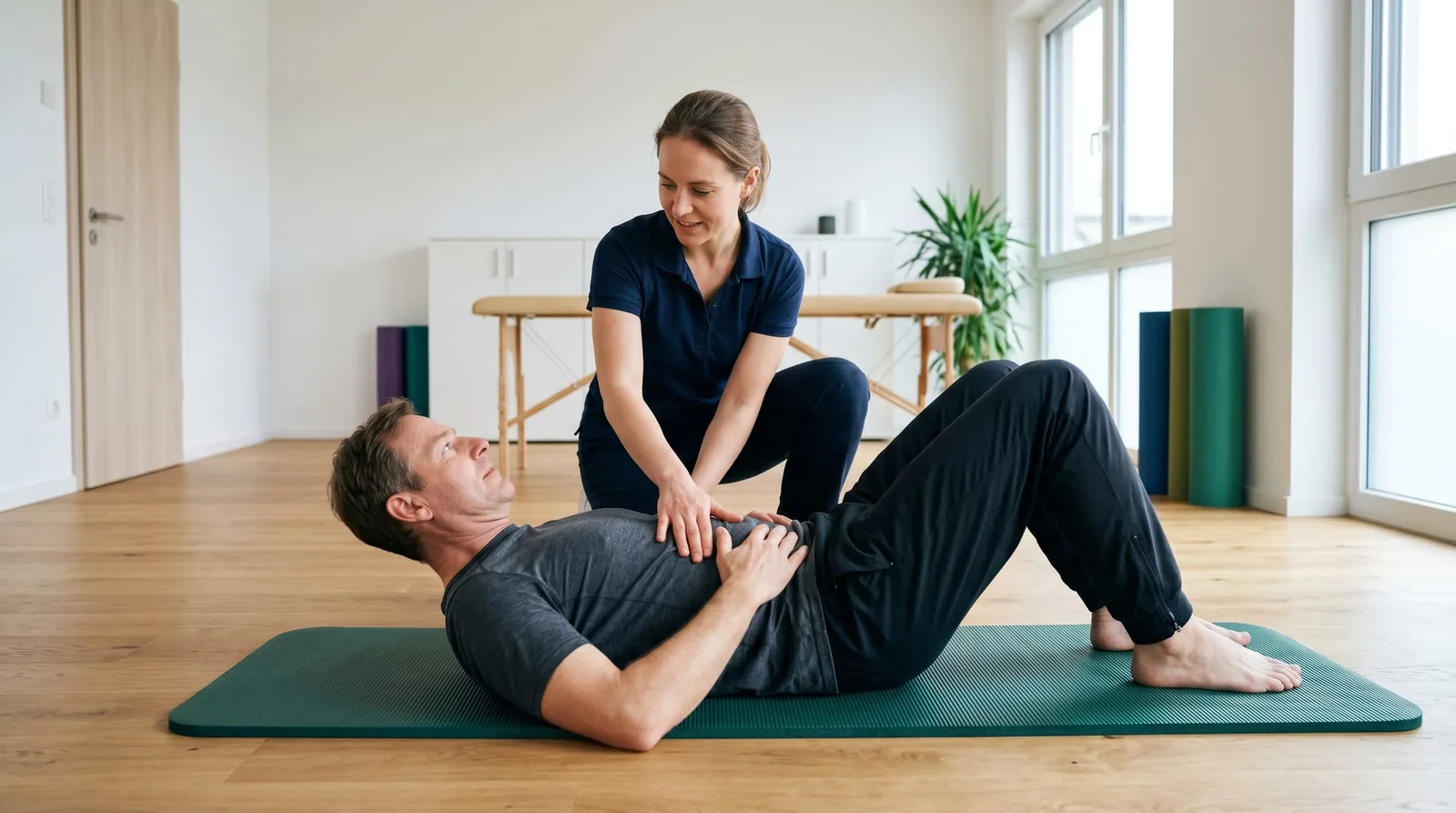
- Training therapy: Strengthening the deep trunk muscles and stabilising the spine
- Heat therapy: For muscle relaxation and improved circulation
- Electrotherapy: As support in acute pain states
Every treatment is tailored individually to your complaints and findings. Your physiotherapist discusses with you which approach fits your situation.
Exercises for spinal stenosis: why flexion helps
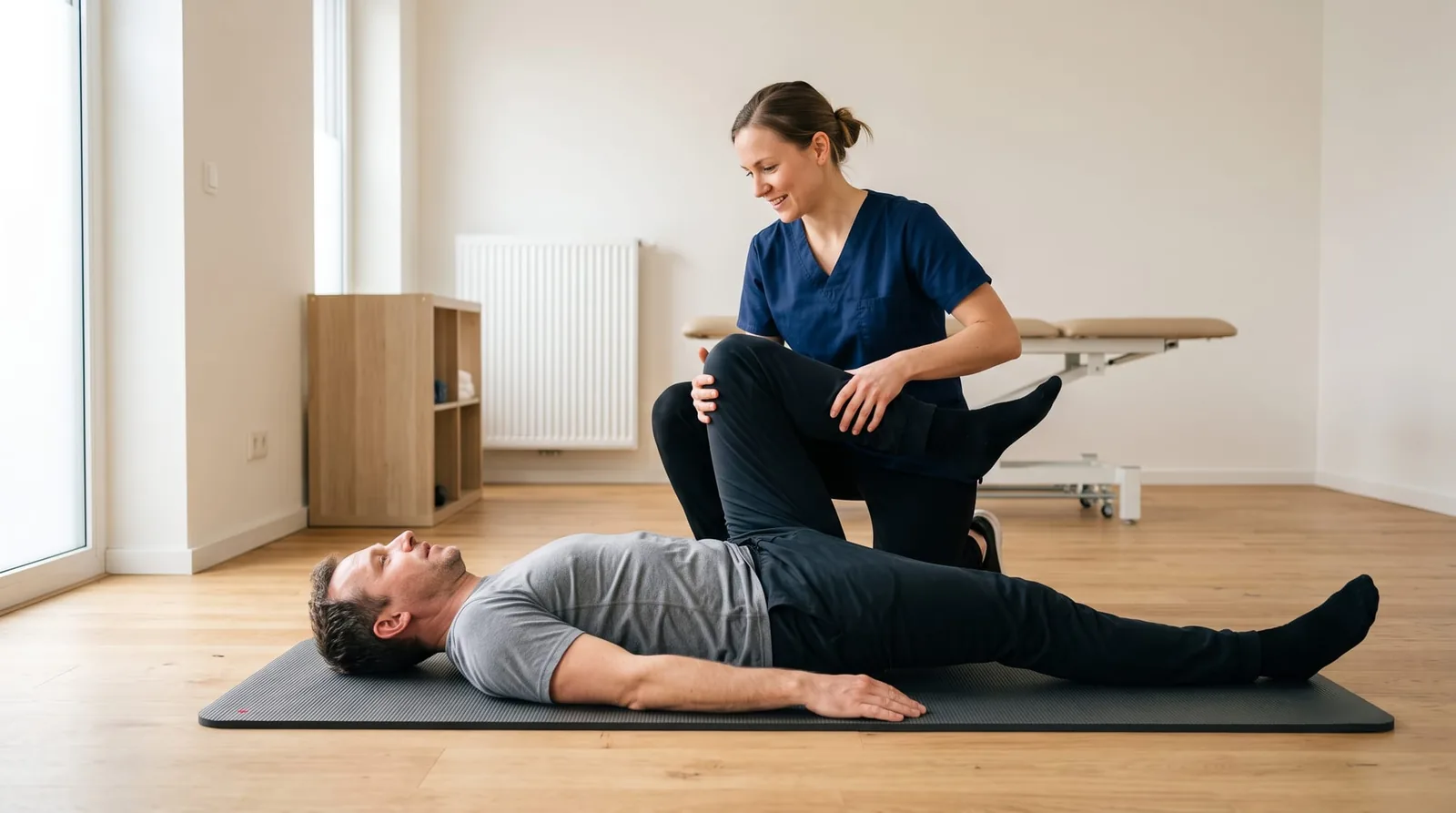
A central therapy principle for spinal stenosis is flexion of the spine. Bending forwards can slightly widen the spinal canal and thus relieve the nerve roots. That is why forms of movement that bring the spine into flexion are well tolerated by many of those affected.
Proven forms of movement and exercises for spinal stenosis are:
- Knee-to-chest exercise lying down: Lying on your back, gently pull both knees to your chest and hold for 20 to 30 seconds
- Cycling: The slightly forward-leaning upper body relieves the spinal canal and is well tolerated by many of those affected
- Aqua gymnastics: Movement in water is gentle on the joints and enables exercises in a relieving position
- Walking exercises with planned breaks: Breaks in a slightly bent-forward position help increase the walking distance step by step
Please discuss any exercise programme with your physiotherapist beforehand. What suits you individually depends on your personal findings and your physical starting point. You will find further ideas for training at home in our article on back training at home.
When is surgery necessary for spinal stenosis?
Most of those affected can be treated well with conservative measures. Surgery for spinal stenosis is usually only considered when:
- Neurological deficits such as paralysis or persistent sensory disturbances occur
- Bladder or bowel dysfunction is present (this counts as an emergency indication)
- Conservative therapy shows insufficient effect over several months
- The walking distance remains severely restricted despite treatment and quality of life is considerably impaired
The most common surgical procedure is decompression: bony tissue or thickened ligament material is removed to widen the spinal canal. In some cases, a stabilisation (spondylodesis) is also performed. Whether and when surgery makes sense is decided by a specialist together with you, based on your findings and complaints.
Talk to us about your complaints: how to reach us in Cologne
If you have complaints suggesting spinal stenosis, we are happy to help. We take time for your concerns and develop an individual treatment plan together with you.
You can reach us on +49 221 1693 8485 or by email at info@novum2.de. Our practice at Ebertplatz 2 in 50668 Cologne is open Monday to Friday (Fridays until 4:10 pm).
You will find further information on related back topics in our articles on herniated discs and lumbago.