
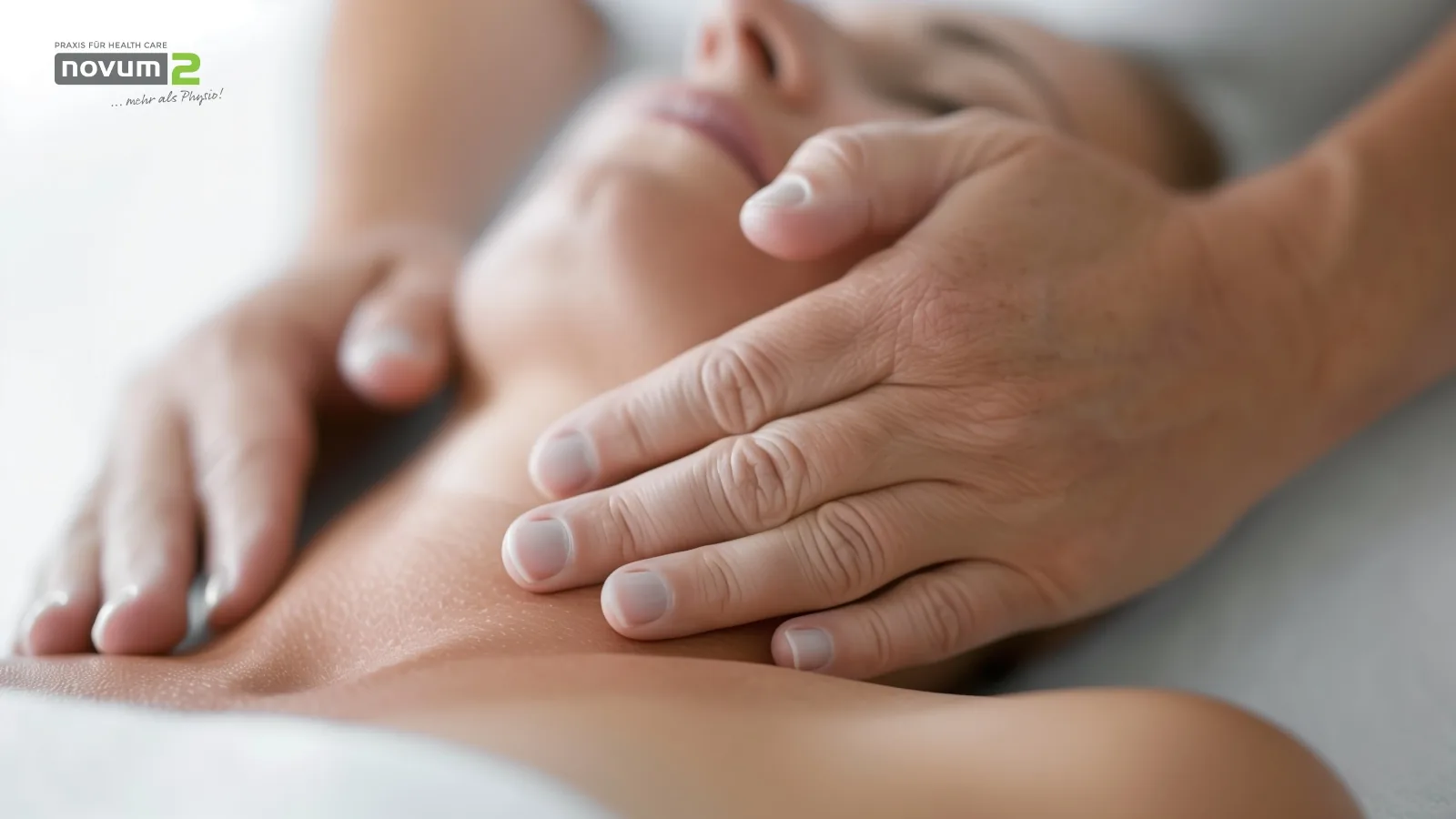
In brief
- Specialised form of physiotherapy.
- Treats joint and muscle dysfunction.
- Pain relief and improved movement.
- Therapy duration: 20 minutes per session; 40 minutes (double session) possible.
- Prescribed by a doctor and covered by health insurers.
What is manual therapy?
Manual therapy is a specialised form of physiotherapy that focuses on examining and treating functional disorders of joints, muscles and nerves.
Using specific hand techniques, movement disorders are identified and treated to reduce pain and restore normal function.
Originally derived from manual medicine and chirotherapy, manual therapy has established itself as a scientifically grounded treatment method.
Manual medicine is a special form of treatment that may only be applied by professionals such as physicians or chiropractors.
The goals of manual therapy are:
- Pain relief: Painful points are treated with targeted techniques.
- Restoring mobility: Restricted joints are mobilised.
- Improving function: Poor posture and dysfunction are corrected.
Fields of application of manual therapy
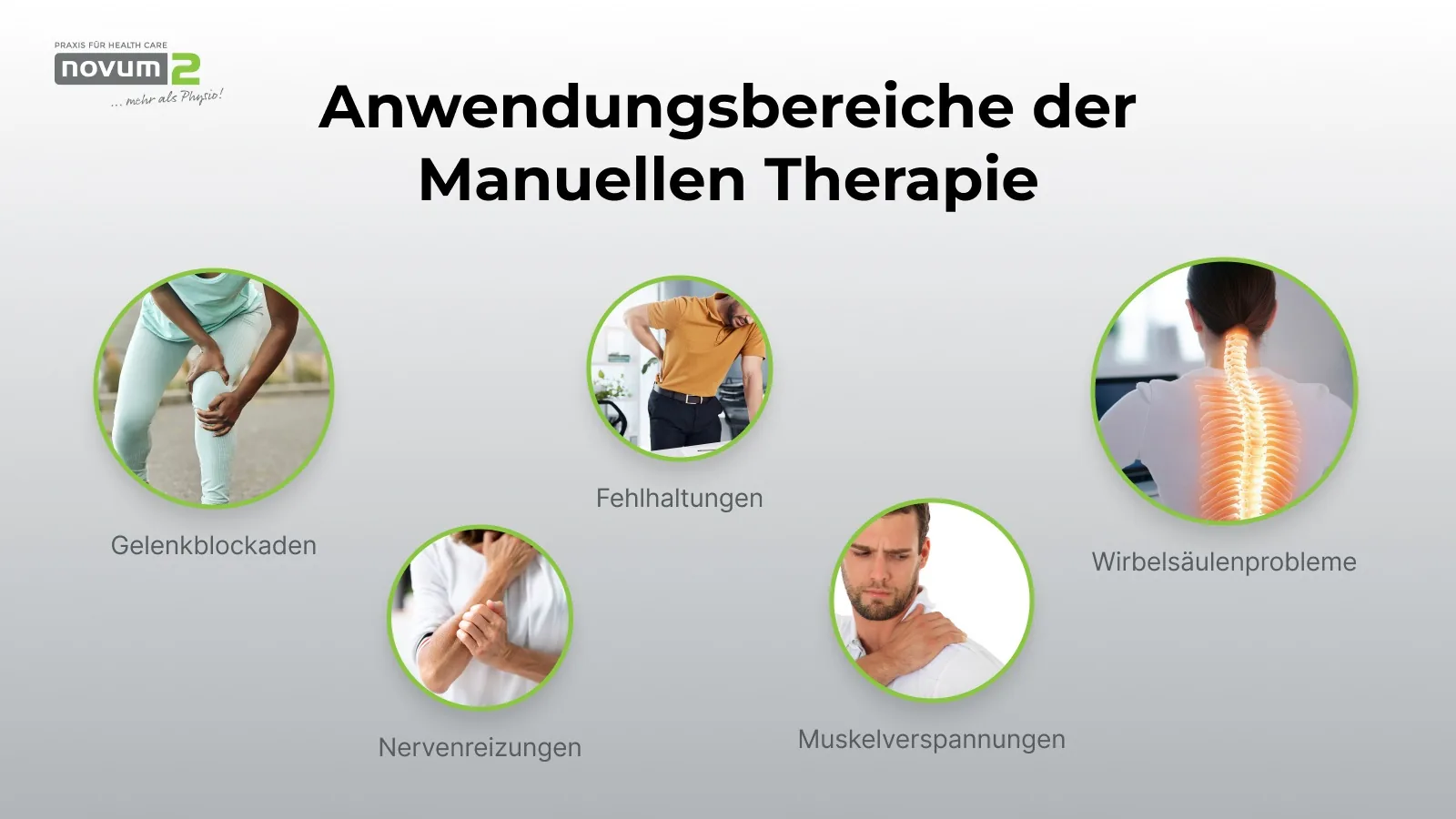
Manual therapy is suitable for a wide range of complaints and functional disorders of the musculoskeletal system:
- Joint restrictions: Limited mobility of joints such as the knee, hip or shoulder. Special techniques to improve the roll-glide behaviour of joints are used to ease pain and treat dysfunction.
- Muscle tension: Chronic tension leading to pain and restricted movement.
- Nerve irritation: Complaints such as tingling or numbness caused by trapped nerves.
- Spinal problems: Pain and restricted movement in the region of the spine.
- Poor posture: Correction of postural errors that can lead to problems in the long term.
When is manual therapy sensible?
Manual therapy makes sense when you suffer from acute or chronic complaints that restrict your mobility or cause pain.
It helps not only with treatment but also with preventing future problems.
When is manual therapy not suitable?
Manual therapy is not suitable for all patients.
Particularly with acute injuries, inflammation, malignant tumours, bone diseases, severe vascular disorders or after operations, this form of treatment should be avoided.
Thorough diagnostics before starting therapy are essential to ensure that manual therapy is suitable for the individual patient.
Your therapist will conduct a comprehensive history and examination to rule out possible contraindications and ensure the best possible treatment for you.
What happens during manual therapy?
Manual therapy uses various techniques, all aimed at restoring the normal function of joints, muscles and nerves.
Manual therapy techniques are applied by specialised physiotherapists and focus on manually influencing joints, muscles and nerves to ease pain and improve mobility.
Overview of techniques in manual therapy
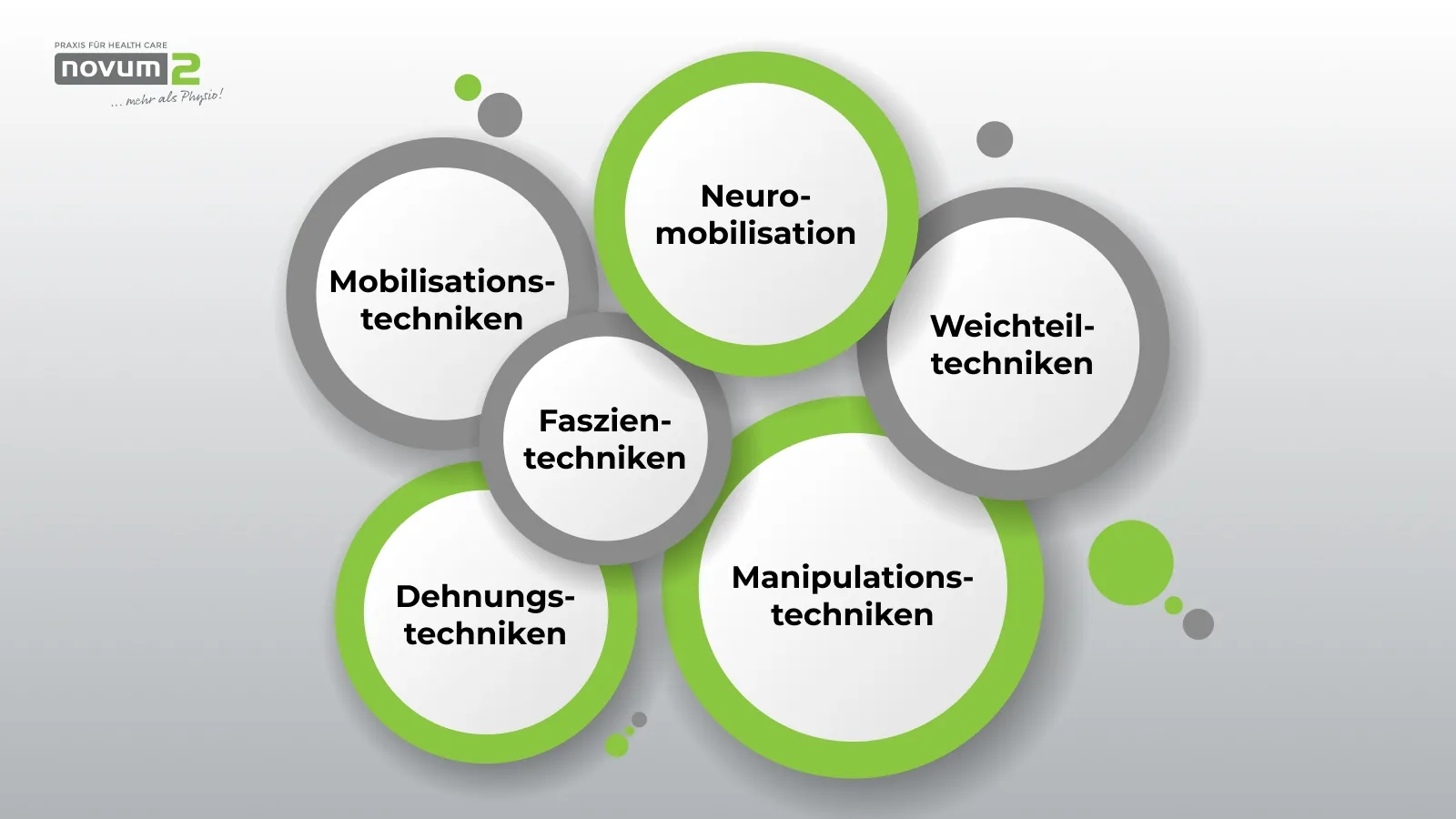
| Technique | Description | Field of application |
|---|---|---|
| Mobilisation techniques | Gentle, rhythmic movements to improve joint mobility | Restricted joint mobility |
| Manipulation techniques | Fast, targeted movements to release joint restrictions | Acute joint restrictions, particularly of the spine |
| Soft-tissue techniques | Treatment of muscles, tendons and fasciae to release tension | Muscle tension, connective-tissue adhesions |
| Stretching techniques | Lengthening shortened muscles and tendons | Muscle shortening, restricted flexibility |
| Neuromobilisation | Improving nerve mobility and function | Nerve irritation, tingling, numbness |
| Fascial techniques | Influencing the connective tissue to promote mobility and freedom from pain | Chronic pain, fascial adhesions |
Differences between manual therapy and physiotherapy
While physiotherapy offers a broad spectrum of treatments for various physical complaints, manual therapy is a specialised form that deals specifically with functional disorders of the musculoskeletal system.
- Specialisation: Manual therapy requires additional training and qualification.
- Techniques: Use of specific hand techniques that are not applied in general physiotherapy. Various procedures such as traction treatment and manual therapy are used to improve mobility and ease pain.
- Objective: Focus on restoring the normal function of joints and tissues.
The combination of physiotherapy and manual therapy enables a comprehensive treatment approach tailored individually to your needs.
Is manual therapy painful?
In principle, the treatment should not be painful.
However, certain techniques can be briefly uncomfortable, especially when sensitive or inflamed structures are treated.
Your manual therapist will always make sure the treatment is tolerable for you and adjust the intensity accordingly.
After-effects and healing process
It is possible that you may feel mild muscle-ache-like symptoms after treatment.
This is a normal sign that the body is responding to the therapy.
As a rule, these sensations subside within 24 to 48 hours.
Who may perform manual therapy?
Manual therapy may only be performed by specially trained physiotherapists who have acquired an additional qualification as a manual therapist.
This training comprises several hundred hours of theoretical and practical instruction as well as examinations.
- Physiotherapists: With appropriate additional training in manual therapy.
- Physicians with additional qualifications: Some doctors have training in manual medicine or chirotherapy.
- Quality assurance: Make sure your therapist is certified and attends regular further training.
Prescription and billing
Manual therapy can be prescribed by a doctor on prescription.
The costs are usually covered by health insurers, provided there is a medical need.
How manual therapy works at NOVUM2
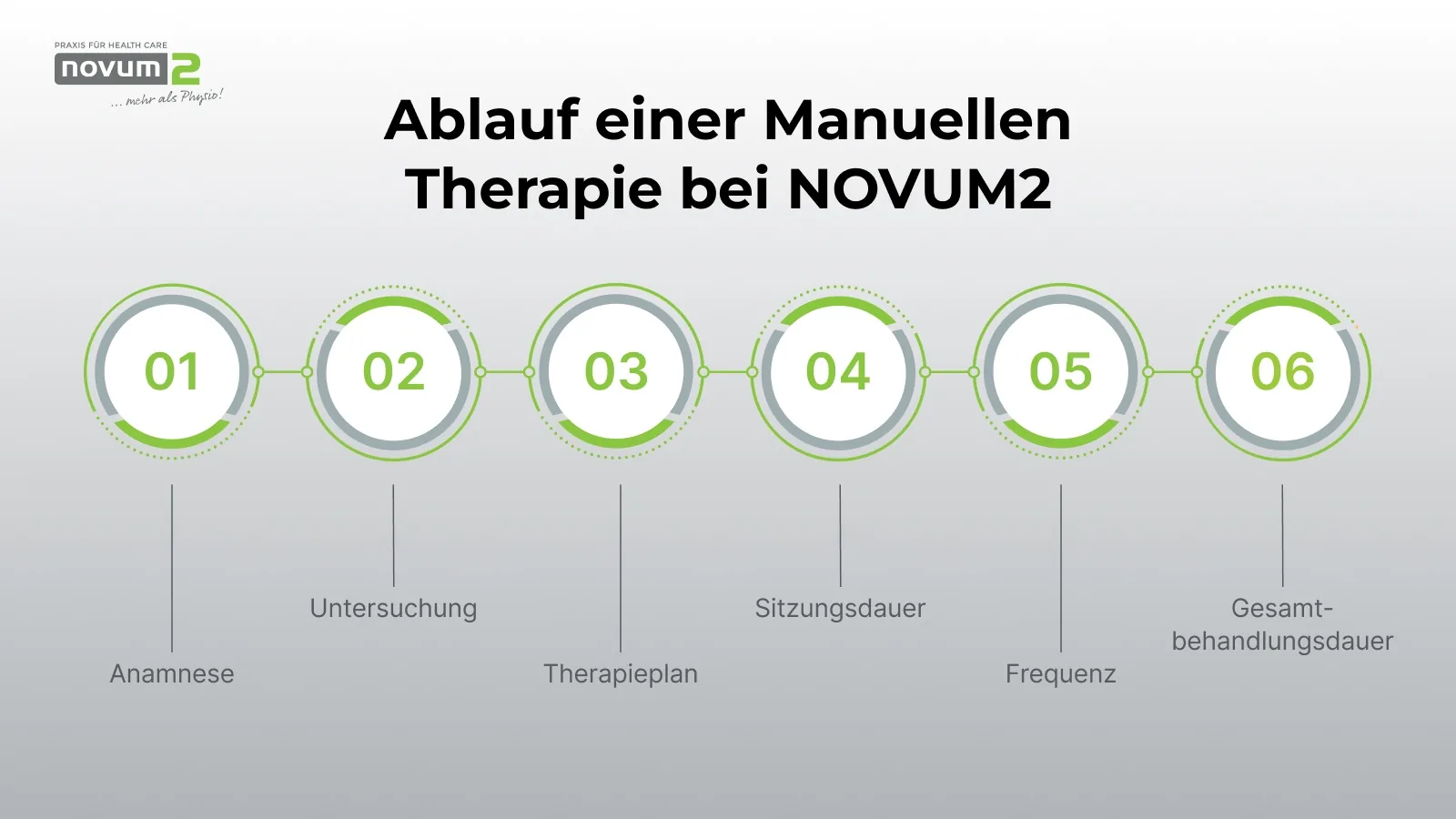
At NOVUM2 Physiotherapy in Cologne, we attach great importance to individual care.
Initial examination and therapy planning
- History: We discuss your complaints and medical history.
- Examination: Analysis of posture, mobility and pain points.
- Therapy plan: Creation of a tailor-made treatment plan.
Duration and frequency of therapy sessions
- Session duration: A therapy session usually lasts 20 minutes; 40 minutes (double session) are possible.
- Frequency: Depending on your complaints, we plan one to two sessions per week.
- Total treatment duration: The number of sessions varies according to the individual situation.
Exercises for home
To support the success of therapy, you receive specific exercises for home.
These help improve mobility and reduce pain in the long term.
When is manual therapy prescribed?
Manual therapy is prescribed by the doctor and depends on the diagnosis.
Indications
- Orthopaedic complaints: Osteoarthritis, herniated discs, joint restrictions.
- Neurological problems: Carpal tunnel syndrome, sciatica.
- Post-operative conditions: After joint operations or fractures.
Benefits of manual therapy

Manual therapy offers numerous benefits for your health:
- Comprehensive improvement: Treating causes rather than just symptoms.
- Pain relief: Effective reduction of acute and chronic pain.
- Improved mobility: Restoration of the normal range of movement.
- Prevention: Avoiding future complaints by correcting poor posture.
- Individual care: Tailor-made therapy plans for every patient.
Contact us
If you have further questions or would like to book an appointment, we at NOVUM2 Physiotherapy in Cologne are happy to help.
Our goal is to help you improve your health and quality of life.