
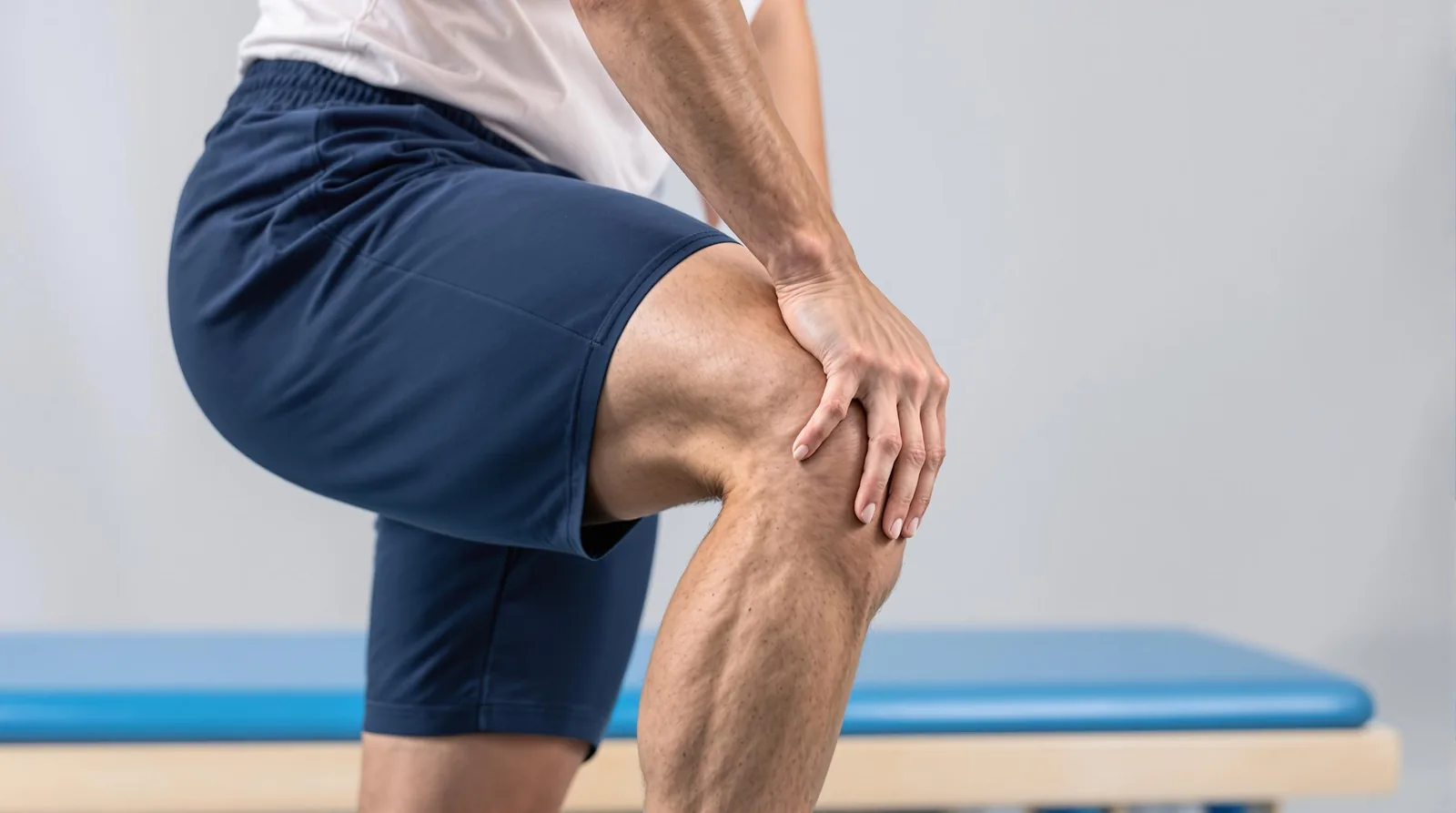
Knee cracking in brief
- Causes: gas bubble formation, shifting tendons and ligaments, cartilage wear, malalignment, overload.
- Symptoms: noises when bending or straightening, accompanying pain, swelling, restricted movement.
- Treatment: physiotherapy, strengthening and stretching exercises, stability training, anti-inflammatory measures.
- Prevention: joint-friendly exercise, avoiding unfavourable loading, balanced training, the right shoes.
- Complications: osteoarthritis, cartilage damage, meniscus injuries or chronic instability if left untreated.
What is knee cracking?
Knee cracking is a widespread phenomenon that many people notice during everyday movements. It frequently occurs when bending, straightening or rotating the knee.
While in most cases there is no serious condition behind it, the noise can sometimes indicate structural problems or overload.
The noises arise through different mechanisms: gas bubbles bursting in the joint fluid, tendons or ligaments gliding over bony prominences, or bony and cartilaginous changes in the joint.
Most people experience occasional cracking, but if it is accompanied by pain or swelling, it can be a sign of a problem requiring treatment.
Definition and explanation
Cracking noises in the knee are common and in many cases harmless.
However, they can also be caused by diseases or unfavourable loading.
Depending on the underlying cause, the intensity, frequency and accompanying symptoms differ.
Fundamentally, the cracking can be attributed to the following causes:
- Physiological causes: Uneven pressure conditions in the joint fluid lead to the formation and bursting of gas bubbles, which causes the familiar cracking.
- Mechanical causes: Tendons or ligaments snap over bony prominences, particularly during certain movements or after prolonged inactivity.
- Pathological causes: Signs of wear, cartilage damage or meniscus problems can intensify the cracking and be accompanied by pain.
Causes and risk factors
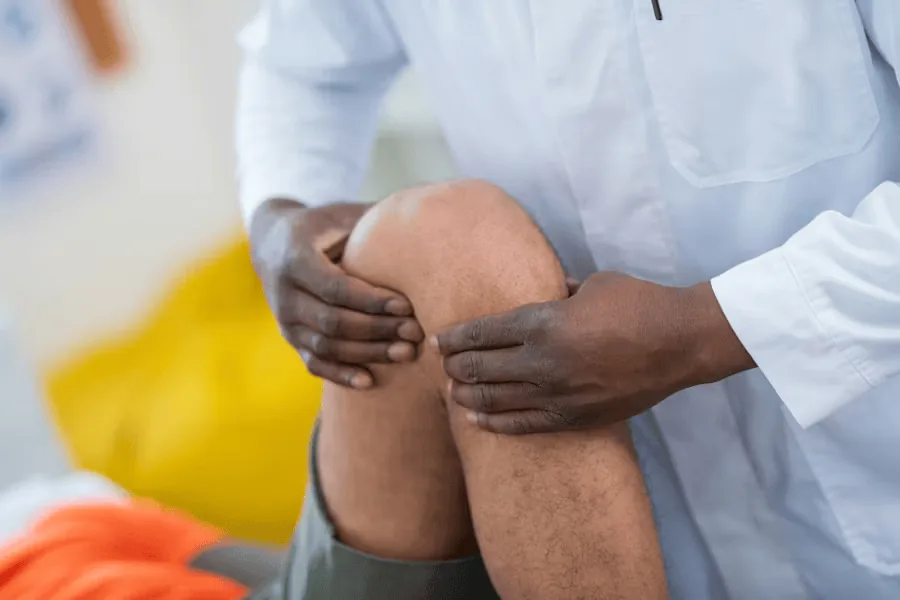
Knee cracking can be caused by various factors.
The most common triggers are:
1. Gas bubbles in the joint fluid
The joint fluid contains gases such as nitrogen or carbon dioxide.
These can form small bubbles that burst when the knee moves, causing an audible crack.
This is completely harmless.
2. Shifting tendons and ligaments
When bending or straightening, tendons or ligaments can glide over bony prominences and cause noises.
This frequently occurs after longer rest periods or with muscular imbalances.
3. Cartilage wear and osteoarthritis
With increasing age or excessive loading, the joint cartilage wears down.
As a result, the bones rub against each other more strongly, which can lead to cracking or grinding noises.
Accompanying symptoms are often stiffness or pain.
4. Meniscus problems
Meniscus tears or degenerative changes can cause small pieces of tissue to become trapped in the joint.
This can lead to sudden cracking and pain, particularly during twisting movements.
5. Kneecap malalignment (patellofemoral pain syndrome)
If the kneecap does not run optimally in its groove, friction and cracking noises can occur.
This frequently affects athletes or people with muscular imbalances.
6. Overload from sport or poor posture
Intensive training, frequent knee loading or incorrect movement patterns can stress the knee joint and lead to cracking noises.
This occurs especially in jumping sports or with incorrect running technique.
The role of diet in knee health
Diet plays a decisive role in the health of the knee joint, as it supplies the body with important nutrients needed to maintain cartilage, reduce inflammation and support general joint health.
Certain foods can help strengthen the knee joint and ease the symptoms of cracking or pain.
The influence of age on knee cracking
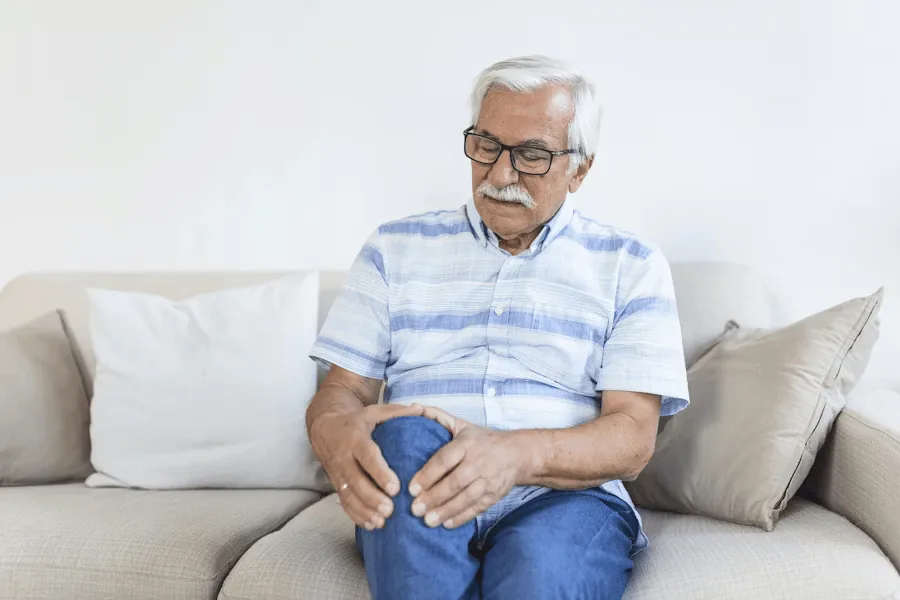
With increasing age the body changes, and the knee joint is not spared.
Knee cracking can be intensified by the natural ageing process, above all through cartilage wear and a decrease in joint fluid.
- Cartilage wear and osteoarthritis
Over the years, the cartilage in the knee joint can become thinner and wear down, which is called osteoarthritis. This wear leads to increased rubbing of the bones against each other, frequently causing cracking, grinding and pain. - Joint fluid and lubrication
With age, the production of joint fluid, which serves as a lubricant for the joint, also decreases. Less joint fluid means that movements are less smooth, and noises such as cracking or grinding become more likely. - Muscle loss and instability
In old age, the muscles that stabilise the knee can lose strength. Weaker thigh muscles can put additional strain on the knee joint, which can lead to unfavourable loading and increased cracking.
Symptoms and warning signs
Occasional knee cracking is usually harmless.
However, if the following symptoms also occur, this can indicate a bigger problem:
- Pain during movement or at rest
- Swelling or redness in the knee area
- A feeling of instability or locking
- Restricted mobility or stiffness
With persistent complaints or deterioration, a professional diagnosis should be sought.
Diagnostics
A thorough examination by a physiotherapist or doctor helps determine the cause of the knee cracking.
Possible diagnostic procedures are:
- Physical examination: Checking mobility, stability and pain points.
- Imaging: X-rays, ultrasound or MRI can reveal structural changes.
- Movement analysis: Examining the running or walking movement to identify unfavourable loading.
Treatment options
Treatment depends on the cause of the cracking.
In most cases, a combination of physiotherapy, targeted training and load adjustment helps.
Prevention and long-term measures
- Regular training to strengthen the leg muscles.
- Joint-friendly exercise such as controlled squats or mobility exercises.
- Suitable footwear with good cushioning.
- Dynamic sitting and movement breaks to avoid stiffness.
When professional help is needed
If the cracking is regularly accompanied by pain, swelling or instability, professional assessment is advised.
A physiotherapist or orthopaedist can plan individual therapy and prevent long-term damage.
Suffering from knee cracking?
Book an appointment here at our physiotherapy practice in Cologne and let our experts advise you on knee cracking, its causes and treatment options.