
In brief
- Natural shock absorbers: Bursae protect our joints from friction. When inflamed (bursitis), these small sacs swell painfully.
- Typical warning signs: Watch for swelling, redness, warmth and pronounced pain on pressure, often at the shoulder, elbow, hip or knee.
- Recognising causes: Usually mechanical overload is behind it, but bacterial infections or underlying diseases such as rheumatism can also be triggers.
- Acute phase: Short-term relief following the RICE rule (rest, ice, compression, elevation) can calm the acute phase – according to newer international recommendations: use ice only briefly for pain relief, then start dosed movement early.
- Physiotherapy as the basis: Targeted exercises for posture correction and strengthening relieve the affected areas in the long term and prevent chronic courses.
What is bursitis?
Bursitis is a painful condition that can restrict mobility and considerably impair everyday life.
To understand what exactly happens in bursitis, it is important to know the function and significance of the bursae in our body.
The role of the bursae in the body
Bursae are small, fluid-filled sacs of connective tissue that act as natural cushions in our musculoskeletal system.
They are located at strategically important sites in the body, often near joints, where they lie between bones, tendons and muscles.
Their main task is to reduce friction and distribute pressure to enable smooth, pain-free movement.
How bursitis develops
In bursitis, one or more bursae become inflamed.
As a result, more fluid than normal collects in the bursa, leading to swelling that doctors call an effusion.
Inflammation of the bursa can occur at various parts of the body such as the heel, shoulder, hip joint and foot, and can have various causes:
- Overload or repeated strain
- Injuries or trauma
- Bacterial infections
- Systemic diseases such as rheumatism or gout
Frequency and those affected
Bursitis is not rare.
At the knees and elbows alone, the bursae become inflamed in at least one in 10,000 people per year.
Interestingly, middle-aged men are more frequently affected, possibly due to occupational strain.
Course and chances of recovery
In many cases, bursitis heals within two to three weeks, provided the affected area is given sufficient rest.
However, bursitis can also become chronic, particularly if the triggering factors persist or if underlying conditions such as diabetes or rheumatism impair healing.
For successful treatment and fast recovery, it is important to recognise the symptoms early and seek professional help.
Symptoms and diagnosis of bursitis
Early detection and correct diagnosis of bursitis are decisive for successful treatment.
Typical symptoms of bursitis
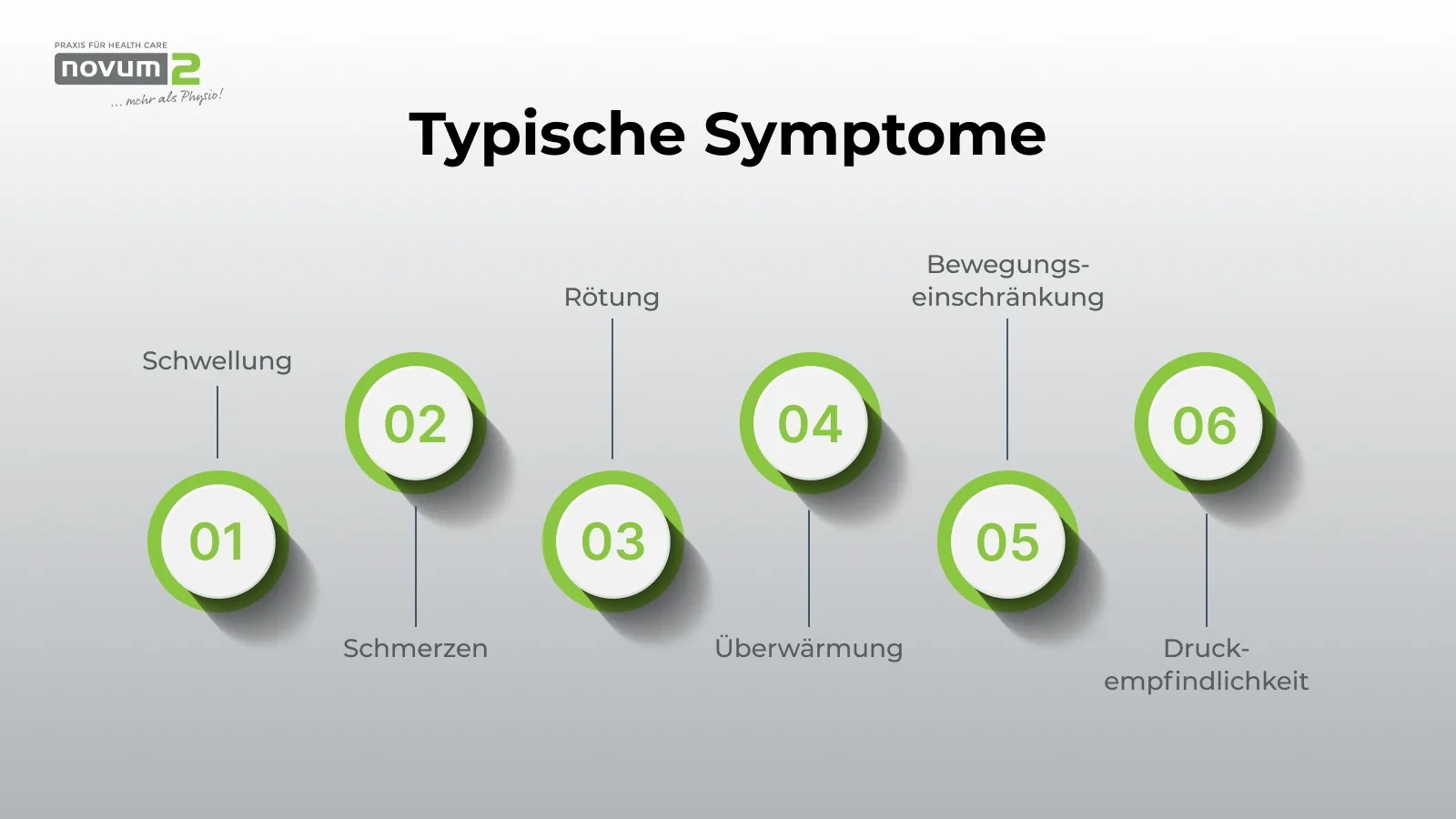
The signs of bursitis can vary depending on the affected part of the body, but there are some characteristic symptoms:
- Swelling: The area around the inflamed bursa appears swollen.
- Pain: Those affected often feel pain, especially with pressure or movement.
- Redness: The skin over the inflamed bursa can be reddened.
- Warmth: The affected area often feels warmer than the surrounding tissue.
- Restricted movement: Due to pain and swelling, the mobility of the affected joint can be restricted.
- Tenderness to pressure: The inflamed area reacts sensitively to touch and pressure.
In severe cases or with a bacterial infection, fever and a general feeling of illness can also occur.
Frequently affected body sites
Bursitis occurs particularly frequently at the following joints:
- Shoulder joint (subacromial bursitis)
- Elbow joint (olecranon bursitis)
- Hip joint (trochanteric bursitis)
- Knee joint (prepatellar bursitis)
- Ankle
- Wrist
Diagnostic approach
To diagnose bursitis correctly, doctors usually carry out the following steps:
- History: The doctor asks about the exact complaints, possible triggers (e.g. occupational or sporting strain) and any pre-existing conditions.
- Physical examination: Typical signs such as swelling, redness, warmth and tenderness to pressure are checked. The doctor also examines the mobility of the affected joint.
- Imaging:
- Ultrasound examination: This is the leading imaging procedure when bursitis is suspected. It enables assessment of the bursa size, fluid effusion and thickening of the lining.
- X-ray: Can be helpful for ruling out other causes such as bone changes.
- Magnetic resonance imaging (MRI): Used in rare cases, particularly for deeper-lying bursae or unclear findings.
- Blood tests: If a bacterial infection or systemic disease is suspected, blood tests can be carried out to check inflammation markers.
- Aspiration: In some cases the doctor uses a hollow needle to take some fluid from the inflamed bursa. This fluid is examined in the laboratory to detect bacteria and clarify the cause of the inflammation. At the same time, the aspiration can have a therapeutic effect by taking pressure out of the bursa.
Differential diagnosis
It is important to distinguish bursitis from other conditions with similar symptoms, such as:
- Tendonitis
- Joint inflammation (arthritis)
- Muscle strains or tension
- Bone fractures or periosteal inflammation
A precise diagnosis is decisive for choosing the right treatment method.
At NOVUM2 in Cologne, we rely on comprehensive diagnostics to create the optimal therapy plan for each patient.
Our experienced physiotherapists work closely with medical specialists to make a precise diagnosis and initiate treatment.
If you notice symptoms of bursitis or suffer from persistent joint pain, do not hesitate to book an appointment with us.
The earlier bursitis is recognised and treated, the better the chances of recovery and the faster you can return to your usual mobility.
Treatment options for bursitis
The treatment of bursitis aims to ease the pain, reduce the inflammation and restore mobility.
Depending on the cause, location and severity of the inflammation, various therapy options are available.
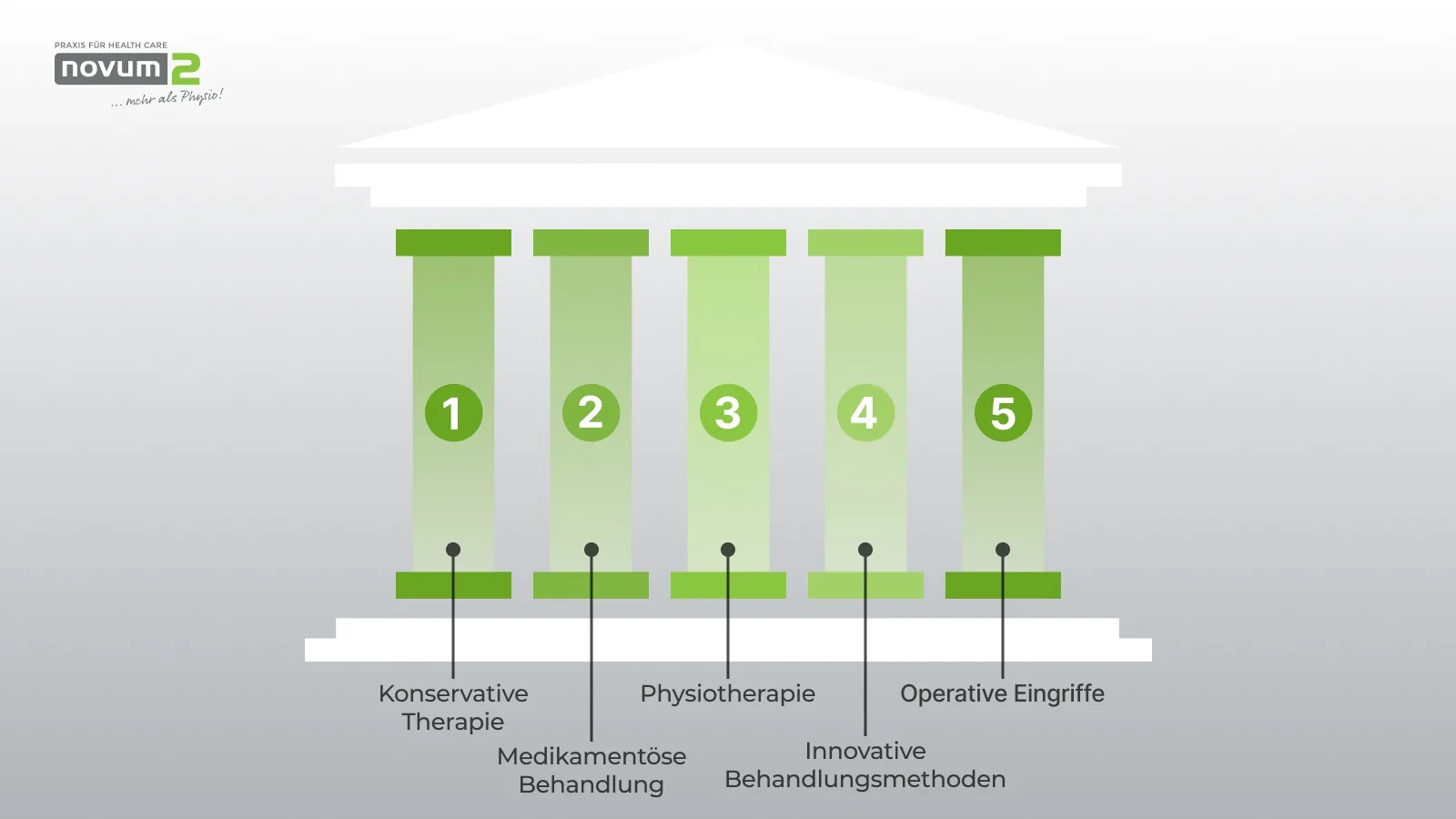
1. Conservative therapy
The first stage of treatment usually comprises conservative measures:
- RICE rule: This proven first-aid measure stands for rest, ice, compression and elevation. It helps reduce the acute inflammation and ease pain.
- Rest: Temporary relief of the affected joint is often necessary to promote healing. It is important to find the right balance between rest and movement to avoid stiffening.
- Cold or heat applications: Depending on the stage of the inflammation, cold or heat applications can be helpful. In the acute phase, cold eases the pain and suppresses the inflammation. Later, heat can promote circulation and release tension.
2. Medication
For severe pain or stubborn inflammation, medication can be used:
- Painkillers: Non-steroidal anti-inflammatory drugs (NSAIDs) such as ibuprofen or diclofenac can reduce both pain and inflammation.
- Anti-inflammatory medication: In some cases, cortisone injections can be administered directly into the bursa to combat the inflammation quickly and effectively.
3. Physiotherapy
Physiotherapy treatments play a central role in recovery and prevention of bursitis.
At NOVUM2 we offer the following therapy approaches:
- Manual therapy: To improve mobility and release restrictions.
- Stretching exercises: To release tension and increase flexibility.
- Strengthening exercises: For stabilisation of the affected joint and improvement of load capacity.
- Movement therapy: Active movement therapy has proven particularly effective, especially for bursitis in the shoulder (subacromial bursitis).
4. Innovative treatment methods
At NOVUM2 we rely on modern therapy approaches:
- Shockwave therapy: This method has proven effective particularly in chronic courses, above all for bursitis in the hip (trochanteric bursitis).
- Laser therapy: For pain relief and reducing inflammation.
- Kinesio taping: As support for certain forms of bursitis, such as pes anserinus bursitis at the knee.
5. Surgical procedures
In rare cases, when conservative measures are insufficient, an operation may be necessary:
- Removal of the inflamed bursa: This is usually performed on an outpatient basis and often under local anaesthetic.
- Removal of calcium deposits or scarring: To eliminate the cause of the irritation.
The healing of bursitis often requires patience.
Depending on the severity, recovery can take a few weeks to months.
A joint clinic offers both conservative and surgical treatment options, with the advantages of endoscopic surgery for removing the inflamed bursa particularly highlighted.
Consistent implementation of the recommended therapy measures and attention to preventive measures are decisive for a successful healing course and the avoidance of relapses.
Preventive measures against bursitis

Preventing bursitis is an important aspect of long-term health and mobility.
At NOVUM2 in Cologne, we attach great importance to supporting our patients not only in treatment but also in preventing bursitis.
Here are some effective measures you can take yourself:
Ergonomic adjustments in everyday life and at work
- Workplace design: Set up your desk and chair ergonomically correctly. Proper sitting posture relieves joints and bursae, especially in the shoulder and back region.
- Use aids: If needed, use joint protectors or padding, especially if your job requires frequent kneeling or leaning on the elbows. Poor ergonomics can lead to chronic complaints such as elbow bursitis, which can be recognised as a work-related condition.
- Regular breaks: Integrate short movement breaks into your working day to avoid one-sided strain.
Regular stretching and strengthening exercises
- Targeted stretching: Regular stretching, particularly of the muscles near the joints, can increase flexibility and reduce the pressure on the bursae.
- Strengthening exercises: Strengthen the muscles around the at-risk joints. Well-developed muscles stabilise the joints and distribute loads more evenly.
- Balance exercises: Improve your body balance to avoid uneven loading.
Optimising movement in sport
- Gradual increase: Increase the intensity and duration of your sporting activities slowly to give your body time to adapt.
- Variety in movement patterns: Vary your movements and activities to avoid one-sided strain.
- The right equipment: Use suitable, high-quality equipment for sporting activities to avoid unnecessary strain.
Posture correction and movement optimisation in everyday life
- Awareness of posture: Pay conscious attention to your posture when standing, sitting and during everyday activities.
- Back school: Learn back-friendly techniques for lifting, carrying and other everyday movements.
- Regular exercise: Integrate moderate exercise into your daily life to promote circulation and keep joints supple.
A healthy lifestyle
- Weight control: Maintain a healthy body weight to avoid excessive strain on joints and bursae.
- Balanced diet: A nutrient-rich diet supports the health of joints and connective tissue.
- Sufficient fluid intake: Drink enough water to keep the joint lubrication and bursae well supplied.
Early treatment of complaints
- Attention to warning signs: React early to the first signs of pain or discomfort in the joints. Examples of causes of bursitis include sports injuries, pressure loads and diseases that can lead to this inflammation.
- Professional advice: Seek expert help promptly for persistent complaints to avoid chronic courses.
Suffering from joint pain or suspect bursitis?
Our experienced physiotherapists look forward to helping you with individual advice and a tailor-made treatment plan.
Together we will find the best way to ease your complaints and restore your mobility.