

In brief
- Causes: Overload, incorrect running technique, unsuitable footwear, hard surfaces.
- Symptoms: Pain along the shin edge, swelling, tenderness to pressure.
- Treatment: Reduce loading, cool, physiotherapy, stretching and strengthening exercises.
- Prevention: The right footwear, slow increase in training, regular stretching.
- Complications: Chronic pain or stress fractures if left untreated.
What are shin splints?
Shin splints are an overuse injury caused by repeated, heavy loading of the muscles and tendons along the shin edge.
They manifest as pain occurring mainly on the front and inner side of the lower leg.
Particularly affected are the muscles of the shin and the tissue surrounding the bone (the periosteum).
This injury frequently occurs after intensive sporting activities in which the body is exposed to high impact loads.
The term "shin splints" describes the characteristic pain and inflammation caused by this loading.
The condition is also called tibial stress syndrome.
Definition and explanation of shin splints
Shin splints are a common overuse injury that causes pain along the shin.
Runners and other athletes are particularly frequently affected.
The pain arises from overuse of the muscles and tendons attaching to the shin.
Repeated and prolonged loading leads to micro-traumas and inflammation of the periosteum, causing the typical pain.
This inflammation, also called periostitis, affects the muscle attachment and the tendon of the posterior shin muscle.
Timely recognition and treatment are decisive for preventing the symptoms from worsening.
In the medial form, the pain is typically felt along the inner shin edge, while in the lateral form the pain occurs at the outer shin edge.
The shin edges are key sites for pain and injuries that can arise through overload.
Causes and risk factors
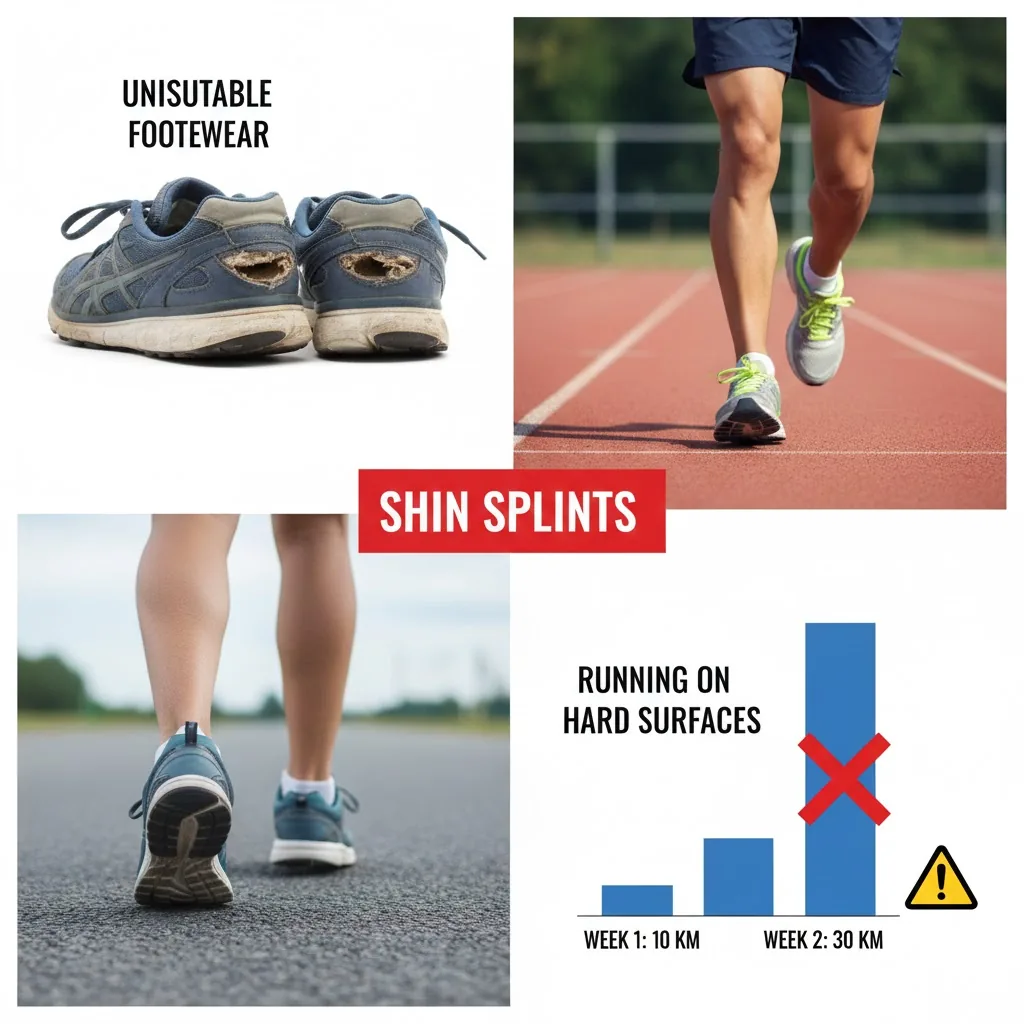
Shin splints usually develop through overloading of the muscles, tendons and periosteum at the shin.
The most common causes include:
- Overload: Intensive training or sudden increases in load without sufficient adaptation of the muscles are the most common triggers. Especially in sports requiring repeated impacts or fast movements, overuse damage can occur quickly.
- Incorrect technique: Malalignments such as flat feet or knock-knees, and an unfavourable running technique, increase the load on the shin and surrounding structures. An incorrect gait or running technique in which the feet do not roll optimally intensifies the stress on the muscles and periosteum. The shin edges are a key site for pain and injuries.
- Unsuitable footwear: Shoes that do not provide sufficient support or cushioning increase the risk, as they impair the natural rolling movement of the foot and lead to an uneven distribution of forces.
- Hard surfaces: Running on hard surfaces such as asphalt or concrete exposes the joints and muscles to considerably more pressure, increasing the risk of shin splints.
- Lack of flexibility and muscular imbalances: Insufficient flexibility in the foot and lower leg muscles or muscular imbalances can intensify the load on the shin and increase the risk of injury.
- Nutritional deficiencies: A lack of important nutrients such as calcium and vitamin D can lead to a weakened bone structure, increasing the risk of shin splints and other bone problems.
Symptoms and pain
The main symptom of shin splints is a sharp, stabbing pain along the front and inner side of the lower leg.
This pain:
- Occurs at the start of activity and intensifies during or after intensive training or walking.
- Can also become noticeable at rest in advanced stages and impair mobility in the long term.
- Is often accompanied by swelling and tenderness to pressure, which intensify when the affected area is palpated.
- In most cases, the pain occurs after a higher training load and does not disappear immediately with rest. If the pain persists regularly and without improvement, this could indicate a more serious injury, such as a stress fracture, so a medical consultation is advisable.
Diagnostics
You can get initial clues about whether you are affected through self-tests, e.g. targeted pressure on the painful areas.
Professional diagnostics are nevertheless advisable to rule out other causes such as stress fractures or muscle strains.
Physiotherapists and doctors can give you an exact diagnosis through a thorough examination and imaging (such as X-ray or MRI).
In a running analysis, examining the movement is essential to identify and minimise potential risk factors for running injuries.
Treatment options
Treatment methods
You should seek treatment early to prevent the symptoms from worsening and to support the healing process.
Common treatment measures include:
| Treatment area | Measure | Description |
|---|---|---|
| 1. Acute measures | Rest and load reduction | Immediate reduction of physical activity to ease the inflammatory process and allow recovery. |
| Cooling | Apply ice packs several times a day for 20–30 minutes to ease pain and swelling. | |
| 2. Physiotherapy | Massage and stretching techniques | Targeted massage and stretching of the lower leg muscles for relaxation and improved flexibility. |
| Strengthening exercises | Exercises to strengthen the muscles around the shin and the foot to prevent further injuries. | |
| 3. Adapting training | Reducing intensity | Adjusting the intensity and duration of training sessions to avoid overload. |
| Adapting movement patterns | Adjusting the running technique and alternative sports such as swimming or cycling to reduce the load. | |
| 4. Insoles | Individual insoles | Custom-made insoles to correct malalignments (e.g. flat feet) and distribute the load better. |
| 5. Surgical measures | Surgery | Only required in rare cases when conservative measures bring no recovery. Normally not necessary. |
Prevention and stretching exercises

With these measures you can avoid shin splints:
| Measure | Description | Example exercises |
|---|---|---|
| Proper warming up and stretching | Targeted warming up and stretching prepares the muscles for the load and reduces the risk of injuries. |
|
| Gradual increase in training | The load should be increased slowly and continuously to avoid overload. |
|
| Suitable footwear | The right shoes provide sufficient cushioning and stabilise the foot, relieving the shin. |
|
| Strengthening exercises | Strengthening exercises improve the muscles of the legs, feet and hips and increase stability, reducing the load on the shin. |
|
| Recovery phases | Breaks between intensive training sessions give the body time to recover and prevent injuries. |
|
These exercises and measures help you strengthen the muscles, distribute the load optimally and reduce the risk of shin splints.
Sport-specific recommendations for avoiding shin splints
Shin splints are a common injury in athletes, particularly runners, dancers and footballers.
They develop when muscles and bone at the transition from ligament to bone of the shin are overloaded.
This overuse leads to micro-traumas and inflammation that cause pain along the shin edge.
Shin splints occur through continuous physical stress in high-impact sports.
Other risk factors include poorly fitting or worn-out shoes, running on hard ground and increasing training intensity or distance too quickly.
As an athlete, pay particular attention to correct technique and suitable equipment to minimise the risk.
Reasons for shin splints at a glance
Shin splints are a common injury in runners and other athletes.
The causes of shin splints are varied and can result from a combination of factors.
Some of the most common causes are:
- Overuse through intensive training or a sudden increase in training: Increasing training intensity or duration too quickly can overload the muscles and tendons and lead to micro-traumas.
- Missing stretching or insufficient warm-up before training: Without sufficient warming up and stretching, the muscles and tendons are less flexible and more susceptible to injury.
- Poorly fitting or worn-out shoes: Shoes that do not provide sufficient support or cushioning can increase the load on the shin.
- Running on hard ground or uneven surfaces: Hard or uneven surfaces increase the impact on the joints and muscles, raising the risk of shin splints.
- Lack of stability or overpronation of the foot: Insufficient foot stability or excessive inward rotation (overpronation) can increase the load on the shin.
- Overload of the muscles and tendons in the lower leg: Repeated loads without sufficient recovery phases can lead to overuse and inflammation of the muscles and tendons.
Medial vs. lateral and compartment syndrome

Shin splints occur in two main forms: medial (inner) and lateral (outer).
The medial form more frequently affects the inner side of the shin, while the lateral form affects the outer side.
In the medial form, the pain is typically felt along the inner shin edge, while in the lateral form it occurs at the outer shin edge.
It is important to distinguish these two forms so that we can tailor the treatment and prevention exactly to your complaints.
Another important point is compartment syndrome, a more serious condition that develops through overuse of the lower leg muscles and tendons.
It leads to increased pressure within a muscle compartment, which can impair circulation and nerve function.
Without timely treatment, this can lead to severe muscle damage and nerve problems.
If you feel severe, persistent pain, numbness or swelling in the lower leg, it is important to see a doctor to obtain an exact diagnosis and avoid serious complications.
When to see a professional?
If your pain persists or worsens despite load reduction, a visit to a physiotherapist or doctor is recommended.
Individual analysis and therapy can help address the causes in a targeted way and prevent long-term damage.