
In brief
- The strongest tendon connects the calf and the heel bone
- Common complaints: inflammation and tears
- Sport and unfavourable loading as main causes
- Early treatment can prevent the condition from becoming chronic
- NOVUM2 Cologne offers specialised therapy concepts
The most important tendon for our mobility
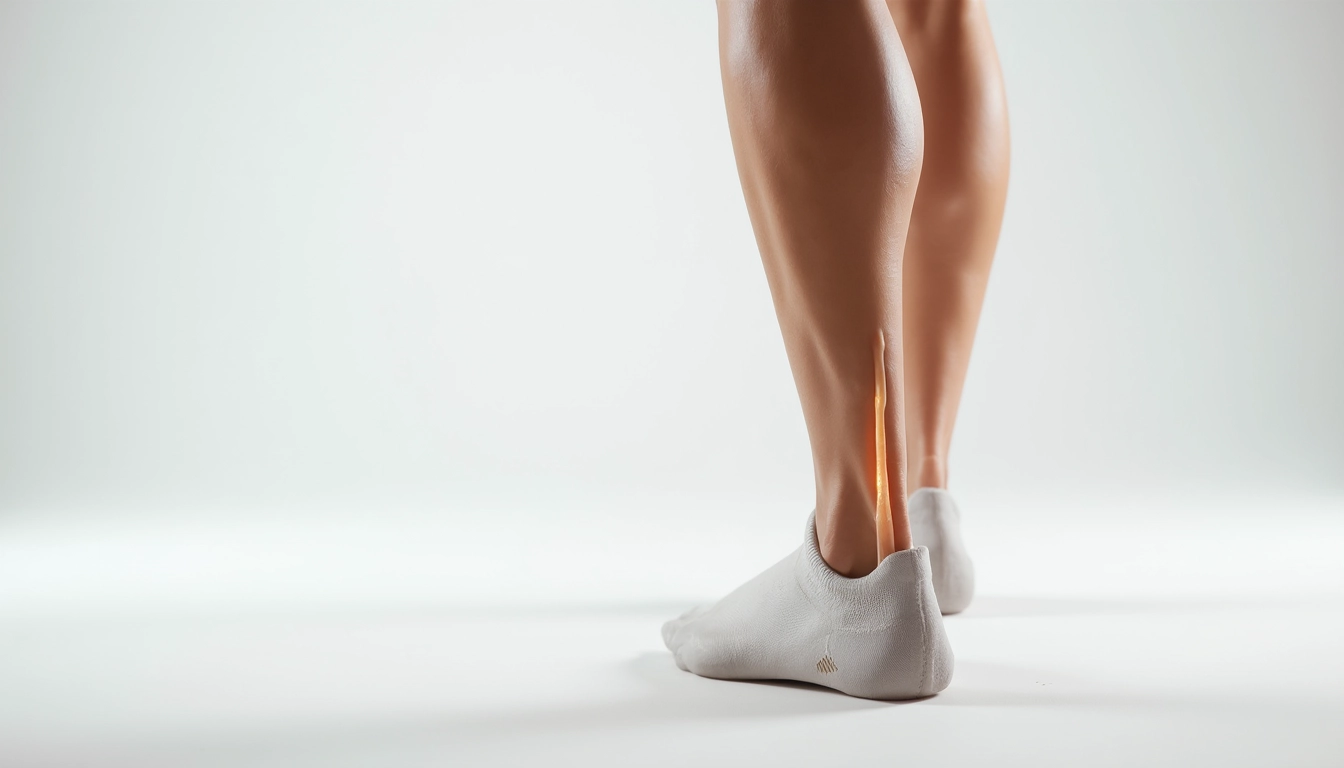
The Achilles tendon (tendo calcaneus) is the strongest and thickest tendon in the human body. It connects the calf muscles to the heel bone and plays a decisive role in every movement, from simple walking to peak athletic performance.
Despite its strength, it is susceptible to injuries and overload, which can lead to considerable complaints.
At NOVUM2 in Cologne, we specialise in diagnosing and treating Achilles tendon problems.
Book an appointment at our practice today: Book an appointment
Common conditions of the Achilles tendon
The Achilles tendon can be affected by various conditions that lead to pain and restrictions:
Achilles tendinitis (achillodynia)
Achillodynia is one of the most common complaints of the Achilles tendon.
In this condition, the tendon or the surrounding tissue becomes inflamed – typical symptoms are:
- Pain in the morning or at the start of an activity, which may subside after "warming up"
- Pain on pressure directly on the tendon
- Possible swelling and warmth in the affected area
- Increased pain when climbing stairs or walking uphill
- Pain when standing on tiptoe
Achilles tendinitis can occur at different sites: at the tendon attachment on the heel bone (insertional tendinopathy) or in the middle section of the tendon (midportion tendinopathy).
Achilles tendon rupture
An Achilles tendon rupture is a serious injury that frequently occurs during intensive sporting activity.
Those affected often describe a sudden, whip-like sensation in the calf, as if someone had kicked them in the heel.
Typical signs are:
- Sudden, severe pain in the calf or heel
- An audible popping sound at the moment of the tear
- Immediate restriction of walking ability
- A visible or palpable gap along the tendon
- Inability to stand on tiptoe
An Achilles tendon rupture can be partial or complete and in every case requires prompt medical assessment.
Degenerative changes and calcifications
Long-term overload or age-related processes can lead to degenerative changes in the tendon structure.
This involves micro-tears and changes in the collagen structure.
In some cases, calcifications can also form in the tendon.
These changes manifest as:
- Chronic, dull pain
- Hardening or nodular thickening along the tendon
- Reduced elasticity of the tendon
- Increasing complaints under load
Causes of Achilles tendon complaints
The development of Achilles tendon problems is often multifactorial:
Sporting overload
Certain sports place particular demands on the Achilles tendon:
- Running sports, especially long-distance running
- Ball sports with frequent jumps and changes of direction (football, basketball, tennis)
- Sprint and jumping disciplines in athletics
A sudden increase in training volume or intensity is a frequent trigger for complaints.
Unfavourable loading and biomechanical factors
- Foot deformities (e.g. flat feet or high arches)
- Leg axis malalignment
- Muscular imbalances between the calf muscles and the front lower leg muscles
- Improper running technique
Unsuitable footwear
- Shoes that are too hard or too soft
- Insufficient cushioning
- Sudden change in heel height
- Worn-out sports shoes without sufficient support
Age-related changes
With increasing age, the Achilles tendon loses elasticity and resilience.
Blood supply decreases, which reduces healing capacity and increases the risk of degenerative changes.
Diagnosing Achilles tendon problems at NOVUM2 in Cologne
At NOVUM2 in Cologne, we rely on a comprehensive diagnostic approach to identify Achilles tendon problems precisely and develop the optimal treatment strategy.
Our diagnostic methods
- Detailed history: An in-depth conversation about your complaints, their onset, course and triggering factors.
- Clinical examination: Comprehensive physical examination with special tests such as the Thompson test if an Achilles tendon rupture is suspected.
- Movement analysis: Assessment of your walking and running pattern to identify unfavourable loading.
- Sonography (ultrasound): In cooperation with specialised physicians, we enable imaging diagnostics using ultrasound to precisely visualise tendon structures, swelling or tears.
- Individual functional diagnostics: Examination of the entire movement chain from foot, lower leg and knee to hip in order to identify connections.
Through these comprehensive diagnostics, we can derive the right therapy for your specific Achilles tendon problems.
Physiotherapy treatment of the Achilles tendon at NOVUM2
Our treatment concepts at NOVUM2 in Cologne are based on current scientific evidence and many years of clinical experience.
Depending on the condition, various therapy approaches are used:
Acute treatment for inflammation
For acute inflammation of the Achilles tendon (achillodynia), we focus on:
- Pain reduction: Through targeted manual techniques and physical measures
- Reducing inflammation: With special applications such as cold therapy or ultrasound
- Relief: Through functional taping of the Achilles tendon and temporary adjustment of activity
- Avoiding protective postures: To prevent secondary problems in other body regions
Rehabilitation concept after injuries
After an Achilles tendon rupture or severe overload, we develop individual rehabilitation programmes:
- Early phase: Protecting the tendon while maintaining mobility and muscle activity
- Build-up phase: Progressive increase in load to improve tendon strength
- Functional phase: Restoring sporting or everyday movement patterns
- Prevention phase: Preventing recurrence through continued tendon and muscle strengthening
Innovative therapy methods at NOVUM2
Our practice in Cologne offers state-of-the-art therapy approaches for Achilles tendon problems:
- Stochastic resonance therapy: This innovative treatment method uses targeted vibration stimuli to promote circulation and support tendon regeneration.
- Super Inductive System (SIS): A modern procedure that, where indicated, can be used as a complementary option to stimulate deep tissue and support rehabilitation.
- Special manual techniques: Our therapists master special hand techniques for mobilising the Achilles tendon and the surrounding tissue.
- Eccentric strength training: Scientifically grounded exercises that demonstrably promote tendon regeneration and improve load capacity.
Preventing Achilles tendon complaints
Prevention is better than cure – this applies especially to the Achilles tendon.
With the following measures, you can significantly reduce the risk of Achilles tendon problems:
Proper stretching and strengthening
- Regular stretching of the calf muscles (especially after sporting activity)
- Targeted strengthening of the lower leg and foot muscles
- Balanced training of the entire leg musculature
Training design
- Slow, progressive increase in training intensity (no more than 10% per week)
- Sufficient recovery times between intensive training sessions
- Varying the load (e.g. running on different surfaces)
- Avoiding sudden load peaks
Footwear and equipment
- Sport-appropriate shoes with good cushioning and support
- Regular replacement of sports shoes (roughly every 600-800 km of running)
- If needed, individual insoles to correct foot deformities
The NOVUM2 exercise programme for a healthy Achilles tendon
Our special exercise programme for the Achilles tendon combines strengthening, stretching and sensorimotor training.
1. Eccentric calf training
One of the most scientifically studied exercises for strengthening the Achilles tendon:
- Stand with the front of your foot on a step or stepper
- Slowly rise onto your tiptoes (concentric phase)
- Then lower your heels very slowly below the level of the step (eccentric phase)
- 3 sets of 15 repetitions, performed daily
2. Deep calf stretch
For optimal stretching of the Achilles tendon and the deep calf muscles:
- Stand in a lunge position in front of a wall
- The back leg stays straight, heel on the floor
- Bend the front knee and lean slightly forwards
- Hold the stretch for 30 seconds, 3 repetitions per side
3. Sensorimotor training
To improve proprioception and coordination:
- Single-leg stance on an unstable surface (e.g. balance cushion)
- Start with 30 seconds and increase to up to 1 minute
- Make the exercise harder by closing your eyes or adding small movements
4. Foam roller for the calf
To release adhesions in the fascial tissue of the calf muscles:
- Sit on the floor and place the foam roller under your calf
- Lift your buttocks and roll slowly over the entire length of the calf
- Linger on painful points for 20-30 seconds
Our promise
- Fast appointment allocation – usually within 24 hours
- Detailed initial diagnostics lasting at least 40 minutes
- Individual therapy planning based on the latest scientific evidence
- Close cooperation with medical specialists
- Support through the various phases of rehabilitation – depending on findings and resilience
The health of your Achilles tendon is our priority
The Achilles tendon is far more than just an anatomical structure – it is the foundation of our mobility and a decisive factor in our quality of life.
When complaints arise, early professional assessment can help to initiate the right treatment and support the course of rehabilitation.
At NOVUM2 in Cologne, we take a comprehensive approach that combines modern therapy methods with sound expertise and individual care.
From recreational athletes to professionals, from young adults to seniors – we support you in treating your Achilles tendon complaints.
Book an appointment at our practice in Cologne today and take the first step back to unrestricted freedom of movement.