
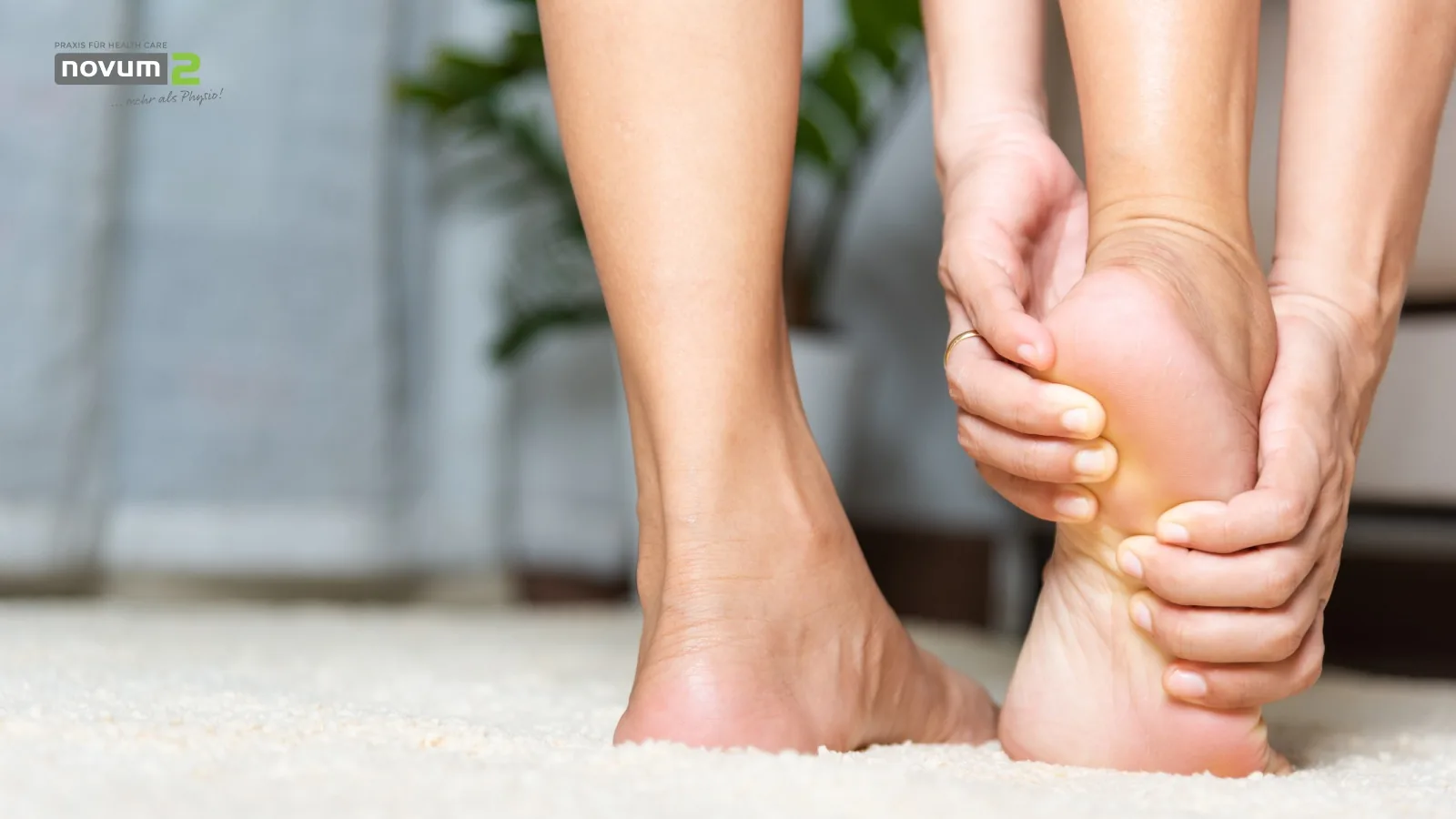
Every step is agony. In the morning after getting up, it feels like walking on needles.
During the day, the stabbing pain in the heel keeps making itself painfully felt, which can lead to considerable foot pain.
This pain occurs particularly when walking and standing. If you suffer from these symptoms, a heel spur could be behind it.
But don't worry: with the right treatment, your heel spur can be addressed in a targeted way. We at NOVUM2 in Cologne show you how.
What is a heel spur and how does it develop?
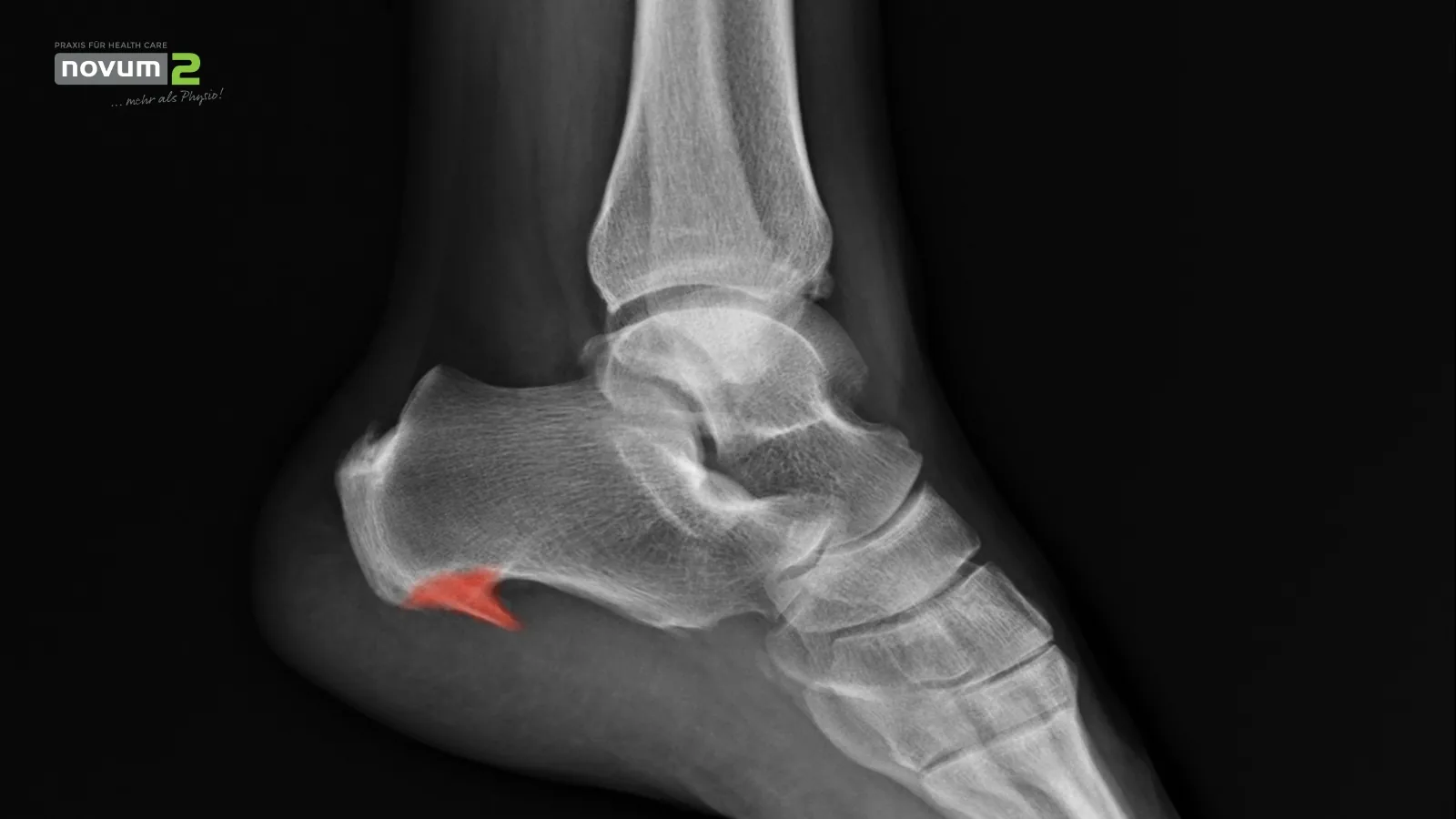
A heel spur, also called a calcaneal spur, is a bony outgrowth on the heel bone (calcaneus), whose cause often lies in overload or unfavourable loading. It usually forms on the underside of the heel bone, where the tendon plate of the sole of the foot (plantar fascia) attaches, and is then called an inferior heel spur.
Cause: how does a heel spur develop?
The main causes of a heel spur are:
- Overloading of the foot
- Unfavourable loading of the foot
Excessive or one-sided loading creates tiny tears and inflammation in the plantar fascia. This repeated loading leads to irritation, which the body tries to repair by depositing more bone substance at the affected site. Over time, this is how the heel spur develops.
Risk factors for its development
The development of a heel spur is promoted by:
- Excess weight
- Foot deformities such as splay foot or high arches
- Age-related wear
Certain underlying conditions can also promote the development of a heel spur, including:
- Diabetes
- Rheumatic diseases
- Gout
- Osteoarthritis
By understanding the causes and risk factors, you can prevent better and take timely measures to reduce the load on your feet.
Symptoms of a heel spur

The main symptom of a heel spur is heel pain.
- In the morning after getting up or after longer periods of rest, stabbing pain occurs in the heel area. This pain occurs particularly when walking or standing.
- This pain usually subsides after a few steps.
Other typical symptoms are:
- Pain on pressure on the sole of the foot in the heel bone area.
- Often an inflammation of the plantar fascia (plantar fasciitis) becomes noticeable.
The persistent pain often leads to:
- Protective posture
- Restricted mobility and load capacity of the foot.
The symptoms considerably impair everyday life, which is why early diagnosis and treatment are important.
Diagnosing a heel spur at NOVUM2 in Cologne
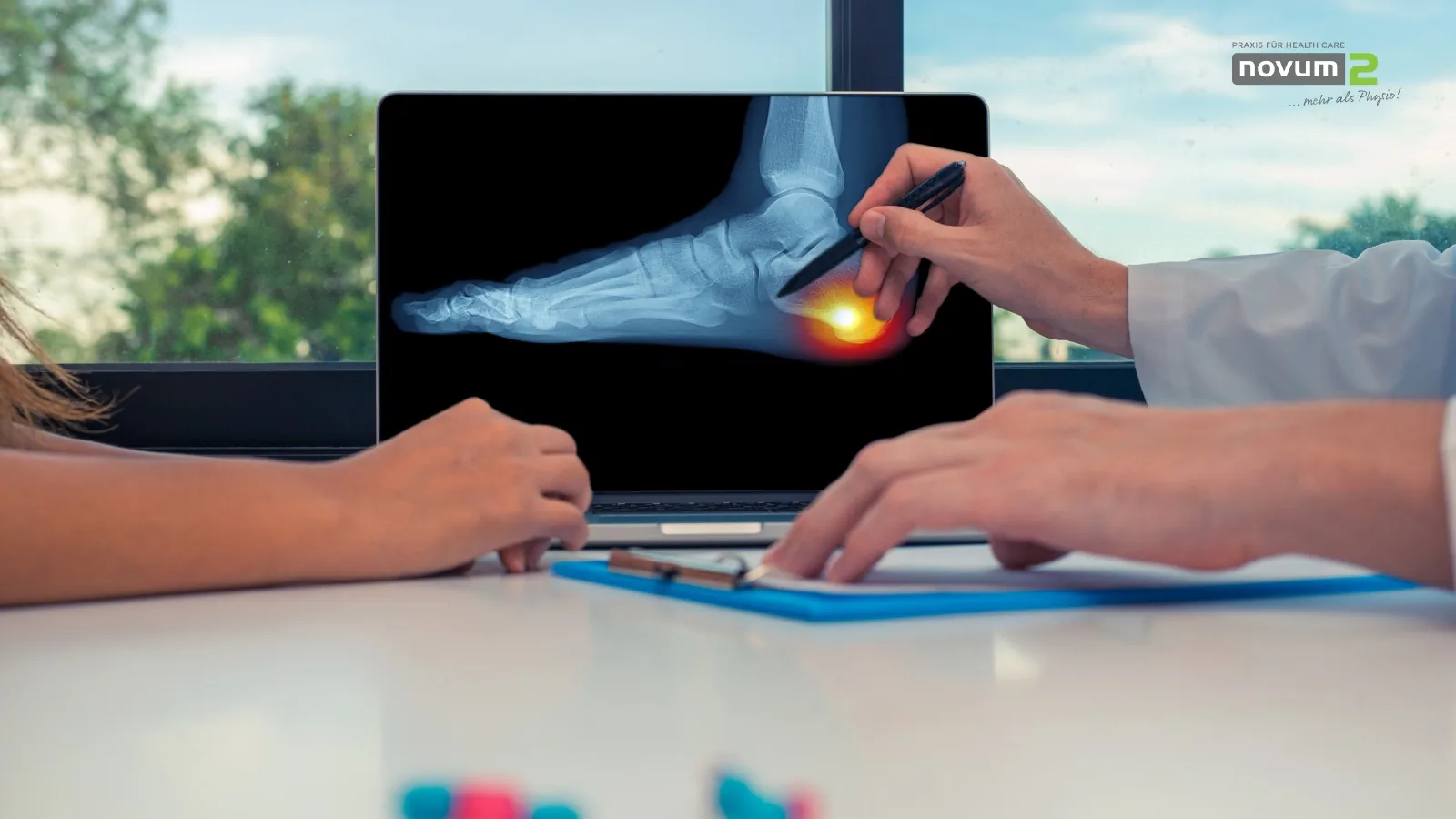
To diagnose a heel spur reliably, our experienced physiotherapists offer a thorough examination.
How the diagnosis works
- Detailed consultation:
- Asking about your complaints
- Recording your medical history
- Identifying possible risk factors
- Examination of the foot:
- Checking mobility
- Testing load capacity
- Identifying possible pressure pain points
If a heel spur is suspected, we may refer you to an orthopaedist. There, the diagnosis can be confirmed with X-ray or ultrasound.
Our goal is to make a precise diagnosis and create the best possible treatment plan for you.
Conservative treatment options
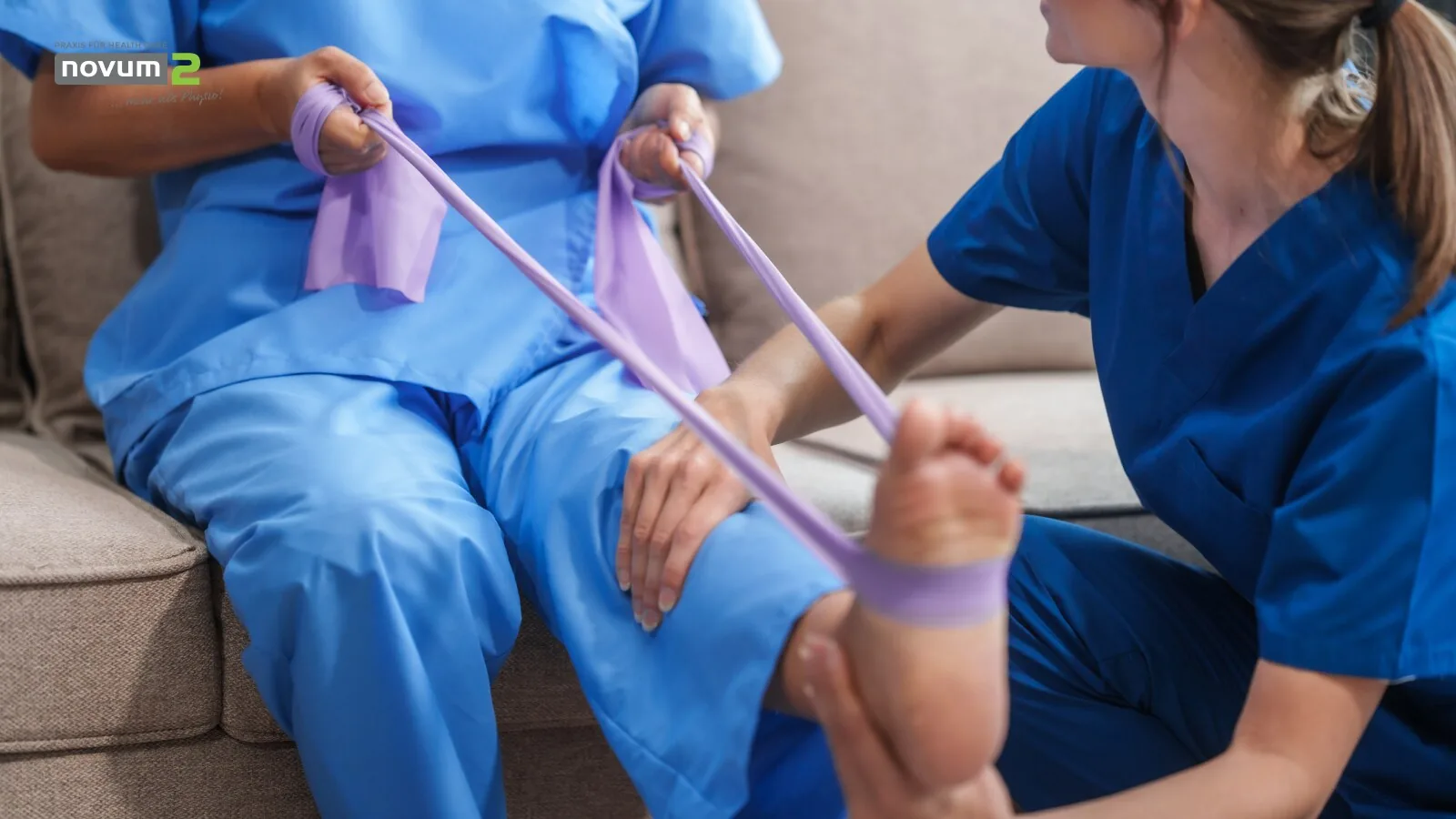
In most cases, the treatment of a heel spur, particularly an inferior heel spur, can be carried out very well with conservative, i.e. non-surgical, measures. This is where physiotherapy comes into play:
With individually tailored treatment, we address your complaints and support circulation and musculature.
Therapy methods at NOVUM2
- Manual therapy and mobilisation:
- Improving mobility
- Pain relief through electrotherapy:
- TENS or ultrasound
- Guidance on exercises for home:
- Relieving and strengthening exercises
- Taping or bandaging the foot:
- Relief and stabilisation
- Shockwave therapy:
- Pain relief and promotion of circulation
Complementary measures
With these conservative methods, we aim to ease your complaints and support healing.
Another specific problem that can be treated is Haglund's deformity, which is caused by overload of the tendon attachment and pressure points on the heel.
Surgical treatment options
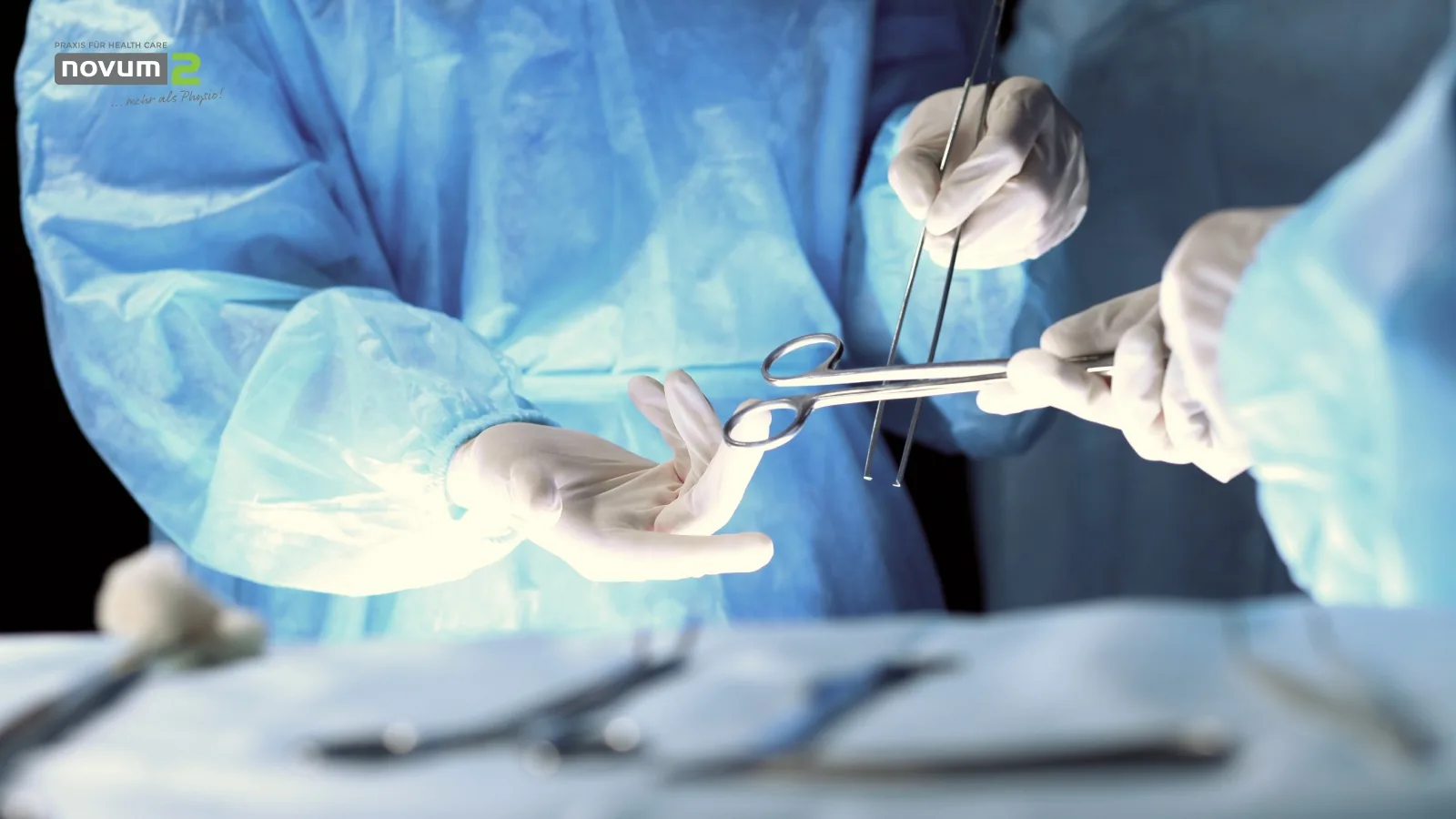
If the complaints of an inferior heel spur do not subside sufficiently after several months of conservative therapy, an operation may become necessary in rare cases.
Goal of the operation
- Removal of the heel spur
- Severing the plantar fascia to eliminate the painful pull
How the operation works
- The procedure is usually minimally invasive.
- The operation is performed through a small skin incision with the help of a camera (endoscopy).
After the operation
- Consistent relief of the operated foot is important.
- Exercise therapy and a gradual increase in loading support the healing process.
These measures can promote successful recovery and restore the mobility of the foot.
Preventing a heel spur
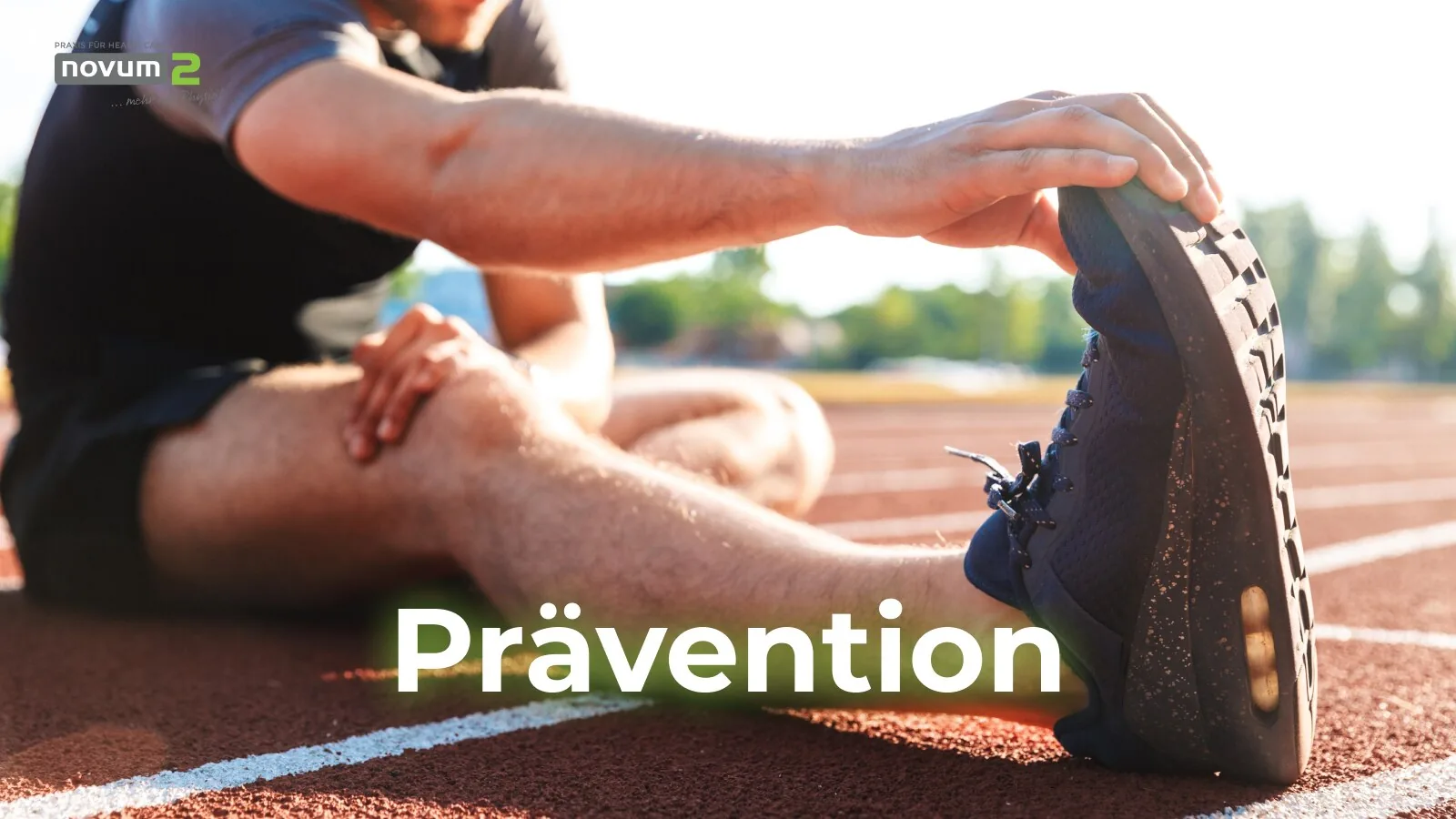
To prevent a heel spur, it is important not to overload the feet and to wear foot-friendly footwear.
Prevention tips
- Good cushioning in the heel area:
- Choose shoes with good cushioning and optimal pressure distribution.
- Special sports shoes or orthopaedic insoles can be helpful.
- Regular stretching:
- Regularly stretch the calf muscles and the sole of the foot to keep the structures supple and prevent shortening.
- Strengthening the muscles:
- Specifically strengthen the foot and lower leg muscles to improve load capacity.
- Weight reduction if overweight:
- Losing weight can relieve the joints and tendon attachments.
- Correcting foot deformities:
- Use insoles or orthopaedic shoes to correct foot deformities.
With these measures, you can significantly reduce the risk of a heel spur and support your foot health in the long term.
Why physiotherapy at NOVUM2 in Cologne?
We at NOVUM2 are experts in treating heel spurs and other foot complaints. Our experienced physiotherapists create an individual treatment plan tailored to your personal needs and goals.
What sets us apart?
- Experienced physiotherapists: Our team has extensive experience in treating foot problems.
- Individual care: Every treatment plan is tailored specifically to you.
- State-of-the-art therapy methods: We use advanced techniques such as shockwave and electrotherapy to ease your pain and accompany the recovery process.
- Central location: Our practice in the heart of Cologne is easy to reach by public transport and by car.
Your advantages at NOVUM2
- Pain therapy
- Support for the healing process
- Accessibility and comfort
Book an appointment today and take the first step towards individual advice. We look forward to accompanying you on your way to healthy, resilient feet.