

A calcific shoulder, also known as tendinitis calcarea or tendinosis calcarea, is a common shoulder condition in which calcium deposits form in the tendons of the rotator cuff.
These calcium deposits lead to pain and restricted movement in the shoulder joint and mostly affect people between 30 and 50 years of age.
Epidemiology
Calcific shoulder is a common condition affecting around 3-5% of the population. It occurs most frequently in people between 30 and 50 years of age, with women affected slightly more often than men. The dominant shoulder is affected more often than the non-dominant one.
Anatomy
The rotator cuff consists of four muscles and their tendons:
- Supraspinatus muscle
- Infraspinatus muscle
- Teres minor muscle
- Subscapularis muscle
These muscles surround the shoulder joint and provide stability and mobility.
The acromion (roof of the shoulder), together with:
- the coracoid process
- the acromioclavicular joint
forms the subacromial space, in which the tendons of the rotator cuff run.
Causes of a calcific shoulder
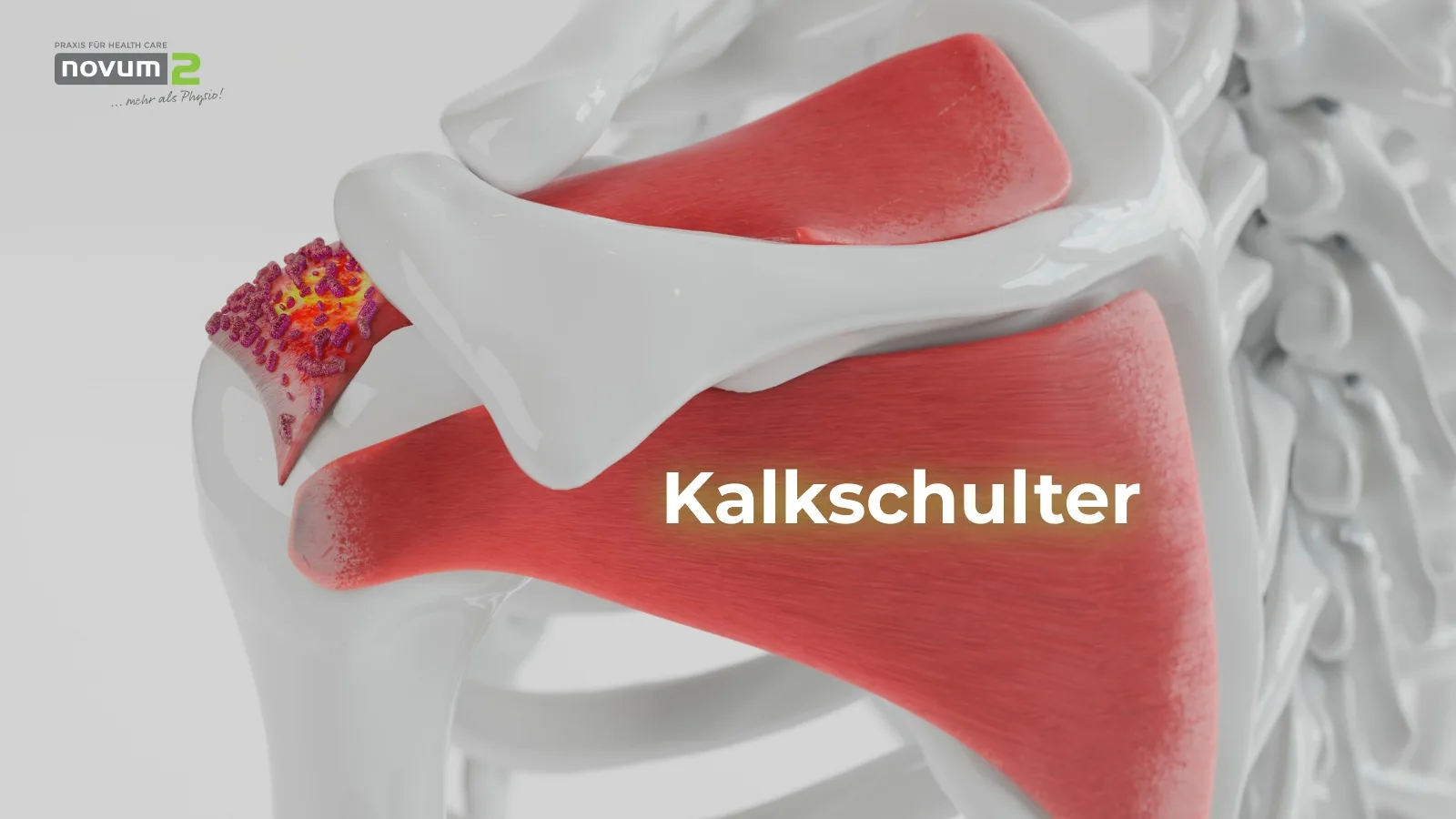
The exact cause of a calcific shoulder is not yet fully understood. Possible factors are:
- Overload or unfavourable loading of the shoulder muscles and tendons, particularly the shoulder tendon
- Reduced blood supply to the tendons
- Metabolic disorders such as diabetes mellitus
- Deposition of calcium salts in the tendons for unknown reasons
Symptoms of a calcific shoulder

The main symptoms of a calcific shoulder are:
- Shoulder pain, especially with movement and loading
- Nocturnal pain when lying on the affected side
- Restricted movement and loss of strength in the shoulder joint
- Pain on pressure in the area of the acromion and the tendon attachments
- Shoulder complaints can considerably impair everyday life, especially with overhead work and other specific movements. Regular shoulder exercises are important to prevent such complaints.
Phases of a calcific shoulder
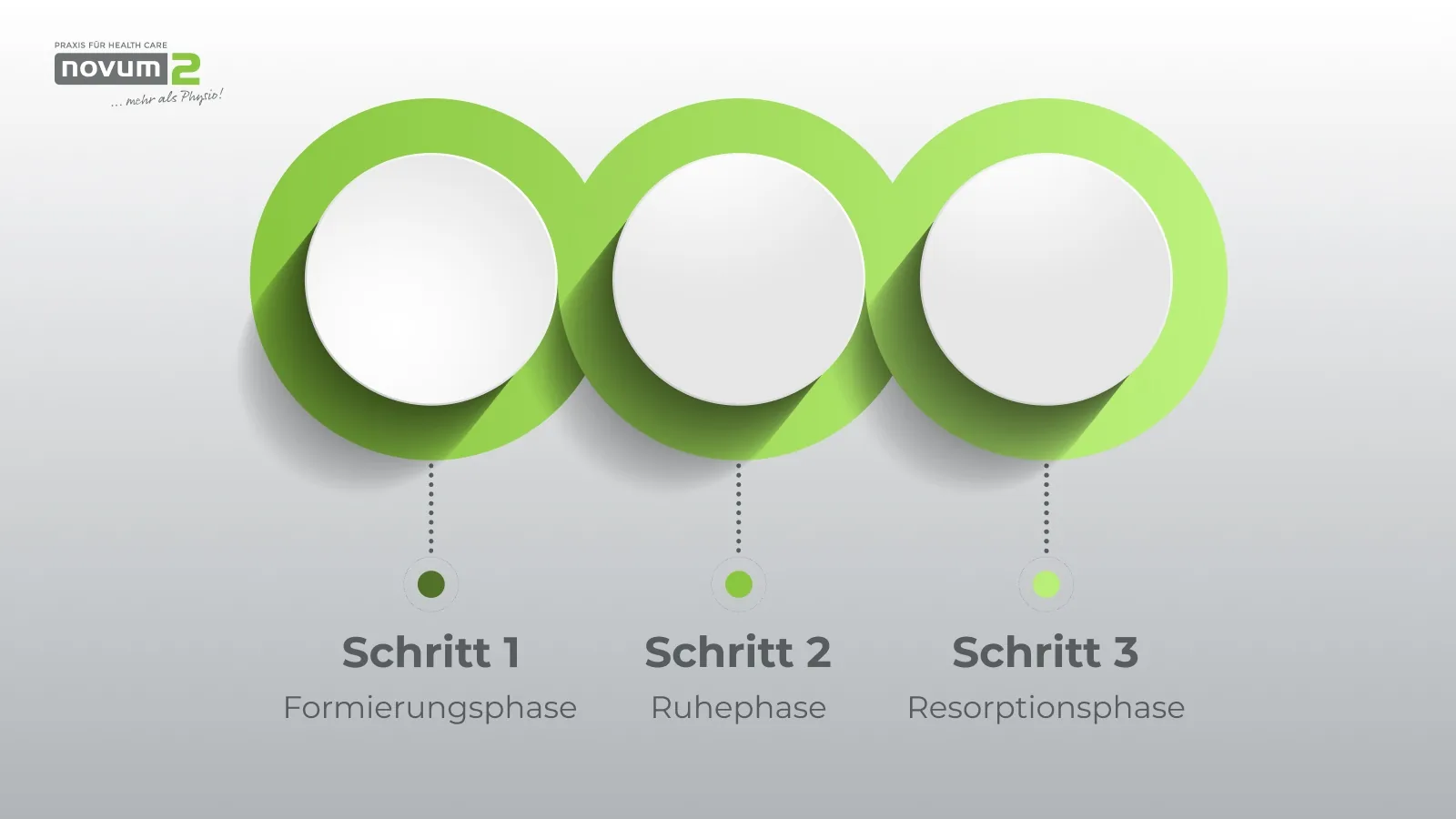
A calcific shoulder typically progresses through three phases:
- Formation phase: deposition of calcium, often with little pain
- Resting phase: calcium deposit present, hardly any complaints
- Resorption phase: dissolution of the calcium, severe pain and inflammation
Diagnosing a calcific shoulder
A calcific shoulder is diagnosed through:
- History and clinical examination by a specialist
- Imaging such as X-ray, ultrasound or MRI of the shoulder joint
- Exclusion of differential diagnoses such as bursitis, impingement syndrome or frozen shoulder
Imaging procedures
- X-ray: Calcium deposits appear as radiodense shadows. The location and size of the calcifications can be assessed.
- Ultrasound: Calcium deposits appear as echo-rich structures. Accompanying inflammatory reactions and blood supply can be assessed.
- MRI: Calcium deposits appear as low-signal structures. Accompanying tendon damage, bursitis or muscle atrophy can be depicted in detail.
Treating a calcific shoulder

In most cases, conservative therapy is sufficient:
- Pain medication: Non-steroidal anti-inflammatory drugs (NSAIDs), painkillers
- Physiotherapy: Movement exercises, stretching, strengthening to improve shoulder joint mobility
- Physical measures: Heat, cold
- Extracorporeal shockwave therapy (ESWT) to break up the calcium deposits
Extracorporeal shockwave therapy (ESWT)
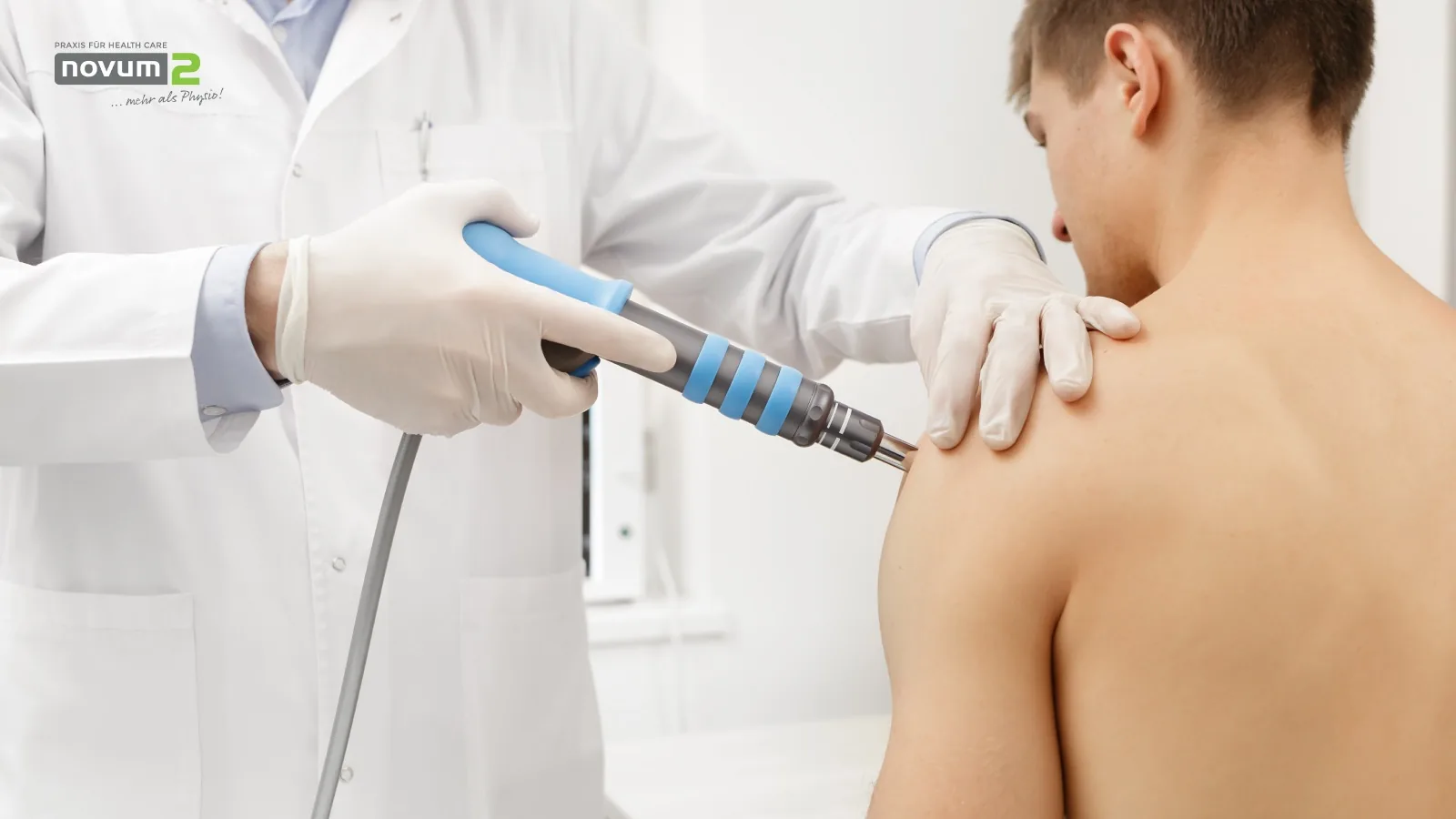
ESWT is a non-invasive procedure for treating calcific shoulders. High-energy shockwaves are applied to the calcium deposits to break them up and stimulate self-healing.
In most cases this leads to pain relief and improved mobility. Usually 3-5 treatments at intervals of 1-2 weeks are required.
Physiotherapy treatment
- Manual therapy: Mobilisation of the shoulder joint and shoulder blade to improve mobility and ease pain.
- Trigger point treatment: Targeted treatment of painful muscle hardenings for relaxation and improved circulation.
- Electrotherapy: Pain relief and muscle stimulation through TENS, ultrasound or interference current.
Surgery to remove the calcium deposits is only necessary in treatment-resistant cases and is followed up with physiotherapy and gradual loading.
Surgical procedures
- Arthroscopic removal of the calcium deposits: Minimally invasive procedure with little tissue trauma and faster rehabilitation.
- Open removal of the calcium deposit: Classic procedure with larger access, allowing treatment of larger deposits or accompanying tendon damage.
Aftercare and rehabilitation
After the operation, the arm is immobilised for a few days. This is followed by a gradual increase in mobility and load capacity under physiotherapy guidance.
Typical rehabilitation phases are:
- Protection phase (1-2 weeks): immobilisation, reduction of swelling, careful passive movement exercises
- Movement phase (2-6 weeks): active movement exercises, stretching, light strengthening
- Loading phase (from 6 weeks): increasing load, strengthening, coordination training
Long-term prognosis and risk of recurrence
After successful conservative or surgical treatment, the long-term prognosis of a calcific shoulder is good. Most patients achieve a significant reduction in pain and improved mobility.
The risk of recurrence is around 10-20%. Regular exercises and good shoulder muscle strength can reduce the risk of recurrence.
Effects on quality of life
A calcific shoulder can considerably impair quality of life. Everyday activities such as dressing, combing your hair or shopping can be painful and difficult.
The ability to work can also be restricted, especially in physically demanding jobs or overhead work.
Through treatment and consistent rehabilitation, the complaints can be eased and quality of life improved.
Exercises and stretches for calcific shoulder
The following exercises and stretches can be helpful for a calcific shoulder:
- Pendulum movements to improve mobility
- Stretching exercises for the shoulder muscles, particularly the rotator cuff
- Strengthening exercises for the shoulder stabilisers
Guidance and execution should be provided by experienced physiotherapists.
Preventing a calcific shoulder
To minimise the risk of a calcific shoulder, the following measures make sense:
- Ergonomic workplace design to avoid overload
- Regular stretching exercises for the shoulder and neck muscles
- Sufficient breaks and recovery times during strenuous activities
- Strengthening the shoulder and trunk muscles to improve stability
Pain medication for calcific shoulder
For severe pain, the following medications can be used:
- Non-steroidal anti-inflammatory drugs (NSAIDs) such as ibuprofen or diclofenac
- Painkillers such as paracetamol or metamizole
- Local application of pain-relieving and anti-inflammatory ointments or gels
- Injection of cortisone into the bursa in cases of severe inflammation
Sport with a calcific shoulder
Training must be adapted individually to the complaints and the course of healing:
- Avoiding strenuous overhead sports in the acute phase
- Alternative training with low shoulder load, e.g. cycling or running
- Slow return under physiotherapy guidance
- Consistent warming up, stretching and strengthening of the shoulder for prevention
Why physiotherapy at NOVUM2 in Cologne?
We at NOVUM2 are experts in treating calcific shoulder and other shoulder conditions. Our experienced physiotherapists create an individual treatment plan tailored to your personal needs and goals.
What sets us apart?
- Experienced physiotherapists: Our team has extensive experience in treating shoulder problems.
- Individual care: Every treatment plan is tailored specifically to you.
- State-of-the-art therapy methods: We use advanced techniques such as shockwave and electrotherapy to ease your pain and accompany the recovery process.
- Central location: Our practice in the heart of Cologne is easy to reach by public transport and by car.
Your advantages at NOVUM2
- Pain therapy
- Support for the healing process
- Improvement of shoulder mobility and function
- Accessibility and comfort
Book an appointment today. We will accompany you in treating your shoulder complaints.