
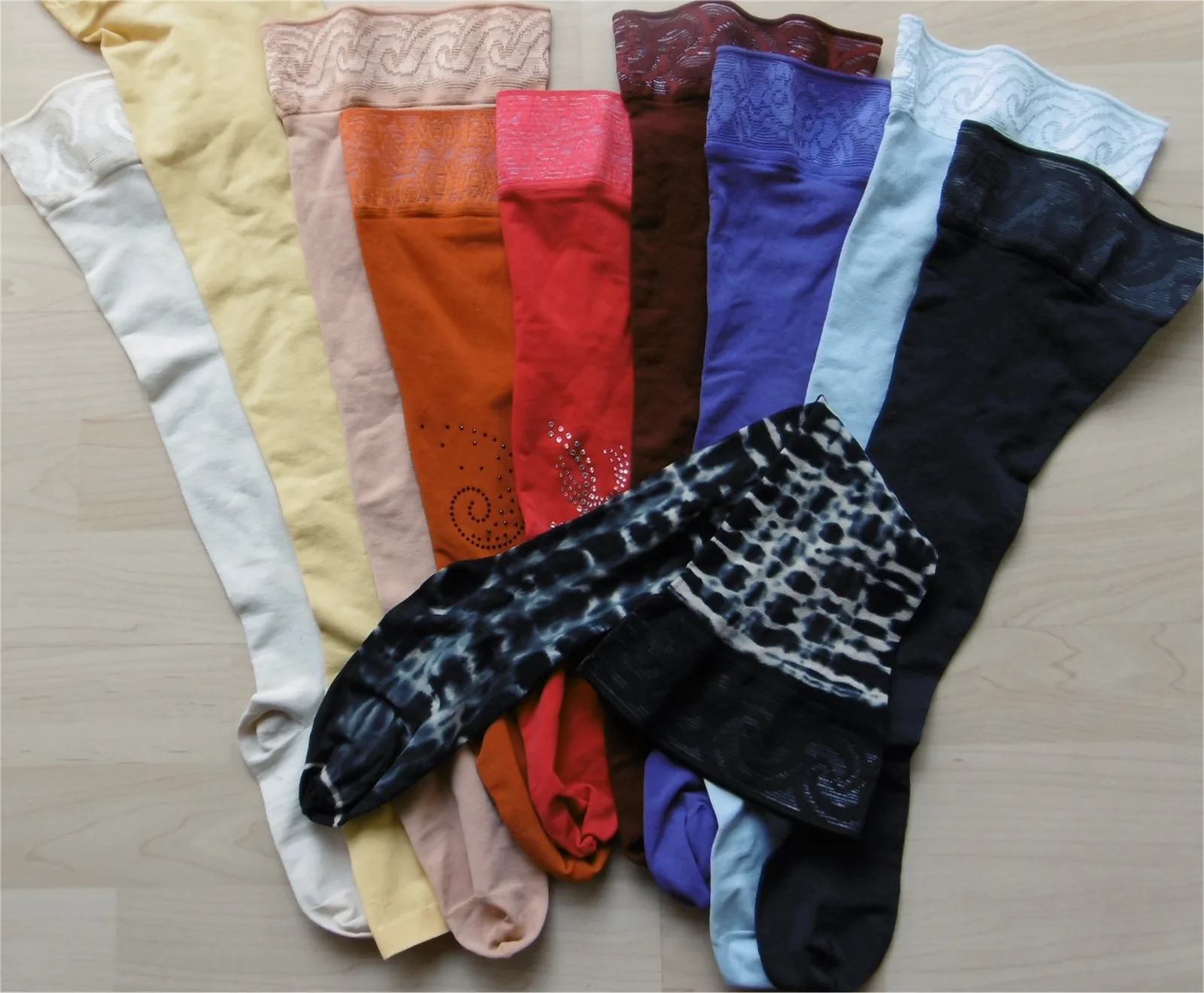
In brief
- Promote circulation: Graduated compression returns blood to the heart more efficiently and lowers the risk of thrombosis.
- Different models & purposes: Medical compression stockings for therapy, support stockings for prevention and sports models for recovery.
- Four compression classes: Depending on pressure strength, for mild complaints up to the treatment of severe venous diseases.
- Use in pregnancy & sport: Reduces swelling, supports the muscles and promotes recovery.
- Correct care & use: Put on in the morning, wear without creases and wash regularly for optimal effect.
What are compression stockings?
Compression stockings are specially developed stockings that exert targeted pressure on the legs to support blood flow in the veins.
The pressure gradient is designed so that it is highest at the ankle and decreases towards the top.
This graduated compression helps return blood to the heart more efficiently, prevents pooling in the venous valves and can reduce the risk of thrombosis and other venous diseases, such as varicose veins.
Different models and materials
There are various compression products, which differ depending on requirements and area of use:
- Medical compression stockings: These are often prescribed by a doctor and offered in different compression classes. They are suitable for treating varicose veins, after operations or for thrombosis prophylaxis.
- Support stockings: Perfect for long journeys or long periods of sitting, to lower the risk of travel thrombosis.
- Sports compression stockings: Support the muscles, improve oxygen supply and promote recovery.
The materials also vary: some models are made of elastic knit fabric, others of cotton or microfibre for a comfortable wearing feel.
Modern versions are breathable, skin-friendly and available in various colours.
Medical standards and compression classes
Compression stockings come in four compression classes (CCL 1–4), which differ by their pressure in mmHg:
| Compression class | Pressure strength | Area of use |
|---|---|---|
| CCL 1 | Light compression | For tired legs or for prevention |
| CCL 2 | Medium compression | For treating varicose veins or after a thrombosis |
| CCL 3 | Strong compression | For pronounced venous diseases or lymphoedema |
| CCL 4 | Very strong compression | Usually for severe lymphoedema or lipoedema |
Myths and misunderstandings about compression stockings
"Compression stockings are only for older people or the sick."
Wrong! Young, healthy people also benefit – whether travelling, at work or during sport.
"Compression stockings are uncomfortable."
Not any more! Modern models are elastic, skin-friendly and available in many colours.
"Compression only helps with varicose veins."
No! They improve circulation, reduce swelling and support recovery after athletic exertion.
Compression stockings in pregnancy
During pregnancy, the risk of varicose veins, water retention and thrombosis increases.
Compression tights or knee-high stockings improve blood circulation and ease complaints in the legs.
Tips for the right choice:
✔ The appropriate compression class should be agreed with your doctor.
✔ Compression stockings must fit well – not too tight, but not too loose either.
✔ Skin-friendly materials ensure a comfortable wearing feel, especially in summer.
Compression stockings in sport: performance and recovery
Many athletes use compression products to support the muscles and promote recovery.
Especially in endurance sports such as marathon running or cycling, they can reduce muscle soreness and maintain performance.
Improved oxygen supply to the muscles through optimised blood flow.
Reduction of swelling and faster removal of lactate.
Better results in recovery after intensive exertion.
The difference between compression stockings and support stockings
Many people confuse compression stockings with support stockings, but there are considerable differences:
| Feature | Compression stockings | Support stockings |
|---|---|---|
| Pressure gradient | Graduated pressure, highest at the ankle | Even pressure |
| Area of use | Therapy of venous diseases, varicose veins, thromboses, lymphoedema | Prevention of tired legs |
| Prescription | Medical aid, often prescribed by a doctor | Freely available |
| Material & fitting | Special knit fabric, individually fitted to leg circumferences | Elastic material, but not made to measure |
| Effect | Promotes blood flow, relieves the venous valves, lowers the risk of thrombosis | Supports the legs, but without targeted medical compression |
When is which product suitable?
Compression stockings are essential for people with venous diseases and serve to treat and prevent serious complaints.
Support stockings are ideal for everyday life, e.g. for men and women who sit or stand a lot.
Use in physiotherapy
Compression stockings are an important part of the basic therapy for venous diseases and after injuries.
They are often combined with other methods:
- Manual lymphatic drainage – supports the removal of fluid from the tissue.
- Movement therapy – activates the muscle pump and strengthens the effect of the compression.
- Fascia therapy – promotes the elasticity of the skin and tissue.
The right choice
The size must fit exactly – professional fitting is recommended.
Fashion colours and various categories allow an individual choice.
High-quality compression stockings offer long durability.
How do you put on compression stockings correctly?
- Put them on in the morning, when the legs are not yet swollen.
- Turn the stocking inside out and roll it over the foot.
- Pull gently upwards without leaving creases.
Care and durability
Daily washing with mild detergent protects the fibres.
No fabric softener or tumble dryer, to protect the material.
Regular replacement every six months for optimal effect.
Suffering from a venous disease?
Book an appointment here at our physiotherapy practice in Cologne and let our experts advise you on compression stockings and other treatment methods.