
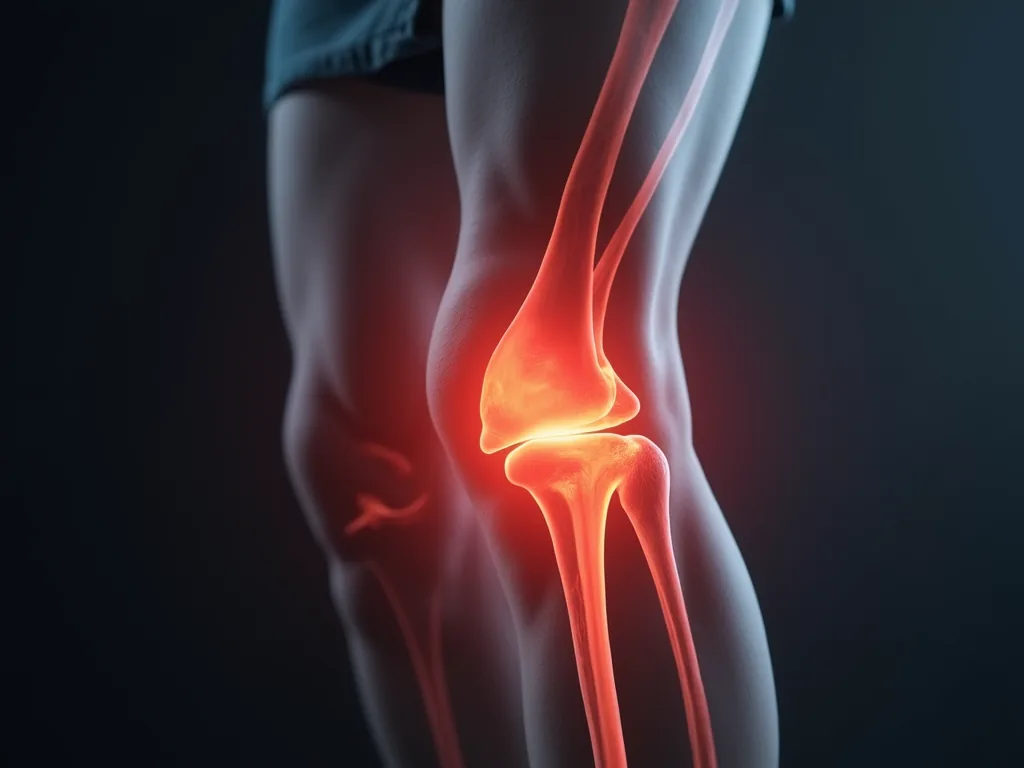
In brief
- A tendon rupture is a partial or complete interruption of a tendon connecting muscle to bone – often caused by overload or degenerative processes, particularly from the age of 30.
- Typical symptoms are a loud popping sound, severe pain, restricted movement and swelling; such injuries can occur in the shoulder joint as well as the Achilles tendon.
- The diagnosis is made through a thorough examination including history, clinical examination and imaging such as ultrasound, X-ray and MRI.
- Treatment can be conservative (with immobilisation, painkillers and physiotherapy) or surgical (through an operation, e.g. suturing or tendon reconstruction).
- Targeted rehabilitation and physiotherapy as well as preventive measures (dos and don'ts) are decisive for avoiding secondary damage and loss of strength in the muscles.
What is a tendon rupture?
A tendon rupture is a serious injury in which the tendons – the essential connections between muscle and bone – tear either completely or partially. Sports injuries in particular frequently lead to such damage. With increasing age, the elasticity of the tendons decreases, making them more susceptible to overstretching and tears.
What function do tendons fulfil?
Tendons are the load-bearing elements of our movement system.
They connect the muscle to the bone and thus transfer the force generated by the muscle to the joint – for example in the shoulder joint or at the Achilles tendon.
| Function | Benefit |
|---|---|
| Movement | Through the contraction of the muscle, the tendon is tensioned, enabling movement of the bone. |
| Protection | At particularly stressed sites, the tendons are surrounded by a protective tendon sheath, which also helps minimise friction and overload. |
| Holding the body together | Without functioning tendons, complex movements and sporting activities would be hard to imagine. Ligaments also play an important role in stabilising the joint but differ functionally from tendons. |
When does a tendon tear?
The causes of a tendon rupture are varied and often multifactorial:
Symptoms of a tendon rupture
The symptoms of a tendon rupture are usually clearly noticeable and vary depending on the extent of the injury:
Complete rupture:
Here you often hear a distinctive popping sound, followed by immediate, intense pain. The movement of the affected joint – whether the shoulder joint or the Achilles tendon – is severely restricted, accompanied by marked swelling and often a bruise.
Partial rupture:
With a partial tear, the initial pain often subsides more quickly and mobility is less severely impaired. Nevertheless, a slight feeling of instability and a certain loss of strength in the muscles can occur.
Which tendons are frequently affected
The shoulder joint is one of the most flexible but also most injury-prone joints of the body.
- Tendon rupture in the shoulder:
In a shoulder tear, the rotator cuff plays a central role. A tendon rupture in this area leads to severe pain, a marked loss of strength at the head of the humerus and considerable restriction of movement. Patients frequently report an abrupt pop marking the moment of injury. - Other affected tendons:
Besides the shoulder, the Achilles tendon, biceps tendon and the muscle tendons of the fingers can also be affected. An Achilles tendon rupture, for example, is associated with extreme pain and an inability to load the leg normally.
How do I find out that my tendon is torn?
1. History and clinical examination
Your doctor or orthopaedic specialist asks you in detail about the accident, the pain and the restriction of movement.
Special functional tests are used to examine the affected area precisely – whether the shoulder joint or another muscle tendon.
2. Imaging
Ultrasound can show tendon injuries dynamically, while X-ray serves to rule out bone or ligament involvement.
Magnetic resonance imaging (MRI) provides particularly detailed images of the soft tissue and is therefore indispensable for precisely assessing the extent of a tendon rupture.
Treatment options
The treatment of a tendon rupture depends on the severity of the injury:
Directly after the accident, follow the RICE rule: take a rest, cool the affected area with ice (cooling compresses), use compression (a pressure bandage) and elevate the area. According to newer international recommendations (the PEACE & LOVE principle): use ice only briefly for pain relief and start dosed movement early.
These measures help reduce initial swelling and pain.
For partial tears, treatment can consist of anti-inflammatory painkillers (such as NSAIDs), immobilisation and targeted physiotherapy.
These therapy approaches aim to ease the pain and maintain mobility without surgery being immediately necessary.
If there is a complete tendon avulsion or irreparably damaged tissue, an operation is frequently recommended.
The tendon ends are sewn back together using suture anchors or, if necessary, replaced by a tendon reconstruction.
The subsequent intensive post-operative rehabilitation is essential for restoring the original strength and mobility of the muscles.
After the initial treatment, targeted rehabilitation is decisive:
Tips for the recovery phase
During the recovery phase, pay attention to a balanced ratio of loading and rest:
- Dos:
- Follow the instructions of your doctor and physiotherapist.
- Perform the recommended exercises regularly.
- Pay attention to ergonomic posture.
- Use supportive aids such as splints or bandages to stabilise the joint.
- Avoid overload and returning to intensive sporting activities too early.
- Do not ignore your body's warning signals – have pain or uncertainty medically assessed.
Prevention and the right response
Prevention and a quick response are decisive for avoiding tendon ruptures or mitigating their consequences:
Prevention:
Thorough warming up before sporting activities, learning correct movement technique and using suitable protective equipment (such as appropriate footwear or insoles) are essential.
In an emergency:
In an acute injury, apply cold immediately, immobilise the affected area and take painkillers if necessary. A prompt medical examination is important to prevent further damage.
What do I do if my tendon is torn?
If you suspect a tendon rupture, do not hesitate to seek professional help:
In an acute case, contact the emergency services or visit the nearest accident and emergency department.
Specialised physicians in orthopaedics or sports medicine are available to diagnose your injury precisely and initiate the appropriate therapy.
Tendon rupture? Get treated now
Have you suffered a tendon rupture after an accident and are looking for physiotherapy in Cologne for your rehabilitation?
Book an appointment at our practice today: Book an appointment now!